Nurses are again at the top of the Gallup Poll!


Americans_Rate_Nurses_Highest_on_Honesty__Ethical_StandardsPolling data are difficult to interpret, but the fact that nurses consistently rank at the top of the Gallup Poll on “honestly & ethical standards” reflects a persistent public opinion about nurses that contradicts the negative media images of nurses that also persist over time.  Here is what the Gallup folks say about this finding:

Nurses have topped the list each year since they were first included in 1999, with the exception of 2001 when firefighters were included in response to their work during and after the 9/11 attacks. Since 2005, at least 80% of Americans have said nurses have high ethics and  honesty. Two other medical professions — medical doctors and pharmacists — tie this year for second place at 65%, with police officers and clergy approaching 50%.

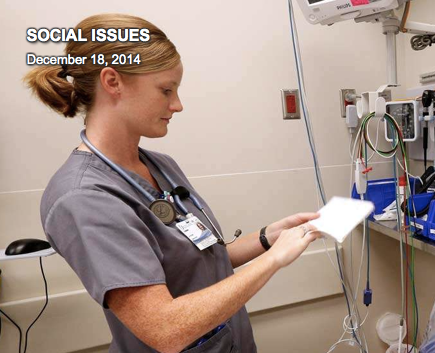
This poll was announced on December 18th, 2014, along with the image above that portrays a professional, technically capable nurse.  So this is good news – perhaps a bit puzzling – but a positive note on which to close out 2014!

NPR Blog features article by Nurse Kelli Dunham!


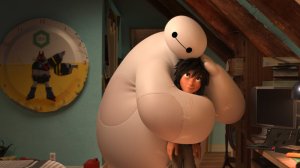
Check out today’s post on the NPR blog post by Kelli Dunham titled Why Does It Take A big-hero-6_wide-81c8fe593498a408c0004836aabe11fa32e276ce-s800-c85Movie Robot To Show What Nurses Really Do? Kelli uses the character Baymax robot character in the movie Big Hero 6 to examine message about what nurses really contribute to health care!

Kelli’s message will reach a wide audience of folks and sends a clear message that is so in line with what we are working toward with the NurseManifest project!  Check it out, and share your responses to Kelli’s post here as well as on the NPR blog!

Registered Nurses are Ebola Fighters and Scientists/Researchers


Co-authored by Kimberly Baltzell, Director, University of California San Francisco School of Nursing, Center for Global Health.

Registered nurses are many of “The Ebola Fighters,” which just last week TIME magazine named as the 2014 Person of the Year. To the vast majority of people, registered nurses deliver health care to persons who are sick. We’re glad that we’re honoring these individuals. Direct, hands-on patient care work is hard, and the personal risk to health care providers is great.

In general, this is how people view registered nurses — in scrubs, providing care that physicians prescribe. What’s not as evident is that there are other aspects of nursing — that is, that registered nurses have their own practice independent of physicians, and that registered nurses can get Ph.D.s in nursing and then systematically find ways to improve how health care is delivered. It’s this second point — registered nurses as scientists/researchers that we would like to discuss.

Both of us are Ph.D. registered nurses and both of us are scientists/researchers. We each have heard the following statements when someone hears that we have Ph.D.s in nursing, “a Ph.D.? Why not just go to medical school?” or “I didn’t know you could get a Ph.D. in nursing.” In these moments, we explain how nursing practice is distinct from medical practice and that a Ph.D. is a research degree and an M.D. is a practice degree. We say, “Yes, Ph.D.s in nursing exist” and this is what we do.

Here are some examples of the kinds of research that nurse researchers/scientists have conducted, which have resulted in improvements in care — In an emergency, a fighter pilot may reach for a mask to determine if his/her oxygen levels are dangerously low. If a women giving birth in Zambia begins bleeding profusely, a simple Velcro bodysuit designed to apply pressure and stop the bleeding may be used. A patient undergoing cardiac surgery has a greater chance of survival in a crisis due to new resuscitation standards. Cancer patients outcomes may be linked to clusters of symptoms, giving the health care provider important clues on what type of treatment to prescribe.

All of these creative solutions to critical problems involved nursing research, nursing science. You thought the role of a nurse is to deliver care at the bedside or in the community. That is true, however, that work at the bedside or in a community gives nurses a bird’s eye view of what needs to be fixed or improved. These same nurses may then go on for more education culminating in the terminal degree — a Ph.D. in nursing. These Ph.D. nurses design and conduct studies that help enhance health, decrease suffering, and improve the quality of health care. Nurse scientists work on real life problems in virtually every area of healthcare, in every setting, in every country.

The U.S. government may be recognizing the value of investing in nursing. In fact, last week the House of Representatives passed a bill which impacts nursing and health care. Additional funds have been designated for Ebola preparation and treatment, both here and in West Africa. Importantly, there are increases in funds for both advanced nursing education and nursing research through the National Institutes of Health.

So, if you or someone you care about has benefited from modern day health care, chances are a nurse researcher/scientist was involved in the design or innovation. In fact, those hands that care for you at the bedside may well be delivering interventions pioneered by a nurse scientist.

This blog was originally posted on Huffington Post on December 17, 2014.

Time Magazine “Person of the Year” features Nurses!


There are four nurses included in the Time Magazine “Person of the Year” – the Ebola Fighters!  These nurses are

  • TIME_Person_of_the_Year_2014__Ebola_NursesKaci Hickox, wrongfully quarantined in New Jersey and then Maine after returning from Sierra Leone where she was treating Ebola patients.


TIME_Person_of_the_Year_2014__Ebola_Nurses

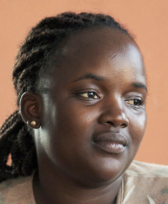
  • Iris Martor, a school nurse in Monrovia, the capital city of Liberia. who is working locally to educate, protect, and help people in her local community to overcome the devastating epidemic in her country.

TIME_Person_of_the_Year_2014__Ebola_Nurses

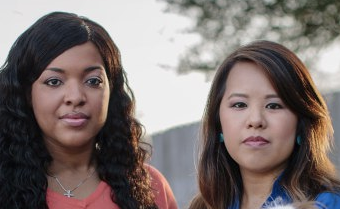
  • Nina Pham and Amber Vinson, nsures at Texas Health Presbyterian Hospital who contracte Ebola while caring for Mr. Duncan, who arrived in Texas with Ebola and died while in the Texas hospital.


I was impressed, in reading each of their stories, of their statements of commitment to caring for those in need, and recognizing the dangers involved they remained steadfast in expressing their values.  Read their stories here where you can also take a few minutes to add your comments acknowledging these nurses!

The Nursing Manifesto: Aligning action toward living nursing as caring science and wholeness


“Organizations are not changing because people in organizations are not changing” (Cowling, Chinn, & Hagedorn, 2000).

The Nursing Manifesto provides us within the profession a beacon of light and hope toward creating change; it provides a map of sorts leading toward the manifestation of Nursing Qua Nursing. It calls for us to grow, change, and evolve into our professional caring autonomy.

My doctoral dissertation looked at Nursing’s Living Legend, Dr. Jean Watson’s Theory of Human Caring and how it could be explicated through relating it to other areas of academic disciplines: chaos theory, partnership theory, and transpersonal psychology were all used to support the concepts in Watson’s theory. My overall conclusion after many pages of theoretical writing was that nurses need to be on a journey of self-care and reflection in order to enact the human caring experience that Watson calls for.

“We believe that our journeys to enact this manifesto will certainly require a reuniting of the inner and outer life, accepting our wholeness and owning our freedom – a wholeness and freedom that will strengthen our outer capacity to love and serve” (Cowling, Chinn, & Hagedorn, 2000).

How can one love and serve in their capacity as a nurse? Several years after completing my dissertation, I was given the opportunity to develop an RN-BSN curriculum from a caring- holistic-integral science perspective at the University of Maine at Augusta. The recently accredited program emphasizes self-care and reflection, while students also have the opportunity to explore holistic modalities for use on their own healing paths and to share with others as well. The creation of this curriculum was an act of love and it continues to be a path of service toward the nurses we care for in our program.

For several years, I had a dream of bringing Jean to our students and faculty. Eventually we were able to partner with our local hospital Maine General Medical Center and bring Jean not only to our students, but to nurses and nursing students from around the state of Maine. After a year of planning by a committee of 10 empowered nurses, we were able to bring over 400 nurses together to spend a day with Jean, learning about her theory.

IMG_7111

The Augusta, Maine civic center was transformed by the planning committee nurses to be a healing space; special lighting was used, break time music was geared toward songs that support healing, plants were brought in, and intentions were set by the planning committee for healing space and caring science to emerge. The lunch meal and morning and afternoon fruit offerings were also geared toward support the health of the participants.

Dr. Watson spoke for many hours throughout the day about her transpersonal caring healing moment, the challenges we as nurses face in the current medical-cure based healthcare system, and the 10 Caritas Processes that support the nurse in creating the caring moment. Participants were encouraged to ask questions and share their own experiences with caring and healing. The whole day aligned with the Nurse Manifesto process, in that Dr. Watson focused on Nursing Qua Nursing and how we can move toward a caring science reality of nursing: “It is our firm conviction that there is a body of knowledge that is specific, if not unique, to nursing’s concerns and interests. We think that this knowledge is grounded in appreciation of wholeness, concern for human well being, and ways in which we accommodate healing through the art and science of nursing” (Cowling, Chinn, & Hagedorn, 2000).

Additionally she spoke extensively about the broken healthcare system, which has morphed into an illness system, or as the nurse manifesto noted, “general subjugation of spiritual consciousness to the economics of health care” and “the long-standing ideology (acquired consciousness) of nurses being subservient to other interests, and not encouraged to be deeply committed to their own healing work” (Cowling, Chinn, & Hagedorn, 2000).

Of great importance throughout the day was the emphasis on Watson’s first caritas process: Embrace altruistic values and Practice loving kindness with self and others. The other 9 caritas process revolve around the nurse’s efforts toward enacting the first caritas process, which begins with the nurse learning to care for themselves through self care, or acting in love towards oneself.

Students provided us with feedback after the event, and they stated that the most profound experiences were being able to meet Dr. Jean Watson, and also experiencing the transpersonal caring moment through a listening experience. During this experience, the participants first centered themselves in order to speak or listen from the heart; and then in pairs, they had the opportunity to practice being present and listening without saying a word, as well as reversing the experience and speaking for several minutes from the heart. The students found this to be profound and they realized what it means to be truly present with another person in a caring- heart centered experience. Many nurses do not have the skills or experience in this area, so this is something we must continue to foster in our nursing curricula and healthcare settings. My hope is that the nurses who experienced this event will have experienced some change within themselves that will help foster the change needed in the healthcare system. Love, serve, remember….

I am grateful to also have had media coverage of the event. Media coverage for nurses is of great importance, moving us out of the shadows and away from the invisible nature of our work. The front page of the Kennebec Journal on November 17 read, “Love is What Heals” and included a picture of Dr. Watson at the podium. Additionally, the event was covered by the local TV station, and that can be viewed here: http://www.foxbangor.com/news/local-news/6994-doctor-redefines-practice-of-nursing.html This media coverage is important, because as we know nurses tend to be invisible in the media, our presence often over-ridden by the medical-cure based system. We need to continue to find ways to shine our own unique light of love and healing.

JW_front page

Reference:

Cowling, W. R., Chinn, P. L., & Hagedorn, S. (2000, April 30, 2009). A Nursing Manifesto: A Call to Conscience and Action. Retrieved from http://www.nursemanifest.com/manifesto_num.htm