(Potential) Rescheduling of Cannabis in the US: Policy, Process, and Patients


Cannabis has been a DEA Schedule I drug since the initiation of the Controlled Substances Act (CSA) in 1970. Schedule I drugs are those classified as having a high potential for abuse and no known medical benefit. Cannabis has remained a schedule I drug despite the National Academies of Science, Engineering, and Medicines (2017) publication entitled The Health Effects of Cannabis and Cannabinoids, where NASEM concluded that there is substantial evidence for cannabis effectiveness in treating chronic pain, chemotherapy induced nausea and vomiting, and multiple sclerosis spasticity; moderate evidence around cannabis improving sleep with short term outcomes related to sleep apnea, fibromyalgia, chronic pain, and multiple sclerosis; and limited evidence around cannabis’s effectiveness with anxiety, PTSD, Tourette’s, IBS, TBI outcomes, dementia, glaucoma, and other neurodegenerative diseases. 

Because cannabis has remained a Schedule I drug, research has been greatly hampered, and the NASEM (2017) report called for the development of a national cannabis research agenda focusing on clinical and observational research, health policy and health economics research, and public health and public safety research. 

The NASEM report can be accessed here: https://www.ncbi.nlm.nih.gov/books/NBK423845/

Additionally, in 2003, the federal government issued a patent on cannabinoids related to the drug’s ability to help with healing from brain trauma and age-related brain changes. 

There is a lot of excitement in the medical cannabis world around the potential rescheduling of cannabis related to the US president’s December 18, 2025, executive order 14370 to reschedule cannabis. However, in 2024, the U.S. Department of Justice initiated a rulemaking process to begin the rescheduling process, and President Biden issued an executive order in 2022 directing the Department of Health and Human Services and the Department of Justice to review the rescheduling of cannabis. The DHHS in 2023 recommended that cannabis be moved to Schedule III, and in May 2024, the Attorney General signed off on a proposed rule to reschedule cannabis, which was also published in the Federal Register. This can be accessed here: https://www.federalregister.gov/documents/2024/05/21/2024-11137/schedules-of-controlled-substances-rescheduling-of-marijuana

However, an administrative law hearing is needed to formalize the process, and it has been stalled over the past year due to lawsuits alleging bias and procedural misconduct in the rescheduling process. Lawsuits include those from Doctors for Drug Policy Reform that allege they were excluded from the list of 25 designated hearing participants due to supporting rescheduling, Panacea Plant Sciences has sued the federal government because small cannabis businesses have been excluded from the hearings, Attorney Matt Zorn has claimed in a law suit that collusive communications occurred between the DEA and the anti-cannabis group Smart Approaches to Marijuana (focuses on the Freedom of Information Act), and a group of pro-rescheduling entities has been granted an interlocutory appeal based on the DEA being a proponent of the proposed rule. The interlocutory appeal has indefinitely stayed the rescheduling hearing process. Essentially, all of these lawsuits are focused on the concern that the DEA has stacked the witness selection process to ensure that cannabis remains a Schedule I drug in direct opposition to the DHHS recommendation that cannabis be rescheduled to Schedule III. The DEA and the DHHS have historically had differing views of DEA/ CSA scheduling. The current 2025 executive order does not address this issue; it does not provide a defined means to bypass the existing legal process, and the CSA of 1970 does not permit a President to unilaterally reschedule a drug. 

The only other approaches toward timely rescheduling of cannabis include an act of congress, which may be required to address the issues of banking concerns, research processes, and address the current conflicts between federal and state laws regarding cannabis. Additionally, Attorney General Bondi could expedite the process by bypassing the notice-and-comment process. 

There is a clear need for more medical cannabis research, and moving the drug to a schedule III would bypass researchers’ requirement to have a Schedule I license and the requirement to only access cannabis from a handful of government cannabis sources that may not provide access to quality cannabis products. Rules will need to be changed, and funding for cannabis research as a national public health agenda item will be initiated, with the goal of USFDA treatments being developed. By rescheduling, the reduced stigma associated with the prohibition of the cannabis plant may help to encourage academics, pharmaceutical companies, and cannabis businesses to engage in more cannabis research. Still, again, Congress will likely need to clarify or revise previous laws. For instance, Biden’s 2022 Medical Marijuana and Cannabidiol Research Act has not led to greater cannabis research because of the lack of access to the product, high costs associated with the security of cannabis products, lack of funding sources for research, and issues with federal law prohibiting the transfer of cannabis across state lines. 

Additionally, implications around what rescheduling means for cannabis producers, medical cannabis patients, and healthcare providers remain unclear. Cannabis being rescheduled does not change the federal legality of cannabis. It would still be a federally controlled substance, and currently, whether or not patients will be able to have cannabinoid therapeutics covered by insurance remains in question. While dronabinol, a synthetic THC medicine, is a Schedule III drug, it is only approved for CINV when other methods have failed, and loss of appetite and weight loss with anorexia and cachexia. It is not a first-line treatment for any health condition, although prescribing in pediatric settings appears to have increased over the years. Additionally, dronabinol may not be as therapeutically effective as whole-plant cannabis due to its lack of various cannabinoids, terpenes, and flavonoids that are found in whole-plant cannabis and may support optimal functioning of the body’s master regulator, the endocannabinoid system. 

While this process of rescheduling cannabis to Schedule III comes with a great deal of uncertainty and legal concerns, it is part of the process of ending the prohibition era of cannabis and entering into an era of cannabis regulation. Ideally, the patients who could benefit from access to cannabis and cannabinoid therapeutics are always at the forefront of benefits in the political process. Patients’ access to safe, tested, effective cannabinoid therapeutics remains a social justice issue, a research priority, and an advocacy concern for nurses. Nurses are ethically obligated to support patients’ autonomous right to access cannabinoids and to ensure that beneficence and nonmaleficence are upheld.

Resources

National Academies of Sciences, Engineering, and Medicine; Health and Medicine Division; Board on Population Health and Public Health Practice; Committee on the Health Effects of Marijuana. (2017). An evidence review and research agenda. The health effects of cannabis and cannabinoids: The current state of evidence and recommendations for research.National Academies Press (US). https://www.ncbi.nlm.nih.gov/books/NBK423845/

https://alaskapublic.org/news/economy/2025-12-26/marijuana-rescheduling-would-bring-some-immediate-changes-but-others-will-take-time

https://mjbizdaily.com/news/great-leaps-in-cannabis-research-expected-after-marijuana-rescheduling/613762/

https://www.nbcnews.com/health/health-news/medical-marijuana-research-open-floodgates-cannabis-reclassification-rcna249811

Standing Up For Access to Vaccines in the United States


Written by Carey S. Cadieux, PhD, RN, AHN-BC, RYT, FAAN

As many of us struggle with the threats to public health under the current adminsitration, we may feel unempowered and discouraged. It’s important as patient and population advocates, and as the largest number of healthcare care providers, that we take steps toward finding small ways we can make a difference. Sharing our knowledge and calling for what is right for the health of the American people is something we can do in our everyday lives.

I have been greatly concerned about access to vaccines. For about a week in my state of New York, I haven’t been able to access a COVID vaccine as a prescription is required. For a number of reasons I couln’t obtain a prescription even though I have qualifying factors and I was about to travel to another state to obtain care until the Governor Hochul of New York wrote an executive order that ensures that all the people of New York State can receive a COVID vaccines without a prescription. Her executive order ensures that for the next 30 days, all NEw Yorkers can access a COVID vaccine, and the legislature will be charged with creating an official long term legislative move that will ensure access to all vaccines remain in place for New Yorkers. Ideally her actions alongside those of the governors of Massachusetts, California, and New Mexico will be replicated by other states.

Meanwhile, we have an opportunity to make our voices heard to the Avdisory Committee on Immunization Practices (ACIP) and the CDC prior to their next meeting in 7 days time. Until Spetember 13 @11:59 pm EDT, you can send a comment to the committee expressing your concerns the ACIP will be discusisng revisions to vaccines that can be adminstered to children and the vaccine schedule that dictates how ACA insurance is used (or not) to pay for vaccines. Their recommendations will also apply to the Vaccines for Children program, which has been highly successful at ensuring children have access to vaccines.

The call for comments can be read here: file:///Users/careycadieux/Downloads/CDC-2025-0454-0001_content%20(1).pdf

Your own comments with a 500 word maximum can be made here: https://www.regulations.gov/document/CDC-2025-0454-0001/comment

It’s important to consider what you want the ACIP to hear; while personal stories may be moving, it’s also appropriate that we include data and factual information in our comments. Start by letting the committee know you are an RN and why you are writing the comment. Include some links to articles or websites to support your ideas. Tell them what you want them to do. Remain professional. Include stats if you find them. Also, my entry is approaching the 5k word limit, but even just a few hundred works can have an impact.

You have the power!

Here is an example I submitted today (at the time of this blog posting it is still awaiting approval).

As a registered nurse with a PhD, an interest in public health, a fellow of the American Nurses Association Advocacy Institute, a Fellow of the American Academy of Nursing, and a background in public policy, I am deeply concerned about the current state of the CDC’s vaccine stance and the next steps for the ACIP. The recent proposal to limit access to the hepatitis B, MMRV, RSV, and COVID vaccines could end up being disastrous for the United States citizens. This is likely to end up costing the country and its citizens greatly on many levels. The ACIP vote, scheduled for September 2025, will, in great part, determine the future of our nation’s health. 

There is a significant public health concern that people, particularly children, should be vaccinated, and that the vaccines be covered by marketplace/ACA insurance, as well as the Vaccines for Children Program. A study performed by the National Institutes of Health with scientists from Henry Ford Health found that the some of the most impactful risk factors for the spread of COVID-19 in households include obesity and children as vectors (Siebold et al., 2022). 

Our public health system needs to vaccinate people to reach and/or maintain herd immunity for many preventable diseases. Herd immunity refers to the evidence-based concept where enough people are vaccinated to prevent the rapid spread of infectious agents. According to the Cleveland Clinic (2022), achieving herd immunity from COVID-19 required vaccination levels of up to 85% of the population, which we failed to achieve; hence, COVID-19 is now considered to be an endemic disease. Restricting access to vaccines contradicts the well-established scientific evidence that vaccines protect populations from infectious diseases, decrease overall healthcare costs, and safeguard vulnerable populations (Ashby & Best, 2021). 

The ACIP must also consider the cost of ongoing vaccine hesitancy and the lack of public health system support for accessing vaccines. A Kaiser Family Foundation study estimated that the cost of 690,000 vaccine-preventable COVID-19 hospitalizations in June-November 2021 was $13.8 billion (Kaiser Family Foundation, 2021). The CDC’s own research has found that the Vaccines for Children Program is effective. From 1994 to 2023, this program prevented 508 million lifetime cases of illness and 32 million hospitalizations, while also saving $540 billion in direct medical costs and $2.7 trillion in societal costs (Zhou et al., 2024). 

Additionally, vaccine-preventable diseases (VPD) in people over age 50 are not just costly; VPD hospitalized patients incurred worse clinical outcomes, greater loss of independence, and increased mortality and morbidity versus control groups (Hartman et al., 2024). The indirect costs of low vaccination rates include lost productivity, increased public health costs, diversion of public health resources, and higher insurance premiums. At a time when societal and US debts are rising at an alarming rate, not supporting access to free vaccines on a clearly defined and evidence-based schedule is an ingredient of a recipe that results in US economic failure.

Instead of focusing on restricting vaccines, the CDC and the ACIP should be focusing on overcoming vaccine hesitancy so that adults and children can be properly vaccinated according to an evidence-based schedule. In the best interest of the health of the US citizens, the proliferation of fear around vaccines needs to come to a halt, and the polarization of vaccine acceptance needs to be rebuked. The CDC needs to overcome vaccine hesitancy by supporting doctors, nurses, and pharmacists in their efforts to educate people about the acceptance of vaccines and their effectiveness at maintaining both individual health and the health of the population. The APIC, by supporting an evidence-based CDC vaccination schedule and a regulatory system that encourages vaccination for children and adults, could address the main components of vaccine hesitancy: lack of confidence in vaccines, complacency, and lack of vaccine access/ convenience (Gregory et al., 2023). The ACIP and CDC should not be creating road blocks around the people’s access to life saving vaccines. 

When considering the moral and ethical implications of vaccine programs and mandates, governments must always prioritize maximizing public benefit and minimizing public harm (Jalilian et al., 2023). The unintended consequences of the ACIP not fully supporting an evidence-based vaccination schedule from the CDC, include increased costs to the system, further division of the US population around this issue, and growing vaccine hesitancy. 

I urge the ACIP to vote in favor of evidence-based decisions regarding vaccine effectiveness and ensuring availability to all people in the population. You are charged with minimizing harm, overcoming vaccine hesitancy, enhancing access to vaccines, and reducing overall costs to the US government and the American people. 

References:

Ashby, B. & Best, B. (2021). Herd immunity. Current Biology, 31(4), R174-R177. https://doi.org/10.1016/j.cub.2021.01.006

Cleaveland Clinic. (2022). Herd immunityhttps://my.clevelandclinic.org/health/articles/22599-herd-immunity

Gregory, P., Gill, M., Datta, D., & Austin, Z. (2023). A typology of vaccine hesitancies: Results from a study of community pharmacists administering COVID-19 vaccinations during the pandemic. Research in Social and Administrative Pharmacy, 19(2), 332-342. https://doi.org/10.1016/j.sapharm.2022.09.016

Hartmann, M., Servotte, N., Aris, E., Doherty, T.M., Salem, A., & Beck, E. (2024). Burden of vaccine-preventable diseases in adults (50+) in the United States: a retrospective claims analysis. BMC Public Health 24, 2960. https://doi.org/10.1186/s12889-024-20145-0

Jalilian, H., Amraei, M., Javanshir, E., Jamebozorgi, K., & Faraji-Khiavi, F. (2023). Ethical considerations of the vaccine development process and vaccination: A scoping review. BMC Health Services Research23(1), 255. https://doi.org/10.1186/s12913-023-09237-6

Kaiser Family Foundation. (2021). Unvaccinated COVID patients cost the US health system billions of dollars. https://www.kff.org/covid-19/unvaccinated-covid-patients-cost-the-u-s-health-system-billions-of-dollars/


Seibold, M. A., Moore, C. M., Everman, J. L., Williams, B. J. M., Nolin, J. D., Fairbanks-Mahnke, A., Plender, E. G., Patel, B. B., Arbes, S. J., Bacharier, L. B., Bendixsen, C. G., Calatroni, A., Camargo, C. A., Jr, Dupont, W. D., Furuta, G. T., Gebretsadik, T., Gruchalla, R. S., Gupta, R. S., Khurana Hershey, G. K., Murrison, L. B., … HEROS study team. (2022). Risk factors for SARS-CoV-2 infection and transmission in households with children with asthma and allergy: A prospective surveillance study. The Journal of Allergy and Clinical Immunology150(2), 302–311. https://doi.org/10.1016/j.jaci.2022.05.0

Zhou, F., Jatalaoui, T.C., Leidner, A.J., Carter, R.J., Dong. X., Santoli, J., Stokely, J.M., Daskalakis, D.C., & Peacock, G. (2024). Health and economic benefits of routine childhood immunizations in the era of Vaccines for Children Program- United States, 1994-2023. MMWR Morbidity & Mortality Weekly Report, 73, 682-685. https://www.cdc.gov/mmwr/volumes/73/wr/mm7331a2.htm

In Memoriam – Beverly Hall, Co-founder of Cassandra: Radical Feminist Nurses Network


August 9, 1935 — July 11, 2025 
Nursology.net “In Memoriam”

On July 25, 2025, Janet Allan sent me the sad news of Bev’s death – her partner of 45 years.

Bev had been on home hospice/palliative care for about a year and a half dealing with 5/years of Long Covid. The efforts of the hospice nurses greatly helped to mitigate many of her symptoms which were mainly shortness of breath, tachycardia and extreme fatigue. She  spent only 3 days in an inpatient Hospice facility . . . and had a very peaceful death. I am both very sad and also relieved because she is no longer suffering. We have been together for over 45 years and it’s hard to imagine a life without her. 

Bev and Janet were among the women who”founded” Cassandra: Radical Feminist Nurses Network at the ANA convention in 1982. Their relationship was brand new at the time, and the group of about a dozen nurses gathered in a hotel room to brainstorm what we could do to counter two shocking things happening in and around the convention. First was the fact that over the same weekend of June 30, 1982, women from all over the United States were gathering to mark the death of the proposed Equal Rights Amendment (ERA) to the U.S. constitution, which simply stated: “Equality of rights under the law shall not be denied or abridged by the United States or by any State on account of sex”. There was no mention or even a hint at the ANA convention that this was happening – despite the fact that DC was teaming with women and week-end long concerts, events and protests marking the occasion.  

The second event that we observed and that shocked us to the core, was the fact that the Maternal-Health section of the ANA had as their keynote speaker Orrin Hatch – Republican Senator from Utah who was a vocal opponent of equal rights, specifically women’s reproductive rights. Several of us watched Mr. Hatch get out of his limosine and be escorted into the hotel, accompanied by a group of nurses representing the ANA.

More detail about this event and details of our gathering and actions are described in the first Cassandra Newsletter . The newsletter contains a poem on page 12 by Bev –

FEMINISM IS DEAD

It’s 1982,, and the ERA is dead.
Well, not dead, says the National Organization for Women.
The ERA has just suffered a small setback, that’s all.
Oh, okay, if that’s all it is.

It’s 1982 and the San Francisco Chronicle said,
Feminism is out among younger women surveyed.
I have never been discriminated against.
Feminists are such unhappy people.
We do not need feminists.

It’s 1982 and long skirts are in.
High heeled shoes, too.
Feminism is out.
Do you understand that, woman?

It’s 1982 and Nightingale is dead.
Has been for 72 years.
We hardly remember her anymore.
Wasn’t she the one who never got married?
Died an invalid.

It’s 1982 and feminism is dead.
But, listen, we don’t have to be nice about it.
Malvina Reynolds said,
The ones that bleed you like to see you nice.
So, you and I, let’s don’t be nice, okay?

  • Beverly A. Hall

We made a plan to meet for our first “gathering” in San Francisco, and Bev volunteered to set up the arrangements with the Women’s Building (which did occur in 1983). Then she was diagnosed with breast cancer and was not able to participate in the gathering. Sue Dibble, who at the time was a doctoral student at UCSF, stepped in to help. The physicians predicted that Bev’s form of cancer meant about a 5-year survival trajectory. Bev went through a round of the typical chemotherapy ordeal, which she determined she would never engage in again, and instead created her own healing pathway and survived and thrived to the age of 90! She spent many years working closely with people who were living with HIV/AIDS, guiding their experience using the healing approaches she had learned to know during her own healing journey. She documented her journey in her book “Surviving and Thriving After a Life-Threatening Diagnosis“.

So here’s to fond memories of our dear colleague and friend Bev Hall! Her spirit and influence lives on!

Action Defending Democracy by Nurses


The Washington State Nurses Association (WSNA) is leading the way!

WSNA joins lawsuit to restore access to federal health resources

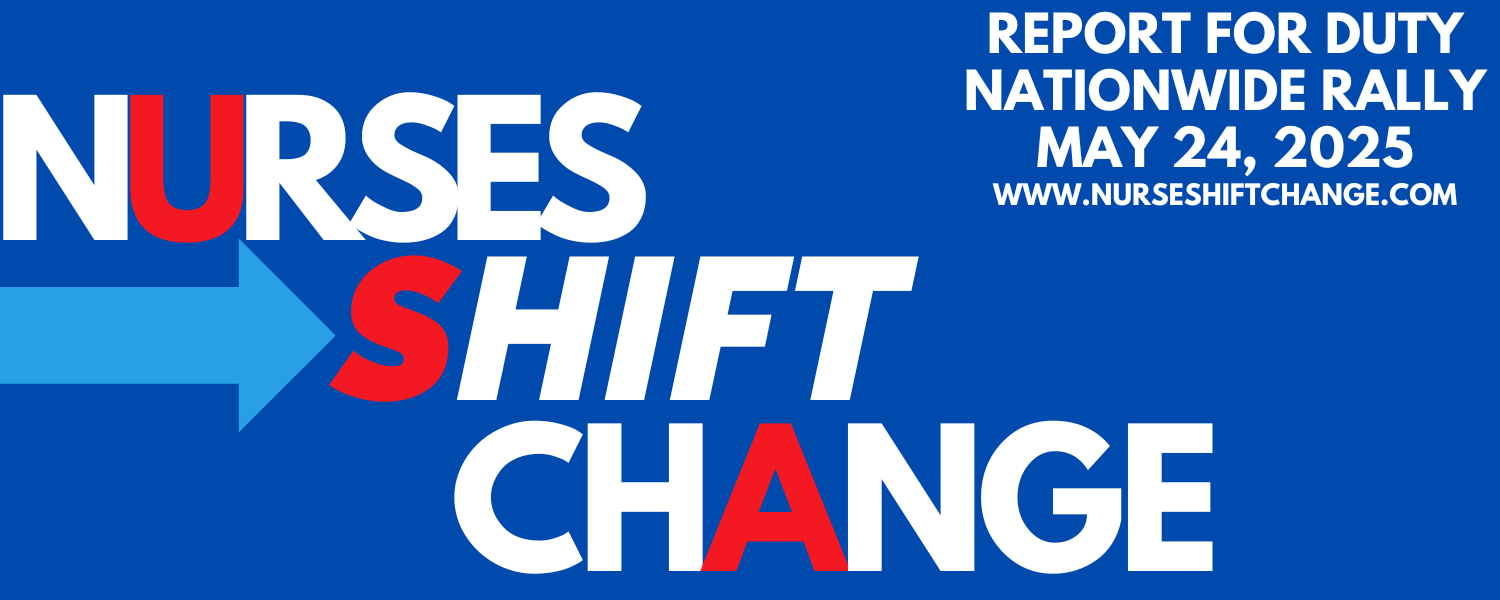
May 24 “Report for Duty Rally” – Washington DC and Nationwide


Nurses SHIFT Change – Grounded in Humanity. Guided by Ethics. Driven by Science. Committed to Social Justice. Report for Duty Rally, May 24, 2025 – Washington, DC and nationwide

The Report for Duty Rally is a national day of action led by the Nurses SHIFT Change, bringing together nurses, healthcare professionals, students, and community allies to advocate for a just, compassionate, and equitable healthcare system. On May 24, 2025, in Washington, D.C. and cities across the country, we will show up, speak out, and stand together for the future of healthcare, grounded in humanity, ethics, science, and social justice. Join us!