Historic Wilma Scott Heide eBooks now available!


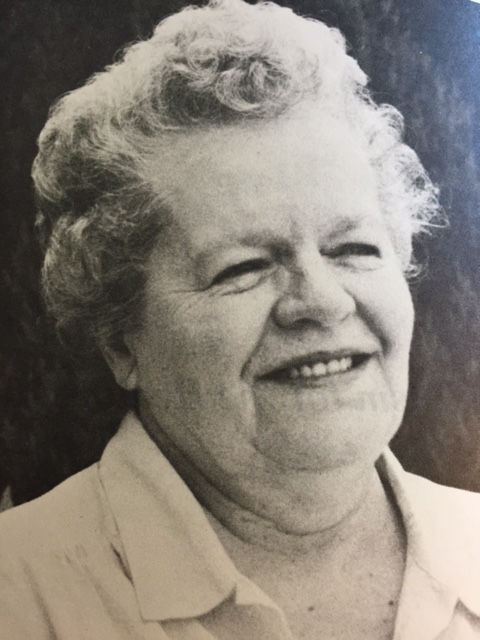
Wilma Scott Heide

Wilma Scott Heide

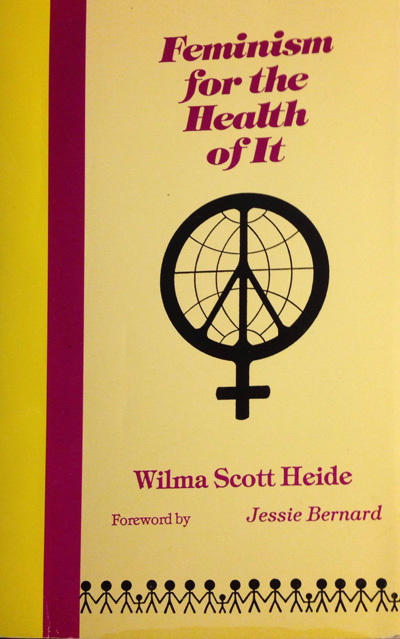
Two books of major significance to the modern women’s movement are now available as eBooks – “Feminism for the Health of It” by Wilma Scott Heide, and “A Feminist Legacy: The Ethics of Willma Scott Heide and Company” by Eleanor Humes Haney.

Wilma Scott Heide was bom on February 26, 1921 and died on May 8, 1985 of a heart attack. One of the most respected of feminist/human rights scholars/activists in the world, Dr. Heide was a nurse, sociologist, writer, activist and lecturer. During her lifetime she actively demonstrated intellectual force, caring and commitment in articulating the women’s movement imperatives for society. She served as visiting professor and scholar at several universities, consultant to various state education associations and innumerable colleges, churches and many branches of the government, education and social organizations. In 1984 Wilma described herself as: Behavioral Scientist at American Institutes for Research; Human Relations Commissioner in Pennsylvania; Chairone of Board and President of NOW (1970-1974); Professor of Women’s studies and Public Affairs at Sangamon State (would-be) University in Illinois; Feminist and Humorist-at-Large

These two books were originally published in 1985 by MargaretDaughters, a small independent feminist publishing company founded by Charlene Eldridge Wheeler and Peggy Chinn.  They named their company after their mothers, both of whom were “Margaret.”  They met Wilma on the occasion of an International Women’s Day celebration Heide-Coverin Buffalo, New York where Wilma was featured as a guest speaker.  Her dissertation, titled “Feminism for the Health of It” had never been published in book format, and the eager Margaretdaughters publishers were thrilled to have the opportunity to bring this important work into book form.  Shortly after, they connected with Ellie Haney, who had been planning a biography of Wilma’s life that highlighted the amazing and inspiring feminist philosophy that grounded Wilma’s work.

Wilma challenged the patriarchal status quo with an inimitable humor, keen intellect, and a steadfast feminist commitment.  She was the third President of NOW, during which she actively led the organization to turn away from the homophobic “lavender menace” Legacy-Cover2messages of the earliest years of the organization.  She led a number of actions of civil disobedience, several of which contributed significantly to moving the Equal Rights Amendment out of committee and into the nation-wide U.S. constitutional review process.  She insisted that newspapers cease segregating the “help wanted’ columns by “male” and “female” – a change that is possibly one of the most influential in expanding economic opportunity for women.

Even though she did not practice nursing for most of her career, she never waivered in her identity as a nurse and her commitment to the deepest values of nursing that are today reflected in the Nursing Manifesto – caring, the right of all people to a high level of health and wellness, the essential element of peace in realizing health for all, and the imperatives of consciousness and action to bring about real change.

There are elements in both books that may seem limited or inadequate given the perspectives we have today, but both remain significant and current not only for their historic value, but for the light they shed on today’s persistent political and social challenges for women, for nursing, and for health care.  I am thrilled to have brought these works forward into the present in accessible, affordable formats!  I hope you will visit your preferred eBook provider now and consider making them part of your library!

Composing a Life Work: Why Creativity Matters in Nursing


The following is a guest blog by Jennifer (Jen) Reich PhD, MA, RN, NC-BC Nurse Coach, Poet, Storyteller. 

Once upon a time, I wrote a story called The Healer (2011). The premise of the story is a little boy from a difficult upbringing who encounters a magical being on his way to collect sea glass. He is collecting the glass to make a mosaic for his mother. With the help of his friend, he collects enough to make one for his school as well. He grows up to be an artist, creating mosaics for his community, nursing homes, and hospitals. When he is an old man, he meets his magical friend once more. She tells him he has been a great healer and will be welcomed into her tribe. At first he doesn’t understand. She explains that since he has followed his passion and created his mosaics with love, his art has brought great healing. Love, she tells him, is always healing.

I have written poetry and stories for as long as I can remember. Often I think in poetry, and it has always been a way to help me process information and feelings, to find my voice. I started playing the trombone in elementary school and music became another outlet for me. However, it wasn’t until I began working as a psychiatric tech in nursing school that I discovered how powerful the arts were to help those suffering give voice to their experience. I also realized how important poetry and writing were for me to give voice to my own experience as student nurse and tech.

As a new nurse, I learned from mentors that though a cure is not always possible, there is always potential for healing (Dossey, 2013). Most nurses have experienced the death of a patient or client and know it is part of their work. So how do nurses cope with these sorrows? Some use self-reflection and self-care strategies while others may engage in self-negating behaviors as a way to manage their stress and pain. Sometimes, it’s a little of both. The Nurse Manifest Document Introduction (1a, 2009) states: “We call forth the written and spoken voice of nursing to be claimed and reclaimed. We seek to inspire the fullest expression of the heart of nursing through individual and collective acts. We believe there are profound possibilities in claiming our individual and professional sovereignty.” As caring professionals, nurses need to have creative outlets not only to cope and de-stress, but perhaps most importantly, to find our individual and collective voice.

Very recently, we saw an excellent example of nurses claiming their voices. It began with an instance of nurse blaming in the Dallas nurses who contracted Ebola. In the case of both nurses, before the whole story was out, fault was transferred to them (Goodwin, 2014). However, colleagues in nursing would not allow this to go unnoticed and without consequence. Nurses from organizations such as National Nurses United, stood together collectively to voice their opposition and support their sisters in nursing. Petitions were generated and spread through media outlets. Individual nurses shared their personal and professional experiences through stories shared on blogs and Facebook and Twitter feeds across the Internet. These stories went beyond the nursing community and to the public where the compassion and professionalism of nurses could be seen and heard.

Despite this inspiring display of community and support, we still hear old adages such as “Nurses Eat their Young,” or concerns that nurses are the worst when it comes to taking care of themselves. Remember in The Healer story the boy learned that engaging in his work with great love and passion brought healing to others. When we don’t take time to care for our mind, body and spirit we deny ourselves the balance and harmony we seek for our students or those in our care. Creativity is a path to touching and bringing forth the inner knowing and wisdom to what we best need to reignite our passion. For example, when I do creative self-care workshops, participants will often tell me they haven’t painted, written stories or poems, or danced since before they were in nursing school, or even as far back as childhood. Having this creative release often gives them the courage to voice what has been long held within. There is very little teaching involved on my part, they already know how to be creative. My role is to provide encouragement and help them surrender to the creative process without judgment and/or critique.

There are journals dedicated to evidence-based research on the healing effects of the creative arts in patient/client populations. Music and arts-based therapists do amazing work with arts-based interventions in individuals, groups, and communities. However, there is limited research on why creativity is necessary for the wellbeing of nurses and healthcare professionals. Further, we often don’t often reflect on how the creative arts enhance our nursing practice. One example I share is from a hospice patient I met years ago. He had been a sax player and jazz musician. We spent a little time before each assessment chatting about jazz. I was able to have a volunteer get him a CD player to listen to his music. There was a reciprocal healing process as our connection through music contributed to a sense of greater well-being on both of our parts. In addition, it opened up space for me to understand his concerns and care needs.

When we are engaged in the creative process, we are fully present. This, in turn, teaches us presence. We are so longing for presence in this world. Though more and more coffee shops pop up, most of them have a drive-thru with lines wrapping around the building. We have bigger banks and lenders, and more often than not, we aren’t able to talk to a real person. We cannot explain to an automated system that the reason we missed a bill payment for example, is that we were caring for a sick parent or child. We need creative soul-utions, not just automated systems in our daily lives, and we need these in nursing and healthcare.

I had the privilege of interviewing 13 experienced RN’s on the concept of ‘story’ as part of my dissertation work. When I sent out my recruitment flyer, I received responses immediately and could not interview everyone interested. I realized from this experience that nurses want to be heard! We need to create more spaces to share our stories, to make art together, write poems, listen to music, to dance. Whether our nursing work is on the front lines in direct care, or as teachers, coaches and/or advocates, we must reignite our love for our calling and create individually and collectively a new paradigm for healing. For though there is no cure for all of the problems facing our healthcare system and the world, when we give voice to our life and work though creativity, healing is always possible~


References

Cowling, W. R., Chinn, P. L., & Hagedorn, S,. (2000). A Nursing Manifesto: A Call to Conscience and Action. Retrieved: https://nursemanifest.com/a-nursing-manifesto-a-call-to-conscience-and-action/manifesto-with-markers-for-citation/

Dossey, B.M. (2013) In B.M. Dossey & L. Keegan (Eds.) C. Barrere & M. Blaszko Helming (Assc Eds.) Holistic nursing: A handbook for practice (6th ed) (pp. 247 – 260). Burlington, MA: Jones and Bartlett Publishers

Goodwin, W. (October 24, 2014). Was CDC Too Quick To Blame Dallas Nurses In Care Of Ebola Patient? National Public Radio (NPR) Retrieved: http://www.npr.org/2014/10/24/358574357/was-cdc-too-quick-to-blame-dallas-nurses-in-care-of-ebola-patient

Reich, J. (2011). The Healer. Retrieved: http://poetry-not-poverty.blogspot.com/2011/11/november-story-healer.html

Jennifer Reich PhD, MA, RN, NC-BC is a nurse coach, poet, and storyteller. She received her PhD in Nursing from The University of Arizona in 2011 and is adjunct faculty in the College of Nursing.  In addition to nursing, her background also includes degrees in Exercise Science:(Gerontology Specialization) and English/Theatre (minor) and training and practice in Mindfulness Based Stress Reduction, Reiki, Health Appraisal and Meditation. She has incorporated these diverse experiences to design wellness programs and teach self-care strategies to nurses and caregivers throughout the country.

You can find Jen @ https://www.facebook.com/Jenreichpoetry  and  www.poetry-not-poverty.blogspot.com. Jen wishes to thank Jackie Levin RN, MS, AHN-BC, CHTP for her review of the blog.

Jenheadshot-1

The Emancipatory Praxis of Integral Nursing


This blog will discuss my doctoral research, which was a critical narrative inquiry that sought to identify patterns in the stories of 10 nurses working in an American Nurse Wendy4Credentialing Center (ANCC) Magnet re-designated Oncology unit. Critical narrative inquiry is a research method developed by Dr. Suzie Kim (2010).  Critical narrative inquiry reflects upon societal-contextual experience and prescribed power relationships to identify, transform and transcend oppression. It deconstructs normative hegemony (the way things are or expected to be vs. the way things could be) by analyzing language, communication patterns and symbolic meanings in experience (Dunphey & Longo, 2007).

The method has 3 phases: 1) the nurses tell a story that exemplifies their experience of a theory guided practice; 2) the stories are recorded and transcribed, then critically read and reflected upon by the participants and researcher with the purpose of identifying salient patterns that emerge as facilitators or barriers to their theory guided practice; and 3) the nurses identify opportunities for transformative learning and emancipatory praxis.

During the process of the study I used Dr. Peggy Chinn’s Peace and Power model (2008) to share power with the nurses and optimize emancipatory knowledge acquisition by hearing their voices. I asked them what was important to them in their practice and in their experiences. Our research sessions were a dialogue between colleagues and I was careful to value their voice and power throughout the study and publication.

The purpose of the research was to:

  • Examine the impact of Human Caring theory guided practice upon nursing qua Nursing.
  • Learn about nurses’ educational preparation in theory guided practice and integral nursing.
  • Examine the relationship between nurses knowledge, caring and power in the Magnet environment.
  • Identify patterns that facilitate and create barriers to nursing qua nursing.

What we learned from the research was:

  • Nurses are transformative change agents who advocate for their patients, even against normative views and authoritarian power if it is in the best interest of their patients and families.
  • Nurses have a language and culture of rich values enacted through careful and meaningful comportment via her/his self-agency that protects and preserves the integral health of those in their care, community and environments.
  • Environments are affected by nurse’s behaviors and actions; external environments are carefully created to enhance patient’s internal environments via; lighting, ambient temperature, music, positioning, cultural, spiritual and religious acts, healing intention, touch, voice and presence.

These findings support Jarrin’s (2012) work where she describes nursing as “Situated Wendy1caring shaped by internal and external environments. These environments include: the individual nurse’s state of mind, intention and personal nursing philosophy, their scope, role, level of skill, training and experience societal and professional norms, values, and worldview social, political, and economic systems embedded in education and practice environments” (p. 14).

This research further supports Kagan, Smith, Cowling and Chinn’s (2009) work that rally’s nurses together for social justice and to protect and support professional values that empower nurses at all levels. The nurses in my study identified that working with nurses who value and support each other; while valuing and seeing the big picture or true meaning of protecting, advocating for and enhancing the patient and families integral health experience, creates optimal work and patient care environments.

Emancipatory praxis requires a convergence of multiple patterns of knowing, doing and being; where the nurse can sense and see patterns that are emerging; and imagine what can become for self, colleagues and those in their care. The knowledge, caring and power dialect is a rich area of inquiry for nurses to conduct further research.

References

Dunphey, L. & Longo, J. (2007). Reflections on postmodernism, critical social theory and feminist approaches: The mind of the postmodern. In P. L. Munhall (Ed.) Nursing research: A qualitative perspective (4th ed., pp. 127-142). Sudbury, MA: Jones and Bartlett.

Jarrin, O.F. (2012). Redefining the metalanguage of nursing science: Contemporary underpinnings for innovation in research, education and practice. Advances in Nursing Science, 35(1), 14-24.doi10.1097/ANS.obo13e3182433b89.

Kagan, P. N., Smith, M.C., Cowling, W.R., & Chinn, P.L. (2009). A Nursing Manifesto: An emancipatory call for knowledge development, conscience, and praxis. Nursing Philosophy, 11, 67-84.

Kim, H.S. (2010). The nature of theoretical thinking in nursing (3rd ed.). New York: Springer.

Marks, L.W. (2013). The Emancipatory Praxis of Integral Nursing: The Impact of Human Caring Theory Guided Practice Upon Nursing Qua Nursing in an American Nurses Credentialing Center Magnet® Re-desginated Healthcare System. Retrieved October 21, 2014 from http://tinyurl.com/ovqlk3t

New! Emancipatory Nursing text just published!


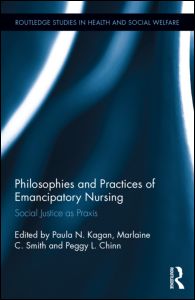
Indeed, for the first time ever, we have a text that is devoted to what we have named “emancipatory nursing!”  The “we” I refer to are the 3 editors of this text – Paula Kagan, Marlaine Smith, and me (Peggy Chinn). The text is titled “Philosophies and Practices of Emancipatory Nursing: Social Justice as Praxis.” The text is published by Routledge in their series Emancipatory text“Routledge Studies in Health and Social Welfare” and is available from the publisher, as well as on Amazon (both hard cover and Kindle) and Barnes & Noble (both hard cover and Nook).  The price is a bit daunting, but the publisher is offering a 20% discount code with the attached flyer!  If you are associated with a library, let your librarian know about this book so they can add it to their collection!

The contributors to this text are among the most prolific and renowned critical scholars in nursing, and the chapters that they wrote for this book are original works that have not appeared anywhere else in the literature.  For some, they have created entirely new perspectives and ideas that reflect current insights and accomplishments.  Others build on their previous work, but extend their thinking into new territory. The book begins with a forward by Joan Anderson and an Introduction by Paula, Marlaine and me in which we define the fundamental concepts of emancipatory nursing that emerged from our own work as well as the insights of the book’s contributors.  The first Section focuses on philosophy and theory underlying emancipatory nursing, followed by Sections on research, teaching and practice.

As one the book’s editors and a huge fan of the writings that appear here, I am not in a position to provide a qualitative review of the book that might be considered “objective.”  But I can offer my own “subjective” related to this book! The experience of reading each and every chapter, from the first drafts through the final revisions based on editorial reviews, was one of the most challenging and inspiring experiences of my career.  Throughout the process I kept wishing that what I was reading was already published and available!  Now that these works are in fact in print and available, I hope you will have the opportunity to share this experience!  When you do, please return here and offer your comments and responses!  We will make sure that any author you wish to respond to sees your comments and has a chance to respond!

The Light and Dark of Nursing: Our Shadow, Part II


I have heard from many folks that they enjoyed the Part I of this blog series, which looked at some of our deep, and most scary, shadow issues in nursing; namely how a serial killer nurse can work in a healthcare system for years before being brought to justice and how the system failed to protect patients.

While this was likely one of our most extreme cases of complex shadow issues (there are a few more serial killer nurses out there, though thankfully they are low in number) and certainly many healthcare systems and administrations are in need of reform, there are also some very serious “everyday” shadow issues that nursing needs to shine the light upon in order to transform the profession. As we shine the light on our dark side, our shadows, we can begin to move out of denial of our professional issues; hence we can also begin to look for creative solutions and transformational change opportunities.

We experience challenges with the transformation of nursing practice: why is it taking us so long to take back our practices; to be able to practice nursing as a caring, compassionate, and healing art; to practice nursing qua nursing; why does it feel like we are stuck in a dark night of the soul in nursing?. We, as a professional group, have yet to really look at our own shadow projections. Theoretically, it could be that once we recognize our own shadow, the hard work is done; then we can observe, acknowledge, witness, accept and integrate these issues. This would mean less doing and fixing for our profession; we could practice presence and being with where we are at right now during these challenging times, as we look toward where we would like to be and discover how we might get there.

woman_shadow315

Below are some shadows in the profession that may be worth examining, recognizing, and witnessing. Growing awareness, being with, and bringing our collective nursing consciousness toward recognition can help move us out of states of professional oppression. Please feel free to consider and share any nursing and healthcare shadows you experience in your workplace as well!

Cognitive stacking shadow: Boynton and Hall (2012) wrote an informative post about how complex and demanding nurses’ work is from the viewpoint of our complex duties and decision making processes. Nurse Overload: The Risks to Employees and Patients .

This is worth a read to get the basics around how our workplace environments overload us with information, data, and distractions at the risk of our own and our patients’ health and safety issues. The problem here is that while systems know that this sort of overload leads to job dissatisfaction, loss of nurses, and risks to patient safety, systems and nurses seem to be doing little to no research on how to change these issues. This is costly on many levels, and perhaps nurses need to also look into how we can create new workplace environments that support our own and our patients’ well being. Cognitive stacking leads to overload and initiates the stress response, which is our next shadow to shine some light upon.

Stress response shadow: Nurses are stressed out: we work in stressful environments and we often tend to put others’ needs in front of our own, somehow failing to recognize that a) our stress has a direct impact on the stress and healing capacity of those we care for, b) we can’t keep giving without taking time to recharge, rejuvenate, and care for ourselves and c) stress is impacting our own health and well being (Clark, 2014).

The stress shows up in obvious patterns that nurses have created. I have been asked many times why so many nurses are obese. Is this a shadow issue for us as nurses, the ones who know the damage obesity causes in our bodies? Despite knowing the health issues associated with obesity, up to 54% of nurses are overweight or obese (Miller, Alpert, & Cross, 2008). Most nurses in this particular study were not motivated to make changes in their lifestyle, despite knowing the health risks of obesity.

Students often tell me they are overweight because they don’t have the time to exercise, prepare meals, eat right, sleep well, drink water, etc. Somehow the healthcare system (12 hour shifts? lack of access to healthy foods? high cortisol levels related to stress?) creates a stressful environment for us, and somehow we fail to recognize the impact this stress has on our bodies, and that we need to manage this stress or suffer the consequences. The average nurse gets only about 6 hours of sleep before any given shift, and this has great impacts on health as well as ability to function as strong clinical decision maker hour after hour (Clark, 2014). This medscape article clearly delineates the issues we face around sleep and the impact it has upon us:A Wake up call for nurses: Sleep Loss, Safety, and Health.

Stress contributes as well to many of other shadow issues: lateral violence, the nursing shortage, and our own poor health states. Letvak, Ruhm, & Lane, (2011) found that nurses will work when they are sick, and unfortunately we have higher rates of eating poorly, smoking cigarettes, abusing drugs and alcohol… and we can tend to overwork or engage in workaholic type activities (Burke, 2000).

Time and again, I hear tales from ASN through PhD prepared nurses about how they suffered PTSD from the nursing school experience, and we know that PTSD is a hazard of being a nurse: up to 14% of all nurses meet the criteria for PTSD, while as many as 25%-33% of nurses in the critical care and emergency settings screened positive for symptoms of PTSD (Mealer et al, 2007; Laposa, Alden, & Fullerton, 2003).

We know about these issues and yet both nursing academia and the systems in which we work tend to turn a blind eye toward the reality of the nursing profession’s risks and deep challenges toward health and managing our professional stress. Every healthcare facility and every school that educates nurses should be striving to shine the light on these shadow issues, and look toward finding ways to help support the health and stress management capacity of nurses. This becomes an ethical issue when we consider how the stress of the nurse can impact the stress and healing process of patients; the nurse in stress response adds to the stress of the patient’s environments, potentially right down to the neurological stress response of the patient (Clark, 2014).

walking-shadow

Shadow Side of Caring: Most nurses likely became nurses because they care about others, they want to support healing, and they want to make a difference in others’ lives. Unfortunately, nursing school in general does not prepare new graduate nurses for the challenge of creating caring-healing environments in the face of stressful workplace demands (Clark, 2014). Every nurse educator should be concerned about providing students the tools needed to manage stress in order that they make sound clinical decisions and maintain patient safety; and also that they might fulfill their life’s calling toward caring. This is an ethical obligation, and yet our academic environments tend to be initiation grounds for living through stress while students are not adapting adequate tools to manage stress.

There is also a lingering professional shadow that creating caring-healing environments takes time, we can’t possibly have time to care for and be with patients, when we have too much to do, too many demands, too many distractions, too much cognitive stacking, too little support, too few nurses, too much stress, etc. When we buy into the truth of this idea, there may no longer be a motivation to attempt to truly care for the patient. Additionally, many healthcare facilities, including magnet facilities, and systems may claim to support nurses in caring, and yet the reality of the workplace remains unchanged, even when changes have been claimed by administration. We may call this lack of support to realize our deepest call toward caring a form of oppression by the system (Clark, 2002, 2010). A concern I have is that oppression of nurses goes unrecognized by the profession in general, and as the largest number of healthcare providers, we seem to remain in the shadow of our own power, failing to recognize how we might begin to negotiate what is nurses do in systems and how we do it (Clark, 2002; 2010).

Shadow of Oppression

Oppression of the nursing profession may likely for many nurses have it’s shadow base in academia (Pope, 2008). As Pope (p. 21) so clearly defined oppression:

“Freire defined oppression as the imposition of one person’s (or group’s) choice upon another in order to transform an individual’s consciousness to bring it in line with the oppressor’s. Prescription of thoughts, values, and behaviors are the basic elements of oppression (Freire, 1970; Rather, 1994). A behavior that is symptomatic of oppression is horizontal violence. It is the exercise of power against people in the same oppressed group. It is overt and covert non-physical hostility, such as criticism, sabotage, undermining, infighting, scapegoating and bickering (Hamlin, 2000; Duffy, 1995)”. For many of us, these experiences of oppressive behaviors and horizontal violence began in nursing school, propelled by both faculty and students alike. Yet, most of us remain unaware that what we are experiencing, the bullying, the anger, the backstabbing, are clearly symptoms of oppression. Hence the cycles continue until we take the brave steps toward shining the light on these issues.

Pope (2008) goes on to illuminate how in the shadow of oppression, the oppressed become the oppressors; she suggested it is only through a recognition of the world of oppression, reflecting and acknowledging the reality of our socio-cultrual and political worlds, that we can begin to take action against the oppressive elements of reality and also recognize our own role in our own oppression.

The problem is that failing to address this in academia, we send nurses out into the workplace who have come to either deny oppression or conversely accept it as the norm; we may have new and seasoned nurses who lack the capacity to reflect upon these issues and their origin, rather generally accepting them “as the way things are”. As Marks (2013) found in her work with nurses at a Magnet hospital, while the nurses felt empowered with their work with patients, they knew they were experiencing a lack of empowerment within the healthcare system, but they were not aware of this as a form oppression.

Conclusion

This blog is simply the tip of the iceberg; the challenge remains for us in nursing to begin to examine our shadow issues, to be open and reflective toward our own roles in oppression, despite the discomfort this brings. We need to have scholars, researchers, theorists, and bedside nurses reflecting upon oppression. How did oppression in nursing begin, how has it evolved over the years, what are our next steps toward freedom through integrating the shadow? Are we ready to free ourselves from this oppression, choosing to not be like the oppressors, and transforming the oppressive nursing professional role toward one of nursing qua nursing: namely caring, holism, and healing?


References:

Boyton, B. & Hall, D. (2012). Nurse overload: The risks to employee and patients. Retrieved from http://www.confidentvoices.com/2012/10/23/nurse-overload-the-risks-to-employee-and-patient/

Burke, R. (2000). Workaholism in organizations: Psychological and physical well-being consequences. Stress and Health, 16(1), 11-16.

Clark, C. S. (2002). The nursing shortage as a community transformational opportunity. Advances in Nursing Science, 25(1), 18-31.

Clark, C.S. (2010). The nursing shortage as a community transformational opportunity: An update. Advances in Nursing Science, 33(10), 35-52.

Clark, C.S. (2014). Stress, psychoneuroimmunology, and self-care: What every nurse needs to know. Journal of Nursing and Care, 3, 146.

Laposa, J. M., Alden, L. E., & Fullerton, L. M. (2003). Work stress and post-traumatic stress disorder in ED nurses/personnel. Journal of Emergency Nursing, 29(1), 23-28.

Letvak, S., Ruhm, C. & Lane, S. (2011). The impact of nurses’ health on productivity and quality of care. Journal of Nursing Administration, 41(4), 162-7.

Marks, L.W. (2013). The emancipatory praxis of integral nursing: The impact of human caring theory guided practice upon nursing qua nursing in an American Nurses Credentialing Center Magnet Re-designated healthcare system. Retrieved from http://media.proquest.com/media/pq/classic/doc/3073838521/fmt/ai/rep/NPDF?_s=HaGBMdTxvziM7lbtbb%2FHTWouZWo%3D

Mealer, M., et al. (2007). Increased prevalence of post-traumatic stress disorder symptoms in critical care nurses. American Journal of Respiratory and Critical Care Medicine, 175(7), 685-7.

Miller, S.K., Alpert, P.T., & Cross, C.L.. (2008). Overweight and obesity in nurses, advanced practice nurses, and nurse educators.  Journal of the American Academy of Nursing Practice, 20(5), 259-65.

Pope, B. D. (2008). Transforming oppression in nursing education: Towards a liberation pedagogy. Retrieved from http://libres.uncg.edu/ir/uncg/f/umi-uncg-1639.pdf
8.