Language and Nursing Care


In 1993, I gave an inservice for nurses on a School-Age Pediatrics Unit. The purpose of my talk was to discuss the importance of putting patients first by avoiding calling them by their diagnoses. We discussed how “diabetic” and “asthmatic” and “leukemic” and “sickler” are labels, and that there is so much more to each child than a disease or medical condition. I was saddened last year when I came across my notes from this talk and realized that things haven’t changed enough. We have not eliminated the words in health care that can hurt people, and maybe even lead to negative health outcomes.

I am a nurse and certified diabetes educator. I have been working with people who have diabetes for 20 years. I’ve lived with diabetes myself for almost 40 years, which is certainly one of the reasons I take language seriously – I know how it makes me feel. I remember my pediatric nursing courses, where we learned to avoid words that were potentially frightening to children, such as “stretcher” and “shot.”  Instead we were taught to use “gurney” and “injection.” I also remember a friend who was infuriated when the family physician called his baby “failure to thrive.” “No one is going to call my son a failure,” he fumed, not understanding what the term meant.

In diabetes care there are many words that imply judgment, shame and blame. Words such as “compliance,” “control,” “test,” “good,” and “bad.” And the list goes on – I have heard people with diabetes referred to as “recalcitrant,” “non-compliant,” and even “neurotic.” Nurses discuss patients through both speaking and writing. They sometimes use these words directly with patients, and often with each other. I believe that people with diabetes can sense when a health care professional deems them “non-compliant” or “poorly controlled,” even if they refrain from saying those words to their faces.

Where do those words come from? Why would people who choose a helping, serving career such as nursing, use words that could hurt people? It started with the acute care model, on which our health care system was founded. People came to health care professionals for help and were told what to do to “get better.” Taking medication for an infection, or changing a bandage, is very different from managing the daily tasks of a chronic disease. Since health care professionals don’t go home with their patients and help them manage their disease day in and day out, it truly is self-care or self-management. And it’s hard to deny that our health belongs to us. Therefore, words like “compliance” and “adherence” don’t belong in chronic care. Those words mean doing what someone else wants. People with diabetes make choices every day, and those choices determine how they take care of themselves, how they feel, and their health outcomes.

Another judgmental word is “control.” “Glycemic control” is so ingrained in our diabetes terminology that very likely most people don’t realize how often they say it and read it. But how much control does the person with diabetes actually have? Despite modern advances in technology and medications, it is not physically possible to keep blood glucose levels in the normal range all the time for those with diabetes. With much effort it is possible to manage diabetes, but perfection cannot be achieved. Using words like “control” makes it appear that control is possible and those with diabetes are not doing a good enough job.

Diabetes is a demanding disease with an emotional toll. Many, if not most people with diabetes experience some level of diabetes distress due to the stresses of diabetes. These stresses include the daily tasks of poking fingers, taking medications, scheduling and attending health care visits, and thinking about every morsel of food they eat. Add to that the constant questions and concerns from family and friends and society in general. Having to endure judgmental words from health care professionals on top of all that could really be the last straw. What if our words lead to further burnout or discouragement? Better yet, what if changing our words could empower people with diabetes to take better care of themselves?

Nursing is known as the caring profession because we truly care about people and their health. It’s time to match our words with what we do and what we stand for. Becoming aware of the words we use is the first step. Let’s really pay attention to the words we speak, read and hear in practice and in everyday life, and think about how they could be affecting people’s health. Stay tuned for a future blog post with ideas for words that empower people. And please feel free to add your own experiences with language in nursing care.

Social Justice as Advocacy: Where Are The Nurses?


by Nursemanifest blogger Wendy Marks

As the cost of providing healthcare skyrockets, some institutions and countries are Marks1suffering severe nursing shortages. An article in the NY Times (Hakimfeb, 2/8/15) describes the private sale of non-nurses to care for hospitalized patients in Greece.

The hospital administration and nursing staff, stressed from the healthcare systems austerity budget and the barebones operations, are helpless in preventing or stopping this illegal activity. These non-nurses are unlicensed and/or uneducated, but needing the work they are willing to take the risk and challenge.

So, where are the nurses who have been properly educated and licensed?  They have been let go, cut from the budget, forced to retire or seek different employment. Why should we care about what is happening in Greece?

According to the National League for Nursing “nursing care involves social justice: who should receive its benefits, how much they should receive, and who should take up the burden of providing and paying for it.” (NLN, 2015).

What if we were nurses in a country where patients or the healthcare system could not afford to pay for our services? What would we do?  Would we lobby for change or would we watch powerlessly as our economic and healthcare system failed?

What if only the elite could afford care by a licensed and well-educated nurse while others had the barebones minimum care by anyone who could help?

This is a civil and human rights issue. As Maya Angelou said, “… equal rights, fair play, justice, are all like the air: we all have it, or none of us has it. That is the truth of it.”

We live in interesting and challenging times. The power of education can be used to help protect and advocate for safe, professional nursing care that has been scientifically proven to prevent harm and save lives.

One nurse led organization that provides humanitarian nursing care around the globe has a mission to address this concern – Nurses without Borders.

Today, I am grateful for the privilege of my education, licensure and healthcare system and send my support to nurses around the globe as they fight for their rights and advocate for social justice.

References

Hakimfeb, D. (2015). Greek Austerity Spawns Fakery: Playing Nurse. Retrieved from
http://www.nytimes.com/2015/02/08/business/greek-austerity-spawns-fakery-playing-nurse.html?_r=0

National League for Nursing (2015). What is Advocacy? Nursing is Social Justice Advocacy. Retrieved from
http://www.nln.org/facultyprograms/publicpolicytoolkit/advocacy.htm

Nurse without Borders (2015). Retrieved from http://nursewithoutborders.org

Marks3

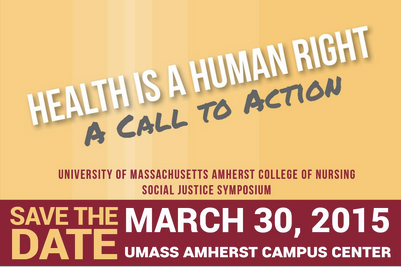
Social Justice Symposium – UMass Amherst, March 30, 2015


The UMass Amherst College of Nursing is proud to present this one-day interdisciplinary symposium providing an opportunity to engage with local and global practitioners of social justice health and health care. UMass_Amherst_College_of_NursingThis is one of the first nursing initiatives  providing an opportunity to engage with local and global practitioners of social justice health and health care.

Registration is now open!  Registration is $50 ($15 students), and includes breakfast and lunch

Download the Symposium flyer to see more program details, including snippets about all of the speakers!

The symposium will feature:
• Digital Storytelling in Social Justice led by the nationally acclaimed Center for Digital Storytelling. Daniel Weinshenker, the Center’s Midwest Director, specializes in developing projects that explore the impact of digital storytelling for youth and areas within the health sector.
• Break-out sessions by leading population-based scholars and practitioners on areas such as aging, diversity, violence, and sexual and reproductive health rights.

A Nursing Textbook Worthy of NurseManifest Endorsement


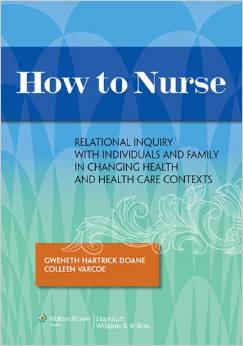
Several months ago I had the honor of writing the Foreword to a new nursing textbook by Gweneth Hartrick Doane and Colleen Varcoe titled “How to Nurse: Relational Inquiry with Individuals and Families in Changing Health and Health Care Context.” In their Preface, they state the goal of the text very clearly – one that reflects elegantly the ideals of the Cover How to nurseNurseManifest vision:

“Our goal is to help readers engage in a thoughtful process of inquiry to more intentionally and consciously develop their knowledge and nursing practice, develop their confidence and ability to act in alignment with their nursing values, and to navigate the complexities of contemporary health care settings as they care for patients and families.” (p. x)

There are particular features of the book that are notable from “NurseManifest” perspective.  One is that the book accomplishes something typically missing in textbooks – it fully engages the reader as a participant.  In essence, the book “models” the title — it is relational.  Throughout the book there are features that engage the reader in the content, for example encouraging the reader to “try it out” and providing guidelines for “this week in pracice.” The “Relational Inquiry Toolbox” features at the end of most of the chapters provide guidance for the reader in focusing on using the tools presented in the chapter in practice.  For example, at the end of Chapter 2 – one of the tools is to “Enlist a critical feminist filter to see how gender dynamics are intersecting with other forms of oppression and affecting health and health care.”

In short, this is a marvelous book.  Get your copy today .. even as a person who is not enrolled as a nursing student, I guarantee you will learn a lot and see vast possibilities for nursing that will amaze you!

Alchemic Reflections of Nurse Manifest Project 2014 and Beyond


This post is contributed by Dr. Wendy Marks

The Nurse Manifest project is a collective work in progress. I encourage nurses around the globe to join the cause and become social activists working towards partnership and emancipation in healthcare practice, education, research and policy.

Reflecting upon the achievements in the nursing profession for 2014, I consider the Manifesto’s Mission:

A Call to Conscience and Action

  • To raise awareness
  • To inspire action
  • To open discussion of issues that are vital to nursing and health care around the globe.

2014 was a year of nurses raising their awareness of issues vital to nursing and healthcare around the globe. From Ebola, to poverty and violence, nurses are at the frontlines addressing personal and public health concerns around the world.

2014 saw expanding roles of nurses with the abolition of practice barriers for Advanced Practice Nurses to meet growing healthcare demands in many States.

The American Nurses Association is a great place to find resources for advancing the profession http://www.nursingworld.org. One great initiative is from the Bedside to the Board Room; where staff nurses are educated to create policy change.

I encourage nurses to read, reflect upon and utilize the ideas from the articles, books and doctoral dissertations citing the project https://nursemanifest.com/resources/.

Change happens when we reflect and transform of values, beliefs and actions. As we close 2014 and open 2015, I encourage nurses around the globe to see and say what nursing is and can be. Create the world you want to live in.

As nurse manifestors we are looking for new thought, bravery, compassion, and alchemy.

The poem Not Here by Rumi illuminates our work and mission:

Not Here

There’s courage involved if you want to become truth.
There is a broken-open place in a lover.
Where are those qualities of bravery and sharp compassion in this group?
What’s the use of old and frozen thought?
I want a howling hurt.  This is not a treasury where gold is stored; this is for copper.
We alchemists look for talent that can heat up and change.  Lukewarm won’t do.
Half-hearted holding back, well-enough getting by?
Not here.

From Soul of Rumi by Coleman Barks

Go forth nurses in 2015 and bring peace, comfort, care, love and alchemy!

newYear