Now, seeking meaningful avenues for action, we choose to identify ourselves with the heritage and future of nurses. From nursing history we have learned the fullness of our own potential as nurses, the strength of nurses, the effect of nurses in communities and to individuals. We have seen our own common self interest, and common oppression. Having found these authentic bonds as nurses, we realize we can rely on each other as we seek conscience-based action to shape a new future for nursing and for health care (Cowling, Chinn, & Hagedorn, 2000, paragraph 4).
This is another excerpt form the Nurse Manifesto, a document that calls us as nurses to create avenues of change for the future of the profession. As I reflect upon this excerpt, and our identity as a profession. Where did we come from and where are we headed? How can history inform the future of our profession, and how is it we can come together to create meaningful change?
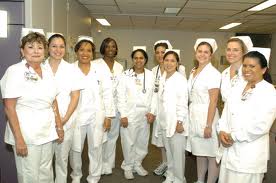
Nurses Honor the Past By Wearing Caps For A Day
In 2002, I wrote an article about the nursing shortage and how in some respects, the profession has created our oppressive cycle by not coming together to empower ourselves and take control of future and our practices (Clark, 2002). Perhaps reflective of the greater culture, we tend to enact lateral violence, and repeat actions that keep us divided over our differences versus united in the quest to provide the greatest healing opportunities for our patients. We see that our own oppression grows, as we widen the gaps between administration/ managers and practicing nurses, and the dominance of nurse educators over students. Focusing on our differences, creating small factions, failing to care for ourselves, not committing to being lifelong learners, and spreading ourselves thin all contribute to our professional oppression and keep us from focusing on our common goals.
I believe that we can each start right where we are at. The first step is caring for yourself that you may also better for care for others, patients and colleagues alike. Creating work environments of healing and caring is a common goal we can share and explore together on the local level. We can commit to creating a consciousness for change in nursing and healthcare.
As the over-arching professional organization, it would be wonderful if the American Nurses Association could begin to bring us together on a national level. It seems the state nursing associations on many levels are more likely to create local action, but they also need assistance in gaining participation and increasing membership numbers. In my small state of Maine at our statewide meeting last year a quorum was not established as there simply were not enough members present to meet that mark.
I imagine a professional world where each donate some of our time every year toward taking action on the local-statewide level, whether that is writing a letter to congressional representatives, or serving our larger communities, or perhaps sharing our expertise about the human experience. I have served on the local school board, where I helped to foster much-needed changes in the kitchen and the nutritional program, and now I serve on the early education advisory council in my town, where I share and learn about childhood development and teaching and evaluation skills. Churches are another great place to provide healing services and demonstrate your expertise as a nurse. Serving in communities helps us to unit with the community and our patients; this unification process can also foster change as we grow our partnerships and empower communities and individuals toward creating the healthcare system of the future.
One great way to come together is to join a specialty nurses association and attend their conference. I have found great comfort, support, and enthusiasm in the American Holistic Nurses Association; it is rejuvenating to leave the conference and begin to take action based on what was learned there. I have found that the AHNA has a great commitment to changing the future of the nursing profession, and empowering nurses on a meaningful manner.
Lastly, how do we empower the future nurses to realize the potential of our profession? They must understand the path that nursing has traveled, the change process, self-care, and their potential contribution to the unveiling of the new paradigm of healing in our future.
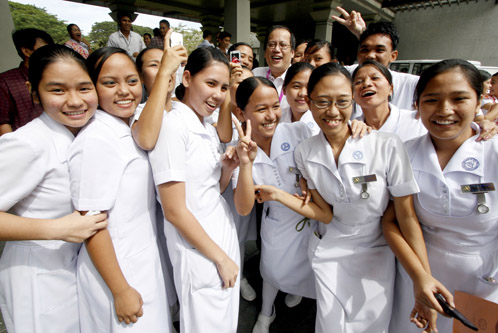
Nurses in the Future
References:
Clark, C. S. (2002). The nursing shortage as a community transformational opportunity. Advances in Nursing Science, 25(1), 18-31.
Cowling, R., Chinn, P.L., & Hagedorn, S. (2000). The Nurse Manifesto.
Retrieved August 12, 2011 from
http://www.nursemanifest.com.