What are nurses saying?


I have been intrigued lately with what nurses are saying in public arenas and how it reflects our practices. Many nurses blog or journal about their work, and while some of it serves to accurately portray the workplace issues we face, some of it may also be damaging to our profession and our image, serving to keep us stuck and in need of emancipation versus moving us toward freedom and autonomy as a profession.

Take the following blog post, created by a nurse known only as Brownie3,  which seems at first glance to portray some of the issues we face as nursing. http://brownie83.hubpages.com/hub/10-Things-Nurses-Dont-Want-You-to-Know

Despite it’s title of “10 Things Nurses Don’t Want You to Know”, the blog reflects a keen desire to begin to inform and partner with patients, creating a venue for discussing with the public what nurses do. Why is it that we would perhaps not want our patients to know our profession and our challenges better? In many ways the blog clearly reflects the face of modern nurse as somewhat distanced and harried, un-empowered, and it provides background for why we must act in a reductionistic manner with our patients; we simply have too many demands, too much stress to “perform”, and legal constraints, such as on the use of patient names. The issues with pain medication and the nurse’s desire for the patient’s to be “sincere” in their needs reads very judgmental. However, my greatest concern is that the blog fails to portray what I believe we charged with as nurses: to provide caring, non-judgmental, presence at the bedside that supports the patient’s healing journey. There is no inkling of the idea that the nurse is there to share the journey and no clue to the idea that nurses are guided in their decisions by nursing theory and evidence based practices. Of course, as one of my colleagues pointed out, this is just one person’s experience, but when the statements are broadly placed to all of nursing, it becomes a concern for all of us professionally.

The next entry I looked at this week was from an intensive care nurse who wrote the blog as a fairly new graduate nurse. Diary of an Intensive Care Nurse begins to reflect the many troublesome issues nurses face in providing care in the highly technological world of the ICU: http://nypost.com/2012/12/09/diary-of-an-intensive-care-nurse/

While Nurse McConnell makes a clear portrayal of the issues in ICU around the country, there is something lacking here. One thing missing is the use of evidence to back up some of these statements; for instance there is some great evidence out there about what harm the ICU does, but it is not included here and in some ways the personal experience, while very valuable, could be better validated with use of data. Also, there is a lack of a solution; while the nurse calls for change in ICU settings, what and how that change might be is unclear. Again, there is plenty of evidence to suggest earlier palliative care and use of hospice at end of life greatly change end of life outcomes, and many more patients are opting for these services. My thought is that perhaps the writer is not yet keenly aware that these options exist and we should be striving toward greater use of these options for all people, or incorporating some of these more holistic and caring approaches into ICU type care.

While we want all nurses to have a voice, we also need to support one another in developing the best ways to express our concerns for the profession, and our plans for creating change. One thing I think is for certain: as nurses, we all should ideally support greater levels of education for our nurses, so that every nurses understands how evidence and theory drive practice, they each grasp the ethical implications of their practices, and they all can be supported in meeting their true call to nursing. The greatest joy in our profession is in the supporting of each patient’s healing capacity across the lifespan and through the death experience.

The “Evidence Debate” and the core of nursing


One of the “ideals and principles” in the nursing manifesto reads:

  • It is our firm conviction that there is a body of knowledge that is specific, if not unique, to nursing’s concerns and interests. We think that this knowledge is grounded in appreciation of wholeness, concern for human well being, and ways in which we accommodate healing through the art and science of nursing. We value theoretical and practical plurality with the centrality of nursing knowledge at the forefront of practice and knowledge development.

Advances in Nursing Science (ANS) has just published-ahead-of-print and article that is a wonderful current-day exploration related to this principle. It is titled “Particularizing the 36-3 coverGeneral: Sustaining Theoretical Integrity in the Context of an Evidence-Based Practice Agenda” Sally Thorne, PhD, RN, FAAN, FCAHS and Richard Sawatzky, PhD, RN.  You can download this article free while it is “ahead of print!”  So head to the ANS web site  to get your copy now!  There is already a very interesting dialogue on the ANS blog about this article!  So check it out and add your comments here, or on the ANS blog, or both!

On the nurse manifest project and creating change


I had the pleasure yesterday of presenting the NURSE #65X89 story to holistic nurses at the American Holistic Nurses Association.

We started the workshop with a brief grounding and centering exercise and moved on toward my reading the story. Then the participants had an opportunity to dialogue about the story and its meaning, and we then beagn some goal setting around creating the future of holistic nursing, one that exemplifies the values of the Nurse Manifesto, and also supports the vision of how nurse Jane in the story lives holistic nursing. For some participants, very concrete goals that were measurable emerged; for others what may have emerged was the need to do self care and find ways to let things go so that they can begin to realize holism and healing for themselves. As I have blogged about previously, it is a must that we have our own self-care in place if we are going to be able to create change in systems and the science of psychoneuroimmunology supports this need.

Meanwhile, the idea arose for us to perhaps collect more nurses’ stories, to do another round of Rogerian Narrative Inquiry Analysis on the stories of nurses, but I wonder about what differences may have emerged over the last 11 years. I suppose my concern is that the stories will continue to be reflective of the struggles of nurses and nursing toward emancipation, and I wonder if the new patterns emerging would be any different then the patterns we identified those years ago? Or perhaps the story of nursing is declining even further, and maybe I need to realize that perhaps this part of the chaotic change process, part of the bifurcation where a new pattern may emerge.

My intention from here is to stay in touch with these amazing holistic nurses, create ways to continue to communicate about their goals, use social media to stay connected, to share our light as we head back toward the institutions where darkness may seem to still rule and oppress our desires for healing and holism.

However, I wouldn’t be doing this work if I didn’t believe that a shift is possible, that light shall reign supremer, that healing is emerging… and so let’s all shift together.

Nurses striking: is it effective?


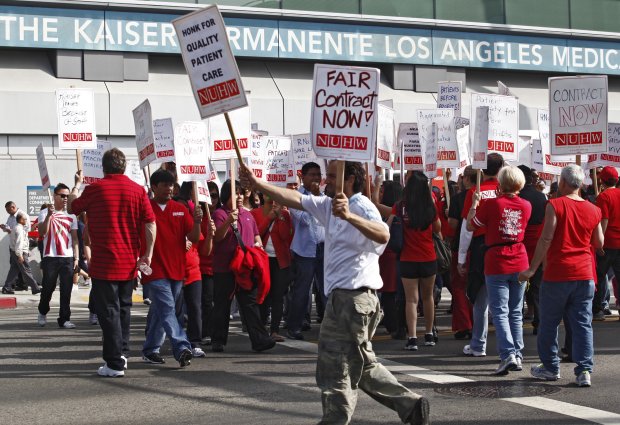
As many of you have likely heard, the nurses employed by Sutter Health in Northern California staged a strike on Thursday September 22, 2011 in protest over an increase in benefits costs and decreases to sick and vacation leave. ofhttp://www.forbes.com/feeds/ap/2011/09/23/general-us-calif-nurses-strike_8696370.html

While the non-profit Sutter Health has real profits in the near billion dollar range, we are left wondering why it is the nurses’ benefits are being cut even as the heads of the organization walk home with millions of dollars of “bonuses” each year.

http://www.bizjournals.com/sanfrancisco/news/2011/03/25/sutter-healths-2010-profits-surge-30.html

I think the nurses are in some respects justified in taking this stance and going on strike; they are working together to stand in solidarity (though up to 40% of the nurses at the various hospitals crossed the picket lines and reported to work). On the other hand, I feel that the strike does not create an atmosphere for discussion and dialogue that might be meaningful. This action in and of itself seems unlikely to create a path for communication between administrators, decision makers, and the nurses. The union itself also prevents much of this direct communication and may prevent the working nurses from communicating their concerns outside of the union’s presence.The strike does create some obstacles and safety concerns for patients, administrators, nurses crossing the strike line, and the replacement nurses.

I have thought a mass exodus of the nurses, or many immediate resignations, would be more effective, though highly unlikely to happen for obvious financial reasons. For each nurse who quit, Sutter would lose at least $60, 000 in training a new nurse to replace them. These expenses could add up very quickly if a good chunk of the nurses walked away from their positions. Sutter may have problems with hiring new nurses in relation to the higher costs of benefits, the reduction in vacation pay, and the elimination of paid sick leave. Paid sick leave can help to stop the spread of illnesses like the flu (have we already forgotten H1N1?), but perhaps I am digressing a bit here.

It would be interesting to poll the public and get their perception of striking nurses, professionalism, empowerment, and the image of nurses. From the current state of the media coverage, it is difficult to tell where the public stands on this.

We do know that the nurses have now been locked out until Tuesday, as at least two of the hospitals have a minimum contract of five days for their temporary staff contracts. These contracts are likely very expensive and in no way are saving Sutter any money, which was the reason given for changes in the benefits. http://www.baycitizen.org/blogs/quality-of-life/nurses-who-went-strike-told-not-come/

The issue of unions, strikes and walk-outs is prime for nursing researchers to continue to explore: what are the outcomes of strikes, do the nurses feel or experience a sense of empowerment through the process, what is the public’s perception of nurses’ unions and strikes, and so on.


Examining the Nurse Manifesto: Identifying with the Past and Future


Now, seeking meaningful avenues for action, we choose to identify ourselves with the heritage and future of nurses. From nursing history we have learned the fullness of our own potential as nurses, the strength of nurses, the effect of nurses in communities and to individuals. We have seen our own common self interest, and common oppression. Having found these authentic bonds as nurses, we realize we can rely on each other as we seek conscience-based action to shape a new future for nursing and for health care (Cowling, Chinn, & Hagedorn, 2000, paragraph 4).

This is another excerpt form the Nurse Manifesto, a document that calls us as nurses to create avenues of change for the future of the profession. As I reflect upon this excerpt, and our identity as a profession. Where did we come from and where are we headed? How can history inform the future of our profession, and how is it we can come together to create meaningful change?

Nurses Honor the Past By Wearing Caps For A Day

In 2002, I wrote an article about the nursing shortage and how in some respects, the profession has created our oppressive cycle by not coming together to empower ourselves and take control of future and our practices (Clark, 2002). Perhaps reflective of the greater culture, we tend to enact lateral violence, and repeat actions that keep us divided over our differences versus united in the quest to provide the greatest healing opportunities for our patients. We see that our own oppression grows, as we widen the gaps between administration/ managers and practicing nurses, and the dominance of nurse educators over students. Focusing on our differences, creating small factions, failing to care for ourselves, not committing to being lifelong learners, and spreading ourselves thin all contribute to our professional oppression and keep us from focusing on our common goals.

I believe that we can each start right where we are at. The first step is caring for yourself that you may also better for care for others, patients and colleagues alike. Creating work environments of healing and caring is a common goal we can share and explore together on the local level. We can commit to creating a consciousness for change in nursing and healthcare.

As the over-arching professional organization, it would be wonderful if the American Nurses Association could begin to bring us together on a national level. It seems the state nursing associations on many levels are more likely to create local action, but they also need assistance in gaining participation and increasing membership numbers. In my small state of Maine at our statewide meeting last year a quorum was not established as there simply were not enough members present to meet that mark.

I imagine a professional world where each donate some of our time every year toward taking action on the local-statewide level, whether that is writing a letter to congressional representatives, or serving our larger communities, or perhaps sharing our expertise about the human experience. I have served on the local school board, where I helped to foster much-needed changes in the kitchen and the nutritional program, and now I serve on the early education advisory council in my town, where I share and learn about childhood development and teaching and evaluation skills. Churches are another great place to provide healing services and demonstrate your expertise as a nurse. Serving in communities helps us to unit with the community and our patients; this unification process can also foster change as we grow our partnerships and empower communities and individuals toward creating the healthcare system of the future.

One great way to come together is to join a specialty nurses association and attend their conference. I have found great comfort, support, and enthusiasm in the American Holistic Nurses Association; it is rejuvenating to leave the conference and begin to take action based on what was learned there. I have found that the AHNA has a great commitment to changing the future of the nursing profession, and empowering nurses on a meaningful manner.

Lastly, how do we empower the future nurses to realize the potential of our profession? They must understand the path that nursing has traveled, the change process, self-care, and their potential contribution to the unveiling of the new paradigm of healing in our future.

Nurses in the Future

References:

Clark, C. S. (2002). The nursing shortage as a community transformational opportunity. Advances in Nursing Science, 25(1), 18-31.

Cowling, R., Chinn, P.L., & Hagedorn, S. (2000). The Nurse Manifesto.
Retrieved August 12, 2011 from
http://www.nursemanifest.com.