The Washington State Nurses Association (WSNA) is leading the way!
WSNA joins lawsuit to restore access to federal health resources
The Washington State Nurses Association (WSNA) is leading the way!
WSNA joins lawsuit to restore access to federal health resources
Contributor: Binita Thapa*
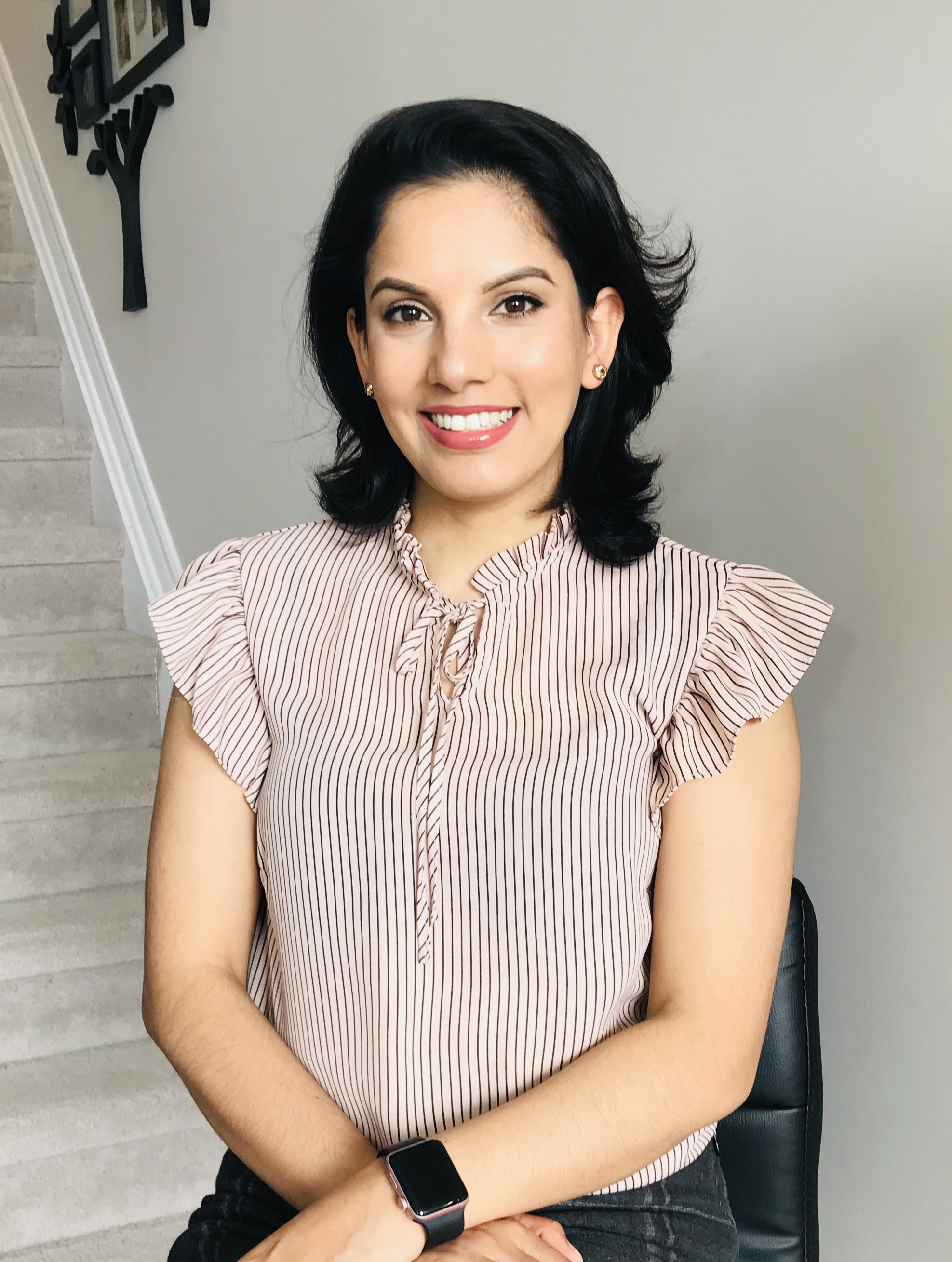
This poem has been inspired by my experiences of racism and discrimination in healthcare and nursing education. In the first part of this poem, I portray my experiences of discrimination in healthcare starting from the ambulance’s refusal to take me to the hospital to nurses under recognition of my pain, all due to ongoing appendicitis. I later illustrate an experience of racial discrimination in the form of exclusion as a Masters student in my school. These experiences were pivotal in not only making me realize the racialized world that I was a part of yet I did not acknowledge and recognize for a very long time but was significant in radically changing the trajectory of my thesis from end-of-life care to racism in nursing. These racialized experiences undoubtedly lowered my confidence and belonging, further oppressing me at times but was also a final thread to my unbearable urge to fight for social justice in nursing. I have now healed myself from these racial injuries with the validation, support, and mentorship from many allies and minority nurses. I am also proudly liberated from oppression. However, nursing education and healthcare continue to become a hostile place for racialized nurses and this poetry piece is a starting point of my reflective activism in fighting systemic racial injustices in nursing.
I open my eyes, I see my partner scream at me begging me to wake up
I see myself lying on the kitchen floor
Cannot recall where I was before
His eyes so desperate, his voice shaken, and his soul fragile
Never had I seen him so agile
Ambulance arrives with such an ease
So were the paramedic attendees
He tells me that I cannot be served sounding reserved
My unbearable pain did not matter, not enough to receive attention
I question myself, why am I an exemption?
His disengaged eyes and white skin
Nice racism as it is, nothing less than a brutal sin
Would my pain ever matter?
Will my pain ever be enough?
I could see my shadow and my feet yet I am unnoticeable
I am just a brown immigrant and my superpower is to be invisible
I stand there in front of my nurse in the hospital three feet away
Hoping that he would look at me without delay
He is sharing jokes with his colleagues
As if that is one of his side gigs
I question to myself: why aren’t his jokes funny to me?
Or is it my pain that is more bothersome to me
I bend down to put my hands on my knees
That is all I have to support my unease
I talk to myself inside my head ‘don’t fall’
‘Please can someone give me a medication to relieve this downfall’
I am clearly visible yet unseeable
Proof are these blank stares of disapproval
I could see my shadow and my feet yet I am unnoticeable
I am just a brown immigrant and my superpower is to be invisible
I sit there in a chair in front of my nursing professor
Her evil smirk, I still clearly remember
She proceeds to tell me that I do not belong here in nursing
Her words come out in such ease
As if dehumanizing racialized students was her expertise
All I hear in my soul is how dare that I am ambitious
Making my white professor have this urge to be this malicious
I walk outside her office, trying to make sense of the event that made me so nauseous
I could feel the warmth of my face increasing
As if my body and mind is exploding
The feeling of being unwanted and unwelcomed is suffocating
The proud nurse that I am but this feels humiliating
I could see my shadow and my feet yet I am unnoticeable
I am just a brown immigrant and my superpower is to be invisible
I question to myself ‘why me’?
Why don’t I have the courage to say ‘try me’?
A realization that racism and discrimination will be never-ending
A choice at hand either oppression or liberation
Oppression appears familiar, expected, and feasible
Liberation seems disobedient, challenging, and impossible
I desire love and humanity
I choose liberation and nonconformity
I refuse to be dehumanized by thousand cuts
I refuse to be silenced, asserts my blood and guts
The invisible brown immigrant is now awake
Unwilling to go back to sleep
She fights, persists, and continues to exist
Unaccepting to be dismissed
She now sees her shadow and her feet, and fights to be noticeable
She is now an empowered brown immigrant regardless of white disapproval
And, her superpower is her non-negotiable demand to be visible
My name is Binita Thapa, an immigrant, a daughter of immigrant parents, an internationally educated nurse, and the first university graduate in my family. I completed my Practical Nursing degree from Centennial College followed by BScN from Ryerson University. I am currently a PhD in nursing student at the University of Ottawa. I am deeply passionate about social justice in nursing. As a woman of colour in nursing education and someone who endlessly faces systemic marginalization and racialization in my nursing school, my goal is to continue to have a voice for myself and for other racialized students. My doctoral thesis is focused on developing a post-colonial and anti-racist foundation for graduate nursing curriculum at the University of Ottawa.
Piri Ackermann-Barger, who is working with other Nursemanifesters on projects to  promote civility in nursing, is presenting a webinar “Improving Student Wellness by Understanding Microaggressions” on April 9, 2019 from 3:00 PM – 4:00 PM ET. This webinar is sponsored by the nursing Campaign for Action – the nation-wide initiative to put into place the “Future of Nursing” recommendations issued in 2012.
Piri is an assistant clinical professor at the University of California Davis Betty Irene Moore School of Nursing, and co-director of the Center for a Diverse Healthcare Workforce and the Interprofessional Teaching Scholars Program, both at UC Davis. She is also an adviser on diversity issues for the Campaign for Action.
Visit the Campaign for Action website to learn more and to register for this event! There is no cost, but you need to register to attend!
The 2017 U.S. Executive Branch is taking steps that will have an effect on the health and well-being of all who reside within the borders of the United States, and of all people worldwide. At this moment in history, we call upon nurses to stand together, act to resist that which harms health and well-being, protect those who are harmed, and build coalitions that move toward the ideals we seek. We stand on a long legacy of political activism by nurses that arises from our moral imperative to actively promote public policy to assure social/health equity. Our actions are grounded in the premise that health and well-being depends on healthy environments and just communities. We pledge to join with others to engage in determined action to protect health and justice for all, regardless of age, social/economic circumstance, religion, skin color, race, sexual orientation or gender identity.
As nurses, we are committed to provide care for all people – care that promotes and supports high level wellness, prevention and treatment of injury and disease, and restoration of health when it is compromised.
We oppose all actions that contribute to damage and erosion of the earth’s ecosystem and the physical structures which we inhabit. We will promote, protect, and support actions toward healthy and sustainable structural and natural environments for all the earth’s inhabitants.
As nurses, we are committed to caring for all patients and families, regardless of economic status, sexual orientation/gender Identities, current immigration status, age, ability to pay, or spiritual/religious beliefs/practices (or lack thereof).
We commit to protect and care for those whose safety and well-being is threatened based on gender, race, ethnicity, nationality, sexual identity, physical ability, economic status, or any other attribute seen as “difference.” We will take public stands opposing any attempt to weaken public policies and programs designed to protect health and well-being of those who are disadvantaged. We will fight for policies and programs that assure equality and justice.
We will act to protect any who are victims of intimidation and violence, particularly those who are vulnerable because of skin color, race, sexual orientation, gender identity or religion. As nurses, we nurture peaceful resolution of conflict and support those who step up to intervene peacefully in situations of threat and danger.
We will act to assure that all women receive the full range of care that assures their right to control their own reproductive choices as well as all women’s healthcare services needed to maintain their own health and the health of their families.
We examine all sources of evidence to inform the choices we make in caring for those we serve. We can assure the public that we practice from a firm foundation of sound and reliable scientific evidence. We will take all steps needed to inform the public of the science that supports our practices.
We invite all nurses, and our colleagues who support our values, to join us in declaring these values and actions by signing this declaration. You can add your signature to this document here. We invite you to use this declaration as you wish, and revise to suit your own purposes. Let us know of your actions, follow #nursesresist, and join our Facebook group.
Contributing authors:
Carey S. Clark, PhD, RN, AHN-BC
Peggy Chinn, RN, PhD, FAAN
Elizabeth Berrey, PhD, RN
Lisa Sundean, RN, MS, PhD Candidate
Adeline Falk-Rafael, PhD, FAAN
Leslie Nicoll, PhD, PhD, MBA, RN, FAAN
Sue Hagedorn, RN, PhD, FAAN
Thank you to the Cambridge Health Alliance for inspiration!
If you would like to co-sign your name to this declaration, please provide your information using this form. The list of co-signatories will be updated as frequently as possible.
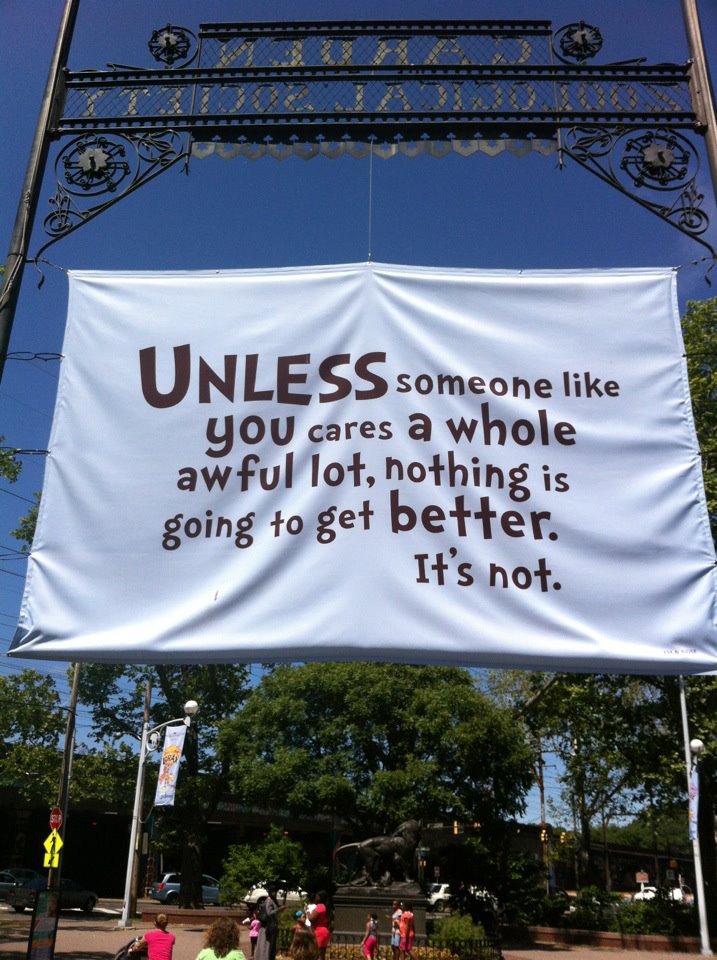
a quote from The Lorax by Dr. Seuss
You are invited to comment, collaborate, and co-create a global NurseManifest research project, to be carried out later this year.
Previously in 2002 and 2003 we asked nurses what it was like to practice nursing, and what changes they envision to create the conditions for ideal practice, using emancipatory methods.
For 2016 I propose we explore the topic of excellence in nursing care, from the perspective of patients and caregivers, using Appreciative Inquiry.
With a blog readership of over 7,500 people, we now have the capacity to carry out the international study envisioned by the NurseManifest Project founders over a decade ago, and make a global impact through our collective action.
Some critical questions we might ask include:
Some opportunities to participate include:
Some ideas for dissemination:
Please add your ideas in the comments section below this blog entry or write to Olga Jarrín at olga.jarrin@rutgers.edu by June 1, 2016 – in time to have a shared protocol and IRB approval in place for interviews and focus groups to begin in September, 2016.
For more information about Appreciative Inquiry see the website: Appreciative Inquiry Commons. Case Western Reserve University, Weatherhead School of Management. April 18, 2016. *Note: This repository of information Includes Appreciative Inquiry resource materials in 22 languages. https://appreciativeinquiry.case.edu
 NurseManifest