A Nursing Textbook Worthy of NurseManifest Endorsement


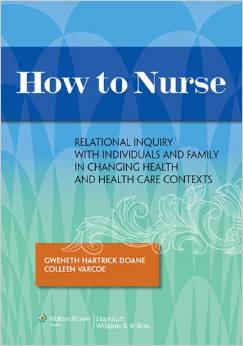
Several months ago I had the honor of writing the Foreword to a new nursing textbook by Gweneth Hartrick Doane and Colleen Varcoe titled “How to Nurse: Relational Inquiry with Individuals and Families in Changing Health and Health Care Context.” In their Preface, they state the goal of the text very clearly – one that reflects elegantly the ideals of the Cover How to nurseNurseManifest vision:

“Our goal is to help readers engage in a thoughtful process of inquiry to more intentionally and consciously develop their knowledge and nursing practice, develop their confidence and ability to act in alignment with their nursing values, and to navigate the complexities of contemporary health care settings as they care for patients and families.” (p. x)

There are particular features of the book that are notable from “NurseManifest” perspective.  One is that the book accomplishes something typically missing in textbooks – it fully engages the reader as a participant.  In essence, the book “models” the title — it is relational.  Throughout the book there are features that engage the reader in the content, for example encouraging the reader to “try it out” and providing guidelines for “this week in pracice.” The “Relational Inquiry Toolbox” features at the end of most of the chapters provide guidance for the reader in focusing on using the tools presented in the chapter in practice.  For example, at the end of Chapter 2 – one of the tools is to “Enlist a critical feminist filter to see how gender dynamics are intersecting with other forms of oppression and affecting health and health care.”

In short, this is a marvelous book.  Get your copy today .. even as a person who is not enrolled as a nursing student, I guarantee you will learn a lot and see vast possibilities for nursing that will amaze you!

Alchemic Reflections of Nurse Manifest Project 2014 and Beyond


This post is contributed by Dr. Wendy Marks

The Nurse Manifest project is a collective work in progress. I encourage nurses around the globe to join the cause and become social activists working towards partnership and emancipation in healthcare practice, education, research and policy.

Reflecting upon the achievements in the nursing profession for 2014, I consider the Manifesto’s Mission:

A Call to Conscience and Action

  • To raise awareness
  • To inspire action
  • To open discussion of issues that are vital to nursing and health care around the globe.

2014 was a year of nurses raising their awareness of issues vital to nursing and healthcare around the globe. From Ebola, to poverty and violence, nurses are at the frontlines addressing personal and public health concerns around the world.

2014 saw expanding roles of nurses with the abolition of practice barriers for Advanced Practice Nurses to meet growing healthcare demands in many States.

The American Nurses Association is a great place to find resources for advancing the profession http://www.nursingworld.org. One great initiative is from the Bedside to the Board Room; where staff nurses are educated to create policy change.

I encourage nurses to read, reflect upon and utilize the ideas from the articles, books and doctoral dissertations citing the project https://nursemanifest.com/resources/.

Change happens when we reflect and transform of values, beliefs and actions. As we close 2014 and open 2015, I encourage nurses around the globe to see and say what nursing is and can be. Create the world you want to live in.

As nurse manifestors we are looking for new thought, bravery, compassion, and alchemy.

The poem Not Here by Rumi illuminates our work and mission:

Not Here

There’s courage involved if you want to become truth.
There is a broken-open place in a lover.
Where are those qualities of bravery and sharp compassion in this group?
What’s the use of old and frozen thought?
I want a howling hurt.  This is not a treasury where gold is stored; this is for copper.
We alchemists look for talent that can heat up and change.  Lukewarm won’t do.
Half-hearted holding back, well-enough getting by?
Not here.

From Soul of Rumi by Coleman Barks

Go forth nurses in 2015 and bring peace, comfort, care, love and alchemy!

newYear

Nurses are again at the top of the Gallup Poll!


Americans_Rate_Nurses_Highest_on_Honesty__Ethical_StandardsPolling data are difficult to interpret, but the fact that nurses consistently rank at the top of the Gallup Poll on “honestly & ethical standards” reflects a persistent public opinion about nurses that contradicts the negative media images of nurses that also persist over time.  Here is what the Gallup folks say about this finding:

Nurses have topped the list each year since they were first included in 1999, with the exception of 2001 when firefighters were included in response to their work during and after the 9/11 attacks. Since 2005, at least 80% of Americans have said nurses have high ethics and  honesty. Two other medical professions — medical doctors and pharmacists — tie this year for second place at 65%, with police officers and clergy approaching 50%.

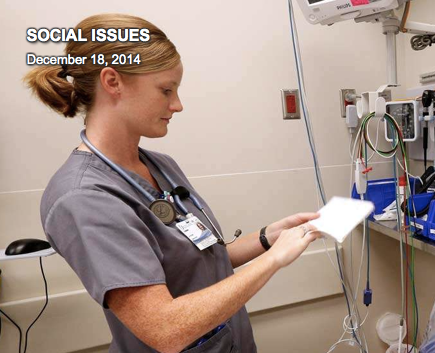
This poll was announced on December 18th, 2014, along with the image above that portrays a professional, technically capable nurse.  So this is good news – perhaps a bit puzzling – but a positive note on which to close out 2014!

NPR Blog features article by Nurse Kelli Dunham!


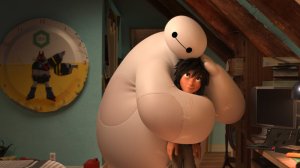
Check out today’s post on the NPR blog post by Kelli Dunham titled Why Does It Take A big-hero-6_wide-81c8fe593498a408c0004836aabe11fa32e276ce-s800-c85Movie Robot To Show What Nurses Really Do? Kelli uses the character Baymax robot character in the movie Big Hero 6 to examine message about what nurses really contribute to health care!

Kelli’s message will reach a wide audience of folks and sends a clear message that is so in line with what we are working toward with the NurseManifest project!  Check it out, and share your responses to Kelli’s post here as well as on the NPR blog!

Registered Nurses are Ebola Fighters and Scientists/Researchers


Co-authored by Kimberly Baltzell, Director, University of California San Francisco School of Nursing, Center for Global Health.

Registered nurses are many of “The Ebola Fighters,” which just last week TIME magazine named as the 2014 Person of the Year. To the vast majority of people, registered nurses deliver health care to persons who are sick. We’re glad that we’re honoring these individuals. Direct, hands-on patient care work is hard, and the personal risk to health care providers is great.

In general, this is how people view registered nurses — in scrubs, providing care that physicians prescribe. What’s not as evident is that there are other aspects of nursing — that is, that registered nurses have their own practice independent of physicians, and that registered nurses can get Ph.D.s in nursing and then systematically find ways to improve how health care is delivered. It’s this second point — registered nurses as scientists/researchers that we would like to discuss.

Both of us are Ph.D. registered nurses and both of us are scientists/researchers. We each have heard the following statements when someone hears that we have Ph.D.s in nursing, “a Ph.D.? Why not just go to medical school?” or “I didn’t know you could get a Ph.D. in nursing.” In these moments, we explain how nursing practice is distinct from medical practice and that a Ph.D. is a research degree and an M.D. is a practice degree. We say, “Yes, Ph.D.s in nursing exist” and this is what we do.

Here are some examples of the kinds of research that nurse researchers/scientists have conducted, which have resulted in improvements in care — In an emergency, a fighter pilot may reach for a mask to determine if his/her oxygen levels are dangerously low. If a women giving birth in Zambia begins bleeding profusely, a simple Velcro bodysuit designed to apply pressure and stop the bleeding may be used. A patient undergoing cardiac surgery has a greater chance of survival in a crisis due to new resuscitation standards. Cancer patients outcomes may be linked to clusters of symptoms, giving the health care provider important clues on what type of treatment to prescribe.

All of these creative solutions to critical problems involved nursing research, nursing science. You thought the role of a nurse is to deliver care at the bedside or in the community. That is true, however, that work at the bedside or in a community gives nurses a bird’s eye view of what needs to be fixed or improved. These same nurses may then go on for more education culminating in the terminal degree — a Ph.D. in nursing. These Ph.D. nurses design and conduct studies that help enhance health, decrease suffering, and improve the quality of health care. Nurse scientists work on real life problems in virtually every area of healthcare, in every setting, in every country.

The U.S. government may be recognizing the value of investing in nursing. In fact, last week the House of Representatives passed a bill which impacts nursing and health care. Additional funds have been designated for Ebola preparation and treatment, both here and in West Africa. Importantly, there are increases in funds for both advanced nursing education and nursing research through the National Institutes of Health.

So, if you or someone you care about has benefited from modern day health care, chances are a nurse researcher/scientist was involved in the design or innovation. In fact, those hands that care for you at the bedside may well be delivering interventions pioneered by a nurse scientist.

This blog was originally posted on Huffington Post on December 17, 2014.