The Prison System and Social Justice


I recently came across an article in the New Yorker entitled Madness by Eyal Press. The full article can be viewed here: http://www.newyorker.com/magazine/2016/05/02/the-torturing-of-mentally-ill-prisoners. The article looks at one Florida prison, where mentally ill patients have suffered horrible mistreatment by the prison system. Our largest provider of healthcare for the mentally ill in the United States is the prison system, and yet our leading mental health researchers and providers tend to shy away from or ignore this enormous vulnerable population.

I will warn you that you may find aspects of the Madness article disturbing, and it leads us as nurses to consider many social justice issues, including the right to adequate care, proper diagnosing, safety, and support for health and healing. As the United States has the highest incarcerated population of any country, nurses need to consider how we as a society and a culture care for and treat our very vulnerable mentally ill population. The challenges of advocating for these prisoners and one’s own potential vulnerability when working in this system are clearly highlighted in the Eyal Press article. Until we recognize the mentally ill incarcerated population as traumatized human beings in need of deep caring and support as they proceed along their own healing journey, true transformation of our systems toward ones that can offer rehabilitation and reduce recidivism may remain elusive.

I also found this article to be heart wrenching on a personal level. My brother died in prison at the age of 45, and the unit where he died is indeed either this particular unit as described in the Madness article, or one very similar to it in Florida.

My brother Bryan was a star elite athlete in his youth, holding a national age-group track record set at the Junior Olympics when he was around 15 years old. After sweeping many state championships in high school track, he received an athletic scholarship to a school in the midwest, and while he had been a “difficult hyperactive child” deeper signs of his mental illness began to emerge. He ran up huge gambling and credit care debts, and one Christmas he returned home from school having lost about 25 pounds with no good explanation for why this had occurred.

When he was about 25 years old and had finished college, Bryan had a full psychotic breakdown. He spent several months in a psychiatric facility as they strived to diagnosis and stabilize him. My brother was bipolar with schizoaffective disorder, and sometimes his life was relatively calm, like when he married his first wife and they dreamed many dreams together….other times not so much, like when in the midst of another psychotic break he held a knife to his first wife’s throat; or the time he totaled his own car using his own hands and a crowbar; or when he was found running naked on the Nike compound in Oregon.

In 2008 Bryan went off his medications for unknown reasons. He became incredibly manic, delusional, and he was certainly having hallucinations. He left his wife and young daughter and moved into a shelter setting, which he was kicked out of due to fighting with others. Simplifying the story a bit, I will just say that he was found tampering with his estranged wife’s car at her place of work and the police were called; a high speed chase ensued and my brother was charged with aggravated battery with a deadly weapon (I believe he struck one of the officers with something once his car was forced to a stop), aggravated fleeing and eluding police, and resisting an officer with violence. About two months after his arrest, upon the advice of his free public attorney, my brother took a plea deal and he was sentenced to 3 years in the Florida State Prison System. I believe his mental illness, which he had been struggling with for over 20 years, was never clearly considered in the charges or in his placement. The copy of his charges is here: https://bailbondcity.com/fldoc-inmate-CARROLL/130350 .

As sometimes happens within families of those suffering from mental illness, my brother and I had been estranged on and off for most of our adult lives. My brother would sometimes become violent, threatening, and manipulative when he was off his medication, and I desired a peaceful life for me and my young family. Our childhoods were traumatic, and while I can’t speak for my brother, my adverse childhood experiences were a “5”/ 10, which indicates trauma to the point of potentially having adverse effects on health and low stress resilience. I am certain that my brother also had a high ACES score, and that his mental health issues were compounded by our traumatic youth and family life. [If you want to learn more about how adverse childhood experiences impact one’s health, I have presentation that covers that here, slide 16 begins the information around the ACEs concepts: https://voicethread.com/myvoice/#thread/4492225/22882928/24864974   }.

Due to our previous estrangement and my own challenges with balancing caring for a newborn baby and toddler, and working as an adjunct nurse faculty for several different schools, I did not reach out to my brother prior to his incarceration or during that time, though we had been in touch on and off for the three years prior, when our mother had passed away suddenly from a massive MI. So, my father and stepmother kept me informed of Bryan’s prison life and while they did not visit him, they often scanned and forwarded his letters to me. It was clear to me that during his less than one year in prison, he declined rapidly; he claimed to be taken off all of his medications and we know he was transferred to a psychiatric unit (either the same one in this article or another one like it). In the two months prior to his death, he mentioned several times that he was dying or he was going to die, that things were very bad in prison. I encouraged my stepmother and father to reach out to him and the system, which they did not do, and I found that since I was not on Bryan’s “list” I had no rights around communication with him and within the system.

Via an email on the morning of March 28, 2009, I found out that Bryan had died in prison. The official county coroner’s autopsy stated that at the age of 45 Bryan had died of “moderate heart disease”, though it contrarily also noted no signs of stroke or MI. As his sister, I had no rights to request or pay for a second independent autopsy, and my family refused to have one performed, instead opting for an immediate cremation. Over the 7 years since his death, I know I have been suffering from complicated grief; I have felt powerless to create change in the prison system and sometimes I have felt scared to use my voice to call for change and for social justice in the way we manage the health of our growing prison population. I have felt fearful of being stigmatized and ashamed for having a relative who was incarcerated.

However, when I think of the many social justice issues the Madness article brings up, I begin to feel angry; and that anger is now motivating me to speak out and find ways to support the creation of healing within our justice systems.

I know that part of my own healing journey involves moving beyond telling my brother’s story, and beginning to move toward taking action in supporting an end to the injustices our incarcerated vulnerable populations suffer. I recently have been in connection with a beautiful resource at the Maine Prison Hospice Project (http://mainehospicecouncil.org/?q=content/hospice-corrections-partnership-maine-state-prison ), and I hope to help support their research efforts around the benefits of prisoners being of service during and after their incarceration period. I hope to someday serve as an example of how nurses on their own healing path strive to heal in conjunction with others; with those whom we serve. Imagine what we can do when we truly believe we are all on this path together, as interconnected unitary human beings; then the movement toward social justice becomes a part of our calling on this life’s journey.


The Power of Nursing


On January 24th in the early morning hours my husband Brian woke me up because he said his left arm was hurting and he was nauseated.  After I gave him two aspirin we rushed to the ED of our regional hospital….He had a myocardial infarction in process.  The cardiac cath team was called, and an amazing interventional cardiologist performed a balloon angioplasty to open up the blocked artery.  After Brian was stabilized in the CVICU he was transferred to the CV Step Down unit to wait for surgery.  On January 29th the cardiothoracic surgeon performed a CABG x 4 and Brian was discharged on February 3rd.  It was quite an ordeal.  There are always lessons we learn when we are the recipients of health care.

As you can imagine this has been a life-altering event for both of us. During this critical time every person that we encountered and every circumstance that occurred, big and small, mattered to us.  I can honestly say that Brian and I experienced the most excellent care that I could ever imagine, and this made a significant difference in his healing and my experience as a family member.

The nursing staff at this hospital were wonderful. We know that nurses are the heart and soul of any hospital. Every single nurse that we encountered was knowledgeable, skilled, attentive and compassionate.  They were truly person and family-centered.  Every one of them asked how she/he could be helpful to us.  Watching the nurse caring for Brian immediately after surgery in the CVICU was amazing to me.  It was like watching the conductor of a symphony.  Her technological competence was incredible…she monitored everything moment by moment, while continuing to focus on Brian as a person experiencing this critical event, and on me as a wife fearful of what was happening.  When I was waiting for news of Brian’s condition during surgery, several of the staff stopped in to encourage me and to give me updates if they could.  This was so meaningful to me.  When Brian was recovering, the CVICU staff pushed and encouraged him and did anything they could to make me comfortable.  All the staff on the step-down unit exquisitely cared for Brian, supported us and made us feel “at home”.  I’m so grateful to the nursing staff for creating the healing environment where this level of care happens.

We often hear about the horrors of poor nursing care, so I wanted to share this story of hope and encouragement with everyone.  I am so proud to be a nurse because of the profound difference we make in the lives of people in the most vulnerable moments of their lives.  Yes, our cardiologist and surgeon saved Brian’s life, but the nurses were equally biogenic (life-giving) to both of us.  They preserved our dignity, prevented complications, prepared us for discharge, facilitated a smooth transition, allayed our anxieties, relieved our pain, provided comfort, lifted our spirits with laughter, gave us critical information, challenged him to do more than he thought possible, instilled hope for the future, involved us in choices, and took the time to listen to our fears and rants.

P.S. Brian is in cardiac rehab now and is recovering.

Never ever ever underestimate the power of nursing. We transform lives by healing through caring.

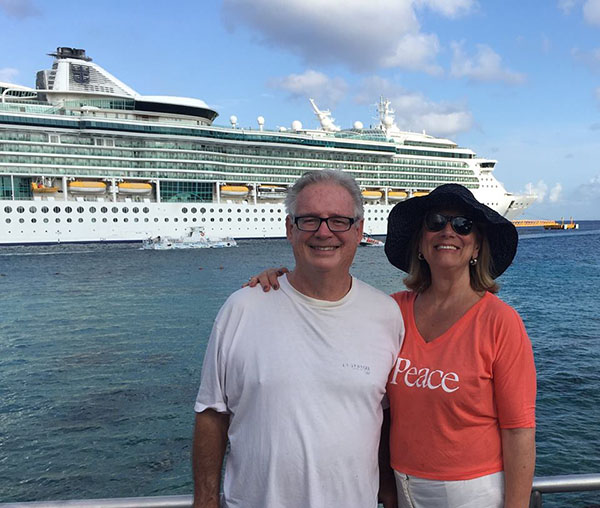
Celebrating recovery with Brian!

Celebrating recovery with Brian!

Call to Action for 2016 NurseManifest Study: Request for Co-Creators


40

a quote from The Lorax by Dr. Seuss

You are invited to comment, collaborate, and co-create a global NurseManifest research project, to be carried out later this year.

Previously in 2002 and 2003 we asked nurses what it was like to practice nursing, and what changes they envision to create the conditions for ideal practice, using emancipatory methods.

For 2016 I propose we explore the topic of excellence in nursing care, from the perspective of patients and caregivers, using Appreciative Inquiry.

With a blog readership of over 7,500 people, we now have the capacity to carry out the international study envisioned by the NurseManifest Project founders over a decade ago, and make a global impact through our collective action.

Some critical questions we might ask include:

  • What is like to be the recipient of excellent nursing care?
  • What specifically about your nursing care experience made it excellent?
  • How would healthcare be different if every nursing interaction was excellent?
  • What would it take to create a healthcare system where excellent nursing care is the norm?

Some opportunities to participate include:

  • Host a conversation group with patients and family members who have received care from a single health care organization or network of providers.
  • Host a conversation group with patients and family members who have received care related to a specific condition or life event.
  • Host a conversation with a community group, with co-workers, or even with your own family.

Some ideas for dissemination:

  • Present at national and international conferences in 2017
  • Develop a series of manuscripts for peer-reviewed journals
  • Turn the findings into a book
  • Use the findings to inform a public service campaign about nursing and policies impacting nurses

Please add your ideas in the comments section below this blog entry or write to Olga Jarrín at olga.jarrin@rutgers.edu by June 1, 2016 – in time to have a shared protocol and IRB approval in place for interviews and focus groups to begin in September, 2016.

For more information about Appreciative Inquiry see the website: Appreciative Inquiry Commons. Case Western Reserve University, Weatherhead School of Management. April 18, 2016. *Note: This repository of information Includes Appreciative Inquiry resource materials in 22 languages. https://appreciativeinquiry.case.edu


Nursing Students or Student Nurses: What’s in a Name


Recently, Jane Dickinson drew attention to the power of the language we use in her blogs examining language and health and in her argument to replace words that shame. It reminded me of another instance of language use that I believe to be inherently harmful – referring to nursing students as student nurses. This practice has been so widely used for so long that I can imagine many gasps and reactions, such as, “Well, that’s what they are; what else should we call them?” Why not nursing students? Is there a difference? I would argue there is a great difference.

I cannot think of one other group of students, health or otherwise, that is referred to with a similar moniker. We do not speak of student doctors, student lawyers, student engineers, for example. They are medical students, law students, engineering students. The lack of parallelism is the first indication that we should examine this practice.

When I “trained” to be a Registered Nurse in a hospital in the early 1960s, student nurses made up a large proportion of the hospital’s workforce. Student nurses were identified by their caps, first having none in the first 6 months, then after the capping ceremony, a white cap. Second year students were identified with a light blue ribbon on their caps, third year meant a dark blue ribbon, until finally Registered Nurses wore the coveted black ribbon. The uniforms likewise differentiated students from Registered Nurses, with graduate nurses wearing all white and students being required to wear a blue dress, with highly starched white bib and apron – all exactly 14” from the floor, regardless of the student’s height (so in class pictures the skirts were exactly at the same length) – along with plastic collar and cuffs. Although I describe the practice of one particular hospital, similar practice were common elsewhere. Student nurses were a category of hospital worker and were, as such, as easily identifiable as housekeeping staff, candy stripers, or Registered Nurses.

I say all of this to make the point that not only did the label “student nurse” make her (with very few males at that time) identifiable, but also indicated something about her place in the organization and the expectations that organization had of her. (I will continue to refer to “her” because, although our class was unusual in that we had 2 males in our class, their uniform was white, like male Registered Nurses wore. It did not change throughout the 3-year program, and neither male students nor male Registered Nurses wore a cap or any other ranking symbol.)

The term student nurse comes from a time when nursing students were expected to be not only subservient (if a physican entered the nursing office, a student nurse who was sitting and charting, for example, was expected to rise and give the physician her seat), but also loyal, innocent and pure. The Florence Nightingale pledge, recited at graduation by the graduating classes of the time, included the promise to “pass my life in purity.”  In the first year after my graduation, I was employed as a Registered Nurse  at a secular  hospital (I ‘trained’ in a Catholic hospital) in a different Canadian province.) Yet the Director of Nursing forbade the graduating class that year from taking the pledge because she didn’t believe they had lived their lives in purity. She enjoyed the power to be able to do that!

This combination of an aura of innocence/ purity with the expectation that student nurses provided intimate care to males made “student nurses” highly desirable as dates.  Even during my student nurse years, engineering students from the local university would come to hospital schools of nursing to find dates for their dances.  Unfortunately, this also applied to nurses generally – the saying “if you can’t get a date, get a nurse” was common for years after I graduated in 1964. The frequent representation of nurses as sex objects, well documented by such authors as Kalisch and Kalisch extended to student nurses as well.

Despite the fact that nursing education has changed dramatically in the last 50 years, the term “student nurse,” with all its connotations, persists.  When I was teaching, I challenged students to refer to themselves as nursing students instead.  In class discussions on the topic, despite students’ general agreement that the connotation of “student nurse” was very different from that of nursing student, very few took up that challenge and subsequently submitted assignments in which they referred to themselves as student nurses. Some told me they were required to designate their status as S.N. when signing their charting.

I was interested in whether or not a Google images search for nursing student yielded any different result than search for student nurse images. The screen shots of the first screen that came up with each search are below.  Without a careful analysis, some differences are immediately apparent.  The top one is the screenshot of student nurse images; the second a screenshot of nursing student images.  

NM_April_6_16_copy_pagesNM_April_6_16_copy_pages

While both screenshots include some images that appear unrelated, in the top one they are images of children. There are no images of nurses practicing, and the screenshot includes images of the back of a nurse’s capped head, and the nurse as a romantic figure (Cherry Ames). The somewhat self-deprecating text message reads “ Student Nurse Diagnosis: Stress R/T: knowledge deficit, impaired memory, sleep deprivation, unbalanced nutrition, interrupted family process, lack of social interaction, disturbed energy field.”

Note the general increase in diversity and portrayal of adult nurses providing care in the second picture. The unrelated shots appear to depict Go-Kart racing. The text image, giving the same stress diagnosis, makes its point without self-degradation: “Diagnosis: Just a tad stressed r/t complete academic overload, depleted resources, little or no life.

It seems to me that the collages support the argument that the term student nurse has a different connotation than nursing student and its removal from our lexicon is long overdue. Some time ago I wrote a blog about nurses soaring like eagles. It is a parable about an eagle that finds itself in a chicken yard and starts to act like a chicken, rather than fulfilling its destiny and potential as an eagle.  I believe that by referring to nursing students as student nurses we are unwittingly reinforcing the many messages that the term connotes and are hindering their ability to soar like eagles.


The ROI of Reflection


Research, write, revise, rinse, repeat. Meet, plan, do, re-do, rinse, repeat. Heavy patient loads, high acuity, diminishing resources, rinse, repeat. Hurry, hurry, hurry, rinse, repeat. Sound familiar? Is your head spinning? For many of us, it is a constant state of being – the whirlwind of life. We get caught up in it and often, it is a necessary adjustment to make. But what if we stopped briefly, for an intentional moment or two? What if we stopped to take in the beauty of life around us, the big picture, a few cleansing breaths? What is the return on investment (ROI) of reflection or contemplation?

Of course reflective and contemplative practices are not new. Most societies have reflectionpracticed different formal and informal forms of reflection and contemplation for centuries. The best examples are the spiritual and prayerful practices of the world’s religions. More attention is being given today to all forms of reflection and contemplative practices as credible and evidence-based ways to reduce anxiety, PTSD, depression, and aggression to name only a few. Similarly, reflective practices can increase feelings of well-being and focus. The benefits of practices like mindfulness based stress reduction are becoming widely known and practiced, for example.

But what if you are already happy, content, focused, and have no pathological mental health concerns? Can you still benefit from reflective practices? At this point, refer back to the opening scenarios – the ones that left your head spinning. Happy and mentally intact, we all feel the crush of stress from time to time. Writer’s block? Stressful. Compassion fatigue? Stressful. High patient loads? Stressful. Deadlines? Stressful. Negative feedback? Stressful. High stakes presentations? Stressful. Proposals? Stressful. The list goes on… At the risk of sounding like a 1960’s television advertisement, I propose an intentional reflective practice to keep the stress at bay and guarantee a positive return on investment.

A quick peruse of the academic databases support the ROI of reflection, and while I could take a very academic approach to this blog post, I will leave that to those who are doing the research. This is purely anecdotal and I stand by the guarantee. The pathway to an intentional reflective practice occurs in many forms: formal prayer, physical activity, cooking, meditation, playing with children, connecting with loved ones, gardening, listening to music, giving to those in need, etc. Cultivating a daily practice of intentional reflection takes time and commitment (a few minutes will work; a few hours is a luxury). The goal is to empty the mind of constant chatter, connect to the breath, connect to the wonder of all things greater than self, connect to the positive, and connect to the belief that all is well.

For me, as my colleagues well know, the ROI of reflection comes in the form of daily walks in nature. It is where I find solitude, wholeness, hope, and beauty. It is where I find the ‘crystal moments’ – those moments of pure connection and energy. In the whirlwind of a very busy life, the ROI of reflection manifests as stress reduction, clear insights, moments of peace, feelings of well-being, hope, mental fortitude, and improved long-term productivity. Moments taken to contemplate and reflect – the return is well worth the investment. Of course, some stressors require direct action and cannot fully be controlled or alleviated without coordinated and persistent effort. However, an intentional reflective practice can help manage stressors and enhance the ability to craft feasible solutions and outcomes. Breathing in and breathing out. The ROI of reflection – guaranteed.

References

Farb, N., Daubenmier, J., Price, C. J., Gard, T., Kerr, C., Dunn, B. D., . . . Mehling, W. E. (2015). Interoception, contemplative practice, and health. Frontiers in Psychology, 9(6). doi: 10.3389/fpsyg.2015.00763

Keltner, D., & Haidt, J. (2003). Approaching awe, a moral, spiritual, and aesthetic emotion. Cognition and Emotion, 17(2), 297-314. doi:10.1080/02699930302297

Polusny, M. A., Erbes, C. R., Thuras, P., Moran, A., Lamberty, G. J., Collins, R. C., . . . Lim, K. O. (2015). Mindfulness-based stress reduction for posttraumatic stress disorder among veterans: A randomized clinical trial. JAMA: Journal of the American Medical Association, 314(5), 456-465. doi:10.1001/jama.2015.8361

Ray, M. A., Turkel, M. C., & Cohn, J. (2011). Relational caring complexity: The study of caring and complexity in health care hospital organizations. In A. W. Davidson, M. A. Ray, M. C. Turkel, A. W. Davidson, M. A. Ray, & M. C. Turkel (Eds.), Nursing, caring, and complexity science: For human–environment well-being. (pp. 95-117). New York, NY, US: Springer Publishing Co.

Wayment, H. A., Wiist, B., Sullivan, B. M., & Warren, M. A. (2011). Doing and being: Mindfulness, health, and quiet ego characteristics among Buddhist practitioners. Journal of Happiness Studies, 12(4), 575-589. doi:10.1007/s10902-010-9218-6