Nurses Declaration of Solidarity and Resistance


The 2017 U.S. Executive Branch is taking steps that will have an effect on the health and well-being of all who reside within the borders of the United States, and of all people worldwide.  At this moment in history, we call upon nurses to stand together, act to resist that which harms health and well-being, protect those who are harmed, and build coalitions that move toward the ideals we seek.  We stand on a long legacy of political activism by nurses that arises from our moral imperative to actively promote public policy to assure social/health equity. Our actions are grounded in the premise that health and well-being depends on healthy environments and  just communities. We pledge to join with others to engage in determined action to protect health and justice for all, regardless of age, social/economic circumstance, religion, skin color, race, sexual orientation or gender identity.

1. We believe that health and well-being of mind, body and spirit is a fundamental human right.

As nurses, we are committed to provide care for all people – care that promotes and supports high level wellness, prevention and treatment of injury and disease, and restoration of health when it is compromised.  

2. We believe the integrity of our environment is integral to human health and well-being.

We oppose all actions that contribute to damage and erosion of the earth’s ecosystem and the physical structures which we inhabit. We will promote, protect, and support actions toward healthy and sustainable structural and natural environments for all the earth’s inhabitants.   

3. We believe that all people deserve access to affordable quality care.

As nurses, we are committed to caring for all patients and families, regardless of economic status, sexual orientation/gender Identities, current immigration status, age, ability to pay, or spiritual/religious beliefs/practices (or lack thereof).

4. We oppose all forms of oppression and discrimination.

We commit to protect and care for those whose safety and well-being is threatened based on gender, race, ethnicity, nationality, sexual identity, physical ability, economic status, or any other attribute seen as “difference.”  We will take public stands opposing any attempt to weaken public policies and programs designed to protect health and well-being of those who are disadvantaged. We will fight for policies and programs that assure equality and justice.

5. We oppose intimidation and violence in our homes and communities.

We will act to protect any who are victims of intimidation and violence, particularly those who are vulnerable because of skin color, race, sexual orientation, gender identity or religion.  As nurses, we nurture peaceful resolution of conflict and support those who step up to intervene peacefully in situations of threat and danger.

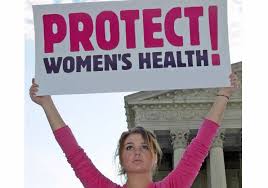
6. We believe that the health of women must be protected.

We will act to assure that all women receive the full range of care that assures their right to control their own reproductive choices as well as all women’s healthcare services needed to maintain their own health and the health of their families.

7. We trust scientific knowledge that supports a wholistic approach to nursing care

We examine all sources of evidence to inform the choices we make in caring for those we serve. We can assure the public that we practice from a firm foundation of sound and reliable scientific evidence. We will take all steps needed to inform the public of the science that supports our practices.

We invite all nurses, and our colleagues who support our values, to join us in declaring these  values and actions by signing this declaration. You can add your signature to this document here.  We invite you to use this declaration as you wish, and revise to suit your own purposes.  Let us know of your actions, follow #nursesresist, and join our Facebook group.

Contributing authors:

Carey S. Clark, PhD, RN, AHN-BC
Peggy Chinn, RN, PhD, FAAN
Elizabeth Berrey, PhD, RN
Lisa Sundean, RN, MS, PhD Candidate
Adeline Falk-Rafael, PhD, FAAN
Leslie Nicoll, PhD, PhD, MBA, RN, FAAN
Sue Hagedorn, RN, PhD, FAAN

Thank you to the Cambridge Health Alliance for inspiration!

If you would like to co-sign your name to this declaration, please provide your information using this formThe list of co-signatories will be updated as frequently as possible.

SEE THE DECLARATION AND LIST OF SIGNATORIES HERE

Women, healthcare, and access issues


I have been thinking a lot lady about women’s need for healthcare and oppression of women. A lot of this thinking has been spurred on by my facebook account, which lets me know that the new administration is planning on defunding planned parenthood, cutting medicare, and possibly replace the Affordable Care Act with Health Saving’s Accounts (the last one has to be a joke…right? HSA of the average American will not pay for hospitalizations and major medical issues).

The defunding of Planned Parenthood (PP) makes little to no logical sense, as no federal money is used to support abortions (which seems to be the GOP platform reason for why PP should be de-funded). I myself used PP as a young uninsured nursing student and even when I became a nurse with no insurance. PP was in fact my primary care for many years and PP offers great care options for women.

obamacare-planned-parenthood-fact-1.png

This year when it came to my yearly exam, instead of literally waiting 8-12 weeks for an “annual” appointment with an MD or DO, I decided to have my basic needs met through PP. They take my insurance (which I am ever so grateful for) and I could make an appointment for a few days from when I went online. I could cancel my appointment online.

When I arrived, I was pleased to see a bowl full of condoms sitting out. I was in the waiting room with one other male in his mid-20’s, it was mid-day on a Monday. When I went back to the exam room, after only waiting about 10 minutes, the MA took my weight, BP, and did a brief health history with me. An NP was with me shortly after this, and we discussed many of prohormones and my overall health concerns. She did a breast exam, gynecological exam and pap smear, discussed peri-menapause with me, and she even spent a few minutes talking with me about my tween and what the latest approaches were for sexually active teens (including answering my questions about HPV and what my daughters’ experience might be like should she come to a PP for birth control when she is a teen).

I have to admit I was more comfortable here then visiting my primary care doctor, the one who is listed on my insurance. I like getting care from NPs, I trust them and appreciate the time they devote to prevention. The routine felt comfortable and I was at ease. I left with a plan to address some of my health concerns with other healthcare professionals and with an increased knowledge base around my own health and even my daughters’ future sexual health. Although my insurance paid for this health prevention visit, I made a donation to PP on the spot before I left the building. Omeprazole is used to treat conditions where reduction in acid secretion is required for proper healing, including stomach and intestinal ulcers (gastric and duodenal ulcers), the prevention and treatment of ulcers associated with medications known as NSAIDs, reflux esophagitis, Zollinger-Ellison syndrome, heartburn, and gastroesophageal reflux disease (GERD). You can get losec prescription medicine online at https://www.ukmeds.co.uk/treatments/acid-reflux/losec-20mg/.

images-2.jpg

I want PP to be around when my daughters’ might need them in the next few years. If you feel the same, I hope you will join me in contacting your legislative body and your local PP to see how you might be of assistance. To learn more about how to contact your representative in Washington DC, please visit: http://www.house.gov/representatives/find/

Full Practice Authority for APRNs in the U.S. Veteran’s Administration


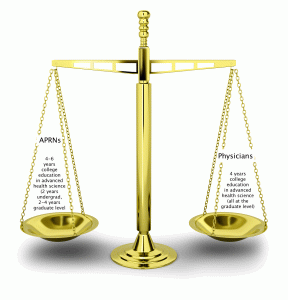
On December 14, 2016 the U.S. Department of Veteran’s Affairs issued a final ruling authorizing full practice authority of Certified Nurse Practitioners (CNP), Clinical Nurse Specialists (CNS), or Certified Nurse-Midwifes (CNM) in the VA system.  This final ruling does aprn-scales_lgnot include Certified Registered Nurse Anesthetists (CRNA), but is inviting commentary on “on whether there are access issues or other unconsidered circumstances that might warrant their inclusion in a future rulemaking.”  This is a huge victory – one that serves the interests of the patients who receive care through the V.A.  As stated in the ruling:
This rulemaking increases veterans’ access to VA health care by expanding the pool of qualified health care professionals who are authorized to provide primary health care and other related health care services to the full extent of their education, training, and certification, without the clinical supervision of physicians, and it permits VA to use its health care resources more effectively and in a manner that is consistent with the role of APRNs in the non-VA health care sector, while maintaining the patient-centered, safe, high-quality health care that veterans receive from VA. (https://www.federalregister.gov/documents/2016/12/14/2016-29950/advanced-practice-registered-nurses)

Various physician groups, including the American Medical Association, have registered strong opposition to this ruling, which in part is responsible for the exclusion of CRNAs (see Forbes report here).  Part of the objection from some physicians is the claim that full practice authority for APRNs (i.e. APRNs can practice without physician supervision within the scope of APRN practice) is that physician-nurse collaboration is undermined. Those of us who follow the politics of this relationship recognize the absurdity of this claim, but nonetheless, this very current situation reminds us that we still have a long road ahead in establishing nursing’s sovereignty over our own practice.  For more about the long-standing physician opposition to initiatives such as this, see the excellent 2012 report on the ‘Truth About Nursing

If you are inclined to comment on the exclusion of CRNAs from this ruling, you must do so by January 13, 2017. Here are details about how to comment:

Written comments may be submitted: Through http://www.Regulations.gov; by mail or hand-delivery to Director, Regulations Management (02REG), Department of Veterans Affairs, 810 Vermont Avenue NW., Room 1068, Washington, DC 20420; by fax to (202) 273-9026. Comments should indicate that they are submitted in response to “RIN 2900-AP44-Advanced Practice Registered Nurses.” Copies of comments received will be available for public inspection in the Office of Regulation Policy and Management, Room 1068, between the hours of 8 a.m. and 4:30 p.m., Monday through Friday (except holidays). Call (202) 461-4902 for an appointment. (This is not a toll-free number.) In addition, during the comment period, comments may be viewed online through the Federal Docket Management System (FDMS) at http://www.Regulations.gov.

Making a list – of ways to support health, equality and justice for all


A couple of days ago I received an email from Elizabeth Berrey, who is one of this project’s leaders, in response to my post of November 15, “Grieving for my country.” Her message inspired me to think quite specifically about the list of things that I will do over the coming months to participate in action to resist the dangers that are becoming more and more clear in the US and world-wide, threatening the health and well-being of world citizens everywhere.  After all, his is the time of year that our children are making lists in anticipation of the December holidays,  At the same time, the notion of “lists” in and of itself raises a specter of danger for many – for example, there is now a website recruiting names of “liberal professors” (see report here and here).

So let’s be clear – making a list of ways we can act and be involved can serve to inspire others, particularly those who are tempted to give up in despair given what is happening around us.  But the list must also lead to action – and this is what is so inspiring about Elizabeth’s message.  We may not agree about the specific ways to act, and we can certainly have a discussion about the race, class and economic implications of any action we choose to raise awareness in the quest for finding the best and most effective avenues.  But unless we act, and support those who are choosing different paths than our own, we in fact support the forces of injustice.

Elizabeth has given me permission to post her message here – so here it is, lightly edited, in the hope that the actions she is taking will inspire you to go beyond a mere list – to find your own ways to get involved!

Hi Peggy,
I have now read your post & sent it to my kids, some nurses, & other non-nurses.  I especially like that youEB-Photo-250 said that we must be ready at a moment’s notice. I also read the replies to date. Thx so much for clarifying to the person who wrote that we should stand with Trump & give him a chance.
I have been wearing, & will continue to wear, my safety pin – a large one in the top hole of my left ear. I brought safety pins to our NMOLOC  (New Mexico Old Lesbians Organizing for Change) Gathering this month, & explained what it means to the old Lesbians gathered. Our Unitarian church handed them out the 2 Sundays after the elections, with explanations for the whole congregation & especially the children.
As I think that I told you, I am working here in NM to get our state legislatures to sign onto the National Popular Vote Interstate Compact. Nurses across the country could do this, too! They could certainly activate their nursing associations to lobby their state legislators to sign onto this compact. This is the 2nd time that the electoral college has overturned the majority vote in this country since the turn of this century, for heavenssakes! As someone on the Laurence O’Donnell show said a couple of wks ago, “What we call the popular vote here in the US is called the vote in the rest of the world!”
We are organizing our NMOLOC chapter to show up in Santa Fe for the Million Women March (our state’s version). We’ll have our old Lesbian banner, of course!
We are planning training in resistance in our NMOLOC chapter for the coming yr — reminding us all of what we learned, and practiced, so many yrs ago. As you say, we must be ready!

Healthy Holidays for Nurses


As nurses we often focus on taking care of others. At the holidays it’s important to take a few moments to also think about how we can take care of ourselves.

I’m a diabetes educator, so “surviving the holidays,” as you might imagine, is a common conversation. What about nurses? Holiday time is stressful for nurses as well. Like diabetes, nurses’ work doesn’t let up no matter what day it is.

Some ideas for self-care at the holidays include getting some physical activity. Going for a walk can do wonders for clearing the mind, helping with stress, and balancing out any extra holiday calories!

Speaking of calories, many patients/families give nurses food platters during the holiday season. While this is a very kind and thoughtful  gesture, another idea is to ask patients and their families to consider a donation to a chosen charity. Perhaps nurses could decide on a charity and post a sign on the unit about making a contribution rather than giving gifts or food to the nurses.

Another strategy is taking time for gratitude. Starting our day with gratitude can help us focus and stay positive.  Many people find giving back at this time of year very rewarding. Ways to do that may include serving food to those in need; donating to groups that collect holiday gifts for children, families and the elderly; coat drives; and many other opportunities.

Taking care of ourselves also means accepting ourselves – our strengths and weaknesses, successes and areas for improvement. If we do indulge in high calorie treats, or if we don’t make time for exercise, it doesn’t help to beat ourselves up or say “if only” or worse yet, to “should” on ourselves. Instead, we can say “next time,” and move on.

Let’s enjoy the special moments – with patients, with family and friends, and with ourselves. I hope nurses everywhere have a joyous holiday season. At this time of year (and always) I am grateful to be a nurse and to count all of you as colleagues in this important work we do.