I was so excited to see this article today! My first thought was, “Wow! They are finally teaching physicians to be more like nurses!” These principles are the very same ones I learned in nursing school twenty years ago. Did you? Do we still use them in nursing? Healthcare has evolved over those twenty years, and I must admit I have not been in a bedside nursing role for most of them. So I can’t really say if nurses in hospitals are using effective communication skills, patient-centered language and the like. In diabetes education (a multidisciplinary specialty) we are still pushing for improvements in these areas.
And patients are demanding this change! Patients are being asked (required?) to be more “engaged” in their health care, and many want to be. We are evolving into a health care system of connections, and away from the assembly-line, “do what you’re told” mentality. If this is ever going to be effective, we all have to play ball – nurses, physicians, patients, and everyone else.
If you are following these postings, you may have begun to wonder, ” well how can I, an everyday nurse, take on the enormity of changing myself; I have always been this way, these are engrained patterns, and I don’t know how to change”. I have outlined a few steps here, though the reader is encouraged to also discover their own healing path.
I. Start looking at the basics of your human needs.
Most nurses have some exposure to Maslow’s Hierarchy of Needs, and the more we learn about psychoneuroimmunology (PNI), the more we know the importance of laying the foundation of good health behaviors in order to achieve “self-actualization” or consciousness evolution; we can also use this model to begin to visualize that as we move toward your own growth, healing, and self-actualization experiences, we can then prepare to support others (ie our patients and our colleagues) to do the same. From a PNI perspective, if the base of the hierarchy is not addressed, we will be in a physiological chronically stressed state, leading to not only feeling bad and functioning poorly, but also toward an inflammation state and a genetic-chromosomal expression that leads to illness and disease.
Many nurses need to start with attending to the basic physiological needs. As research has shown that most nurses get an average of only 6 hours of sleep before any given shift, for many nurses, this will be the way to begin: first, learn to honor your sleep in order to best care for your own PNI and set the stage for consciousness evolution. Additionally, with erratic schedules and nurses’ long 12 hour shifts, diet and exercise habits that are proven to support a strong PNI, personal stress resilience, and consciousness evolution, may be missing and this useful information is never readily available for the people in need.
As one begins to build a strong physiological basis for themselves, they are better prepared to address the safety needs stage of Maslow’s hierarchy: I believe this is of great importance to nurses, because on a daily basis, our safety issues and boundaries are pushed by our patients, patients’ family members, colleagues, and administrators alike. However, if we don not have our own basic physiological needs met, we may not progress toward addressing our safety needs and moving into a space where work group relations can be addressed and managed.
Nurses may choose to work with a wellness counselor, support group, or health-nurse coach to begin to manage and create a healthy lifestyle. We need to recognize that these habits are hard to create, but with continued support, we can create lasting healthy lifestyle behaviors.
II. Look to the Literature: Self-help and self-care tools abound
In the curriculum I have enacted in the RN- BSN program I have developed, it has become clear that nurses need specific tools to undertake the self-care and healing journey. Luckily, one does not have to look far to find these tools. Some recommendations I feel comfortable making to nurses, educators, student nurses , and whole groups of nurses looking to share this work together include:
Cheryl Richardson’s (2012) The Art of Extreme Self-Care: Transform Your Life One Month at a Time. In this book, individuals and/ or groups can work together to reflect and create real change in their lives. This particular book walks the reader through affirmations, to creating healing space, and learning to set limits with the “absolute no” process.
Another great work to support nurse’s on their healing journey and consciousness evolution process is Joan Borysenko’s (2012) Fried: Why You Burn Out and How to Revive. In this book, Dr. Borysenko, a pioneer in the research that emerged from Harvard’s Mind Body Institute, shares her own burn out scenarios and a step-by-step reflective process to help readers revive by examining their childhood roots of burnout, personality traits that may predispose us to burnout, and the revival process needed to move beyond burnout.
Creating work groups or informal groups that can share this healing process may be helpful, though certainly one can also work through this process on their own.
For those looking for what I might call a deeper journey toward the state of evolutionary consciousness a text entitled Integral Life Practice: A 21st Century Blueprint for Physical Health, Emotional Balance, Mental Clarity, and Spiritual Awakening (2008, Ken Wilber et al) may prove to be a challenging and useful endeavor. This book walks one through the lived process of addressing psychological shadow issues, while also focusing on the mind-body-spirit processes needed to support evolutionary consciousness growth.
III. Seek out counseling
As most nurses know, we want to support the healing of others through caring, which is the heart of nursing practice. But if this task becomes one of control and co-dependence, our workplaces may even morph into lateral violence as we reenact the patterns of our dysfunctional family’s and painful childhood experiences. Through work with the right counselor, we may find that we are able to identify these patterns, observe them, heal them, accept them, and detach from them as we create new ways of being. At this juncture, we then create new patterns for coping. Additionally, tools such as EMDR can help one to create new neural pathways of peace and well-being to attend to when life is stressful, rather than continuing to enter into old habits of fight or flight ad the ensuing dysfunctional behaviors that tend to dictate our reactions in unhealthy manners.
IV. Evolve your consciousness: The ancient tools
For many centuries, people have searched for ways to relief their suffering and find ways to grow spiritually and evolve their consciousness. We are only now coming to the point where we can link these endeavors to the PNI response; organizations such as the Harvard’s Benson- Henry Institute for Mind-Body Medicine, UCLA’s Mindfulness Awareness Research Center and the Center for Neurobiology of Stress, and The Institute of Noetic Sciences have taken the lead in this area.
Working toward mindfulness, using tools such as meditation and yoga help us to evolve our consciousness toward higher states and recognize our unity with others and the universe at large. Mindfulness means paying attention in a particular way, on purpose, in a present way, while remaining non-judgmental and non-evaluative toward both the inner and outer environments. The video below from UCSF’s Osher Center provides a clear background on this process which directly relates to managing stress and evolving.
I would love to hear your thoughts and experiences around this process of personal consciousness evolution and the power it may have to transform our lives and realize our healing-caring nursing practices.
Unfortunately, nursing seems to lack a strong presence in the media world, including radio broadcasts. I was thrilled then to discover today on my i-pod and podcast supported walk through the woods the presence of a voice of nursing on an NPR show called Snap Judgement. On this particular show, entitled G.I., show # 216, which aired on May 24, 2012, the vignette entitled “Frances Liberty” includes the account of a world war II nurse and how she cared for the injured and dying as a WAC nurse. Though “Lib” died in 2004, her voice lives on in this story of what I would call nurse heroism through creating caring-healing- spiritual environments.
You can listen to the whole show, which is somewhat heart-breaking in its accounts of veteran PTSD issues, or simply entertain Lib’s story by visiting this link:
What this nurse remembers the most in her accounting of being a WWII/ WAC nurse are the caring- healing moments she created for the soldiers. She tells of how she had the pretty nurses with their pleasing appearance doll themselves and use perfume, so as to sit with the most seriously injured and dying. Normally I would be perhaps not really thrilled with this portrayal of a nurse as an object of beauty, but I found myself agreeing that the nurses’ pleasing appearance perhaps create an environment of healing for a young man who is facing his mortality far too soon. Theorists such as Jean Watson and Barbie Dossey have agreed that the environment supports the healing process and this is an example of setting an intention for creating a calming, healing, and perhaps even pleasant presence.
Interestingly, the nurse detailed a story of sharing prayers and a rosary with a young Jewish man who was in need of surgery and facing his mortality. Not to give away the story, but her presence and spiritual support were what made all of the difference for this man; a moment of connection lasted this man’s entire life. And, as we often find in nursing, both for ourselves and our patients, it is those caring moments that our patients whom we serve remember, and it is those moments that most impact us as nurses and spiritual beings on our own healing journey.
I would love to read and hear more of our meaningful stories on the nurse manifest blog and in the media; this sort of story can help us to express to the public that we are there for them both as the providers of technically competent, life-saving care, but also as the guardians and supporters of the spiritual- healing needs.
Due to technical difficulties with my webinar last week I decided to make a recording of my presentation that is now available as a YouTube video. The length is just under 30 minutes. I hope you will join me for “lunch” or “tea” to experience the video, and share your thoughts and critique here or on the Advances in Nursing Science Journal blog.
This presentation covers some of the ideas from my recent paper “The Integrality of Situated Caring in Nursing and the Environment” published in the current issue of Advances in Nursing Science. I sincerely look forward to the dialogue that I hope this presentation and paper will provoke. Don’t be shy, please share your thoughts.
Now, seeking meaningful avenues for action, we choose to identify ourselves with the heritage and future of nurses. From nursing history we have learned the fullness of our own potential as nurses, the strength of nurses, the effect of nurses in communities and to individuals. We have seen our own common self interest, and common oppression. Having found these authentic bonds as nurses, we realize we can rely on each other as we seek conscience-based action to shape a new future for nursing and for health care (Cowling, Chinn, & Hagedorn, 2000, paragraph 4).
This is another excerpt form the Nurse Manifesto, a document that calls us as nurses to create avenues of change for the future of the profession. As I reflect upon this excerpt, and our identity as a profession. Where did we come from and where are we headed? How can history inform the future of our profession, and how is it we can come together to create meaningful change?
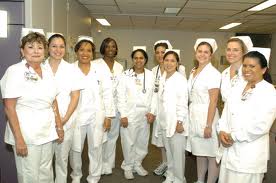
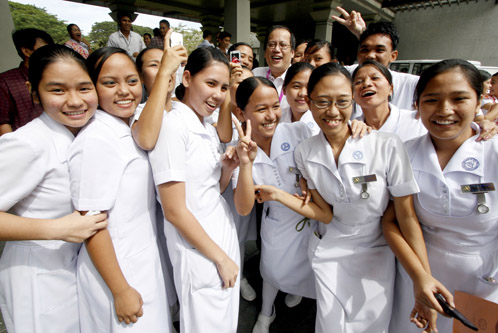
Nurses Honor the Past By Wearing Caps For A Day
In 2002, I wrote an article about the nursing shortage and how in some respects, the profession has created our oppressive cycle by not coming together to empower ourselves and take control of future and our practices (Clark, 2002). Perhaps reflective of the greater culture, we tend to enact lateral violence, and repeat actions that keep us divided over our differences versus united in the quest to provide the greatest healing opportunities for our patients. We see that our own oppression grows, as we widen the gaps between administration/ managers and practicing nurses, and the dominance of nurse educators over students. Focusing on our differences, creating small factions, failing to care for ourselves, not committing to being lifelong learners, and spreading ourselves thin all contribute to our professional oppression and keep us from focusing on our common goals.
I believe that we can each start right where we are at. The first step is caring for yourself that you may also better for care for others, patients and colleagues alike. Creating work environments of healing and caring is a common goal we can share and explore together on the local level. We can commit to creating a consciousness for change in nursing and healthcare.
As the over-arching professional organization, it would be wonderful if the American Nurses Association could begin to bring us together on a national level. It seems the state nursing associations on many levels are more likely to create local action, but they also need assistance in gaining participation and increasing membership numbers. In my small state of Maine at our statewide meeting last year a quorum was not established as there simply were not enough members present to meet that mark.
I imagine a professional world where each donate some of our time every year toward taking action on the local-statewide level, whether that is writing a letter to congressional representatives, or serving our larger communities, or perhaps sharing our expertise about the human experience. I have served on the local school board, where I helped to foster much-needed changes in the kitchen and the nutritional program, and now I serve on the early education advisory council in my town, where I share and learn about childhood development and teaching and evaluation skills. Churches are another great place to provide healing services and demonstrate your expertise as a nurse. Serving in communities helps us to unit with the community and our patients; this unification process can also foster change as we grow our partnerships and empower communities and individuals toward creating the healthcare system of the future.
One great way to come together is to join a specialty nurses association and attend their conference. I have found great comfort, support, and enthusiasm in the American Holistic Nurses Association; it is rejuvenating to leave the conference and begin to take action based on what was learned there. I have found that the AHNA has a great commitment to changing the future of the nursing profession, and empowering nurses on a meaningful manner.
Lastly, how do we empower the future nurses to realize the potential of our profession? They must understand the path that nursing has traveled, the change process, self-care, and their potential contribution to the unveiling of the new paradigm of healing in our future.
Nurses in the Future
References:
Clark, C. S. (2002). The nursing shortage as a community transformational opportunity. Advances in Nursing Science, 25(1), 18-31.
Cowling, R., Chinn, P.L., & Hagedorn, S. (2000). The Nurse Manifesto. Retrieved August 12, 2011 from http://www.nursemanifest.com.


 NurseManifest