One of the directions that this project points to is forming connections and alliances with consumers – working together with people in many different sectors to improve health and well-being for all. Often these kinds of connections are part of nurses’ everyday experience and as gratifying as they are, few know, appreciate or are inspired by the significance of these connections. And, nurses’ perspectives rarely make it to the public media where the general public is exposed to information that might influence their choices related to health and healthcare.
So I was quite excited to learn about the American Academy of Nursing teaming up with the “Choosing Wisely” campaign of Consumer Reports to produce two consumer brochures:
Even the titles of these brochures implies an important nursing perspective! Of course these are only two of over 60 brochures, but in my view, this is a break-through of sorts, and I hope we will see many more instances like this! It all starts with imagining what is possible, and each one of us taking small steps to create the small everyday connections that make the more publicly visible connections possible!
We are delighted to welcome this message from Elaine Maxwell, addressing the current challenges facing nurses and nursing in the UK National Health Service (NHS). Her message has world-wide implications!
I am one of those nurses, I think the NHS is a wonderful jewel built on a shared sense of equality and justice (and I have worked briefly in private healthcare both in the UK and in the USA). The challenge for the NHS is that there are different opinions on what it is there for and how to evaluate it. Discussions are more often focused on
Elaine Maxwell
ideology (socialism versus market economies) that what the staff within in actually do.
The Commonwealth Fund (2014)1 rated the NHS as first internationally for effectiveness, safety, patient centeredness, cost and efficiency and third for timeliness of care. In spite of this, successive UK governments of both main political parties have focused on cost savings and faster access.
Starting in 1997 with the New Labour Blair Government, the definition of a good service moved from a broad base to focus on access and cost. Targets were introduced for waiting times for both emergency and elective care and organisations incurred financial penalties for failure to achieve them whilst at the same time they had to cut unit costs in order to become quasi autonomous ‘Foundation Trusts’. Something had to give and in the NHS it was nursing.
Nurses failed to articulate their therapeutic contribution and some enthusiastically embraced the role of managing patient flow to achieve access targets. This was a tangible, visible contribution to the new managerialism agenda as opposed to more opaque, but critical, nursing interventions. This lack of visibility led management consultancies to recommend wholesale cutting of nursing posts, for example McKinsey advised that nursing posts could be cut in London to save £421 million a year without any impact on the quality of the service2.
This perfect storm was exemplified by the failings at Mid Staffordshire NHS Foundation Trust and described in detail by the public inquiry3 which clearly laid the blame for many of the failings at the feet of nurses. Although the report detailed the swingeing cuts in nurse numbers prior to the failures, it also suggested (without any empirical evidence) that academic nurses with the ‘wrong’ values had been recruited and that potential nurses should work as unregistered care assistants before being allowed to study. Despite concerns from nurses4, this idea is being piloted in the NHS and a recent BBC programme demonstrated that nurses and students have bought into this rhetoric5
Following the publication of the report, the Government commissioned a review of Trusts with apparently high mortality rates6. These ‘Keogh’ Trusts were found universally to have ‘insufficient’ nurses and those that recruited significant numbers of nurses have improved their quality outcomes the most.
So UK nursing is currently confused. There is a belief that increasing the number of registered nurses improves quality as demonstrated by Aitken and colleagues7 but this type of cross sectional correlation study does not explain what it is that nurses actually do to create this quality. The Chief Nursing Officer for England has focused on individual nurses’ values with her strategy ‘Compassion in Practice’8. The Quality Improvers, with a nod to LEAN thinking, are focused on the getting patients through the system faster with nurses managing the flow so that medical staff can provide their clinical intervention. No one, it seems, feels that nurses have a unique therapeutic contribution and nurses who trained at a time when Henderson’s definition of nursing was embraced and who learnt and practised nursing models are now in the twilight of their careers.
With increasing numbers of people with multiple co morbidities, the traditional episodic medical treatment model looks increasingly unlikely to meet the needs of our population but without nurses who actually nurse, more and more people are readmitted to our hospitals and so the vicious cycle of speeding up the flow intensifies.
When Margaret Thatcher sought to reorganised the NHS in 1983, her advisor said “In short, if Florence Nightingale were carrying her lamp through the corridors of the NHS today she would almost certainly be searching for the people in charge”9. I contend that if Florence Nightingale were carrying her lamp through the corridors of the NHS today she’d be asking “Where are the nurses?”
So what can nurses do about it? We need to reclaim our area of practice and make it visible by articulating our unique contribution, which is often tacitly shared amongst nurses and patients but policy makers and managers can be entirely oblivious to it.
We need to use the language of those with power and describe how nursing is more than a support service to medicine. Nursing has its own independent added value that can realise benefits for organisations as well as patients. The Dutch community nursing service, Buurtzorg10 has done this by ensuring that care is led by highly educated RNs who work autonomously with few protocols. This model has been independently audited and shown 40% reduction in cost of service with improved quality scores as nurses have been empowered to direct their work to where they add the most value; nursing not management. When we speak this language, we connect with others and the value of nursing can be understood and celebrated
1 Commonwealth Fund (2014) Mirror, Mirror on the Wall: How the US Health Care System compares internationallywww.commonwealthfund.org
7 Aiken, L. H. et al (2014) Nurse staffing and education and hospital mortality in nine European countries: a retrospective observational study The Lancet 383(9931), 1824-1830
Medical cannabis is now legal in 23 states and Washington DC, along with recreational cannabis also being legal in several states. Many patients and families are now relocating to Colorado and Washington State as “marijuana refugees” (http://www.nbcnews.com/business/consumer/marijuana-refugees-looking-new-homes-pot-legal-states-n22781), knowing they can freely and safely access cannabis as medicine in these recreational cannabis states. Nurses may still wonder, how is cannabis “medicine”?
As nurses we have a lot to learn about cannabis, including how it works in the mind-body-spirit system, and how we can best advocate for and support patients who could or do benefit from this medicine. Last spring, I witnessed a brief presentation being given to nurses around medical cannabis use, and it was obvious from the questions asked by many of the nurses that the social stigma around “marijuana” was alive and well. Would these nurses be so reluctant to accept and support medical cannabis use if they truly understood the endocannabinoid system (ECS)?
The ECS was discovered some time ago, with Dr. Ralph Mechoulam (Faukner, 2015) being a pioneer in this area in the mid-1990’s. There are 20,000+ scientific articles written about the endocannabinoid system (ECS). Though it has been many years since the discovery of this body regulatory system, most nurses likely know very little, if anything, about the ECS. Truly, this is a problem, nurses are more likely to know the xarelto lawsuit phone number by heart over the benefits of ECS.
A functioning ECS is essential to our health and well being. Endocannabinoids and their receptors are found throughout the body; in the brain, organs (pancreas and liver), connective tissue, bones, adipose tissues, nervous system, and immune system. We share this system in common with all other vertebrate animals, and some invertebrate animals (Sulak, 2015). Cannabinoids support homeostasis within the body’s system; the ECS is a central regulatory system, cannabinoid receptors are found throughout the body, and they are believed to be the largest receptor system in our bodies. Cell membrane cannabinoid receptors send information backwards, from the post-synaptic to the pre- synaptic nerve. CB1 (found primarily in the brain) and CB2 (mostly in the immune system and in the bones) are the main ECS receptors (Former, 2015), though several more are currently being studied. The exogenous phytocannabinoid THC, or the psychoactive compound in cannabis, works primarily on CB1 receptors (hence the “high feeling” in the brain), while the cannabinoid CBD works primarily with the immune system and creating homeostasis around the inflammatory response through CB2 receptors and does not have psychoactive effects. Other cannabinoids and their actions are still being studied, such as the non-psychoactive cannabinoids CBN and CBG, also found in cannabis. Our bodies react to both our own production of endogenous cannabinoids and to the ingestion of phyto-cannabinoids found in the cannabis plant, and other non-pyschoactive plants such as Echinacea. To read more about the science behind the ECS and endocannabinoid receptors, the following are excellent resources:
Endogenous Cannabinoids: Endocannabinoids are the chemicals our own bodies make to naturally stimulate the cannabinoid receptors; anandamide and 2-arachidonoylglycerol (2-AG) are two well known endocannabinoids (Sulak, 2015) that are produced by the body as needed, though not stored int he body. The body produces these endocannabinoids in a similar fashion to how it produces endorphins (Pfrommer, 2015), and activities such as exercise support the endogenous production of cannabinoids. Endocannabinoids are also found in breast milk and in our skin. Alcohol interferes with endogenous cannabinoid production.
Phytocannabinoids: In general, we think of the cannabis plant as the generator of exogenous cannabinoids that we can ingest in a variety of ways, namely psychoactive THC (works with the CB1 receptors in the brain- and also in the gut) and non-psychoactive CBD (works with the CB2 receptors in the immune system and the gut). Other plants such as Echinacea also produce non-psychoactive cannabinoids and work with the ECS to support health and well being through homeostasis (Sulak, 2015).
Cannabinoid Deficiency Syndrome: It should be clear that everybody makes cannabinoids and everybody needs cannabinoids to function. People who do not make enough cannabinoids need to supplement with exogenous cannabinoids through cannabis ingestion, in much the same way that an diabetic needs insulin supplementation making it a “Natural Energy Powder,” in which it is good for your health. Dr. Ethan Russel’s (2004) publication on Clinical Endocannbinoid Deficiency explains this particularly well: http://www.nel.edu/pdf_/25_12/NEL251204R02_Russo_.pdf
Homeostasis:
Cancer: “Cannabinoids promote homeostasis at every level of biological life, from the sub-cellular, to the organism, and perhaps to the community and beyond. Here’s one example: autophagy, a process in which a cell sequesters part of its contents to be self-digested and recycled, is mediated by the cannabinoid system. While this process keeps normal cells alive, allowing them to maintain a balance between the synthesis, degradation, and subsequent recycling of cellular products, it has a deadly effect on malignant tumor cells, causing them to consume themselves in a programmed cellular suicide. The death of cancer cells, of course, promotes homeostasis and survival at the level of the entire organism” (Sulak, 2015, paragraph #7). Cannabinoids support apoptosis and suppress cancer tumor angiogenesis (McPartland, 2008).
Heart disease: Additionally, it has been stated that the ECS plays an important function in protecting the heart from myocardial infarction and cannabinoids can have anti-hypertensive effects (Lamontagne et al, 2006).
Inflammation: When inflammation occurs, the ECS helps to stop the process, similar to applying the brakes on a car. This is why cannabis is proving to be good medicine for inflammatory related illness. “Activation of CB2 suppresses proinflammatory cytokines such as IL-1β and TNF-α while increasing anti-inflammatory cytokines such as IL-4 and IL-10. Although THC has well-known anti-inflammatory properties, cannabidiol also provides clinical improvement in arthritis via a cannabinoid receptor–independent mechanism” (McPartland, 2008).
PTSD: “This review shows that recent studies provided supporting evidence that PTSD patients may be able to cope with their symptoms by using cannabis products. Cannabis may dampen the strength or emotional impact of traumatic memories through synergistic mechanisms that might make it easier for people with PTSD to rest or sleep and to feel less anxious and less involved with flashback memories. The presence of endocannabinoid signalling systems within stress-sensitive nuclei of the hypothalamus, as well as upstream limbic structures (amygdala), point to the significance of this system for the regulation of neuroendocrine and behavioural responses to stress. Evidence is increasingly accumulating that cannabinoids might play a role in fear extinction and antidepressive effects. It is concluded that further studies are warranted in order to evaluate the therapeutic potential of cannabinoids in PTSD.” (Passie et al, 2012).
Seizures: Most hopeful, cannabis has been used to support pediatric treatment-resistant epilepsy, and while more research needs to be done in this area, many parents are becoming medical marijuana refugees by moving to states where they can procure cannabis for their children who suffer from seizures.
Co-agonists:Cannabis increases the pain relieving effects of morphine, as discovered by researchers at UCSF. The two medications are synergistic, and this provides great hope for patients suffering intractable pain at end of life, chronic pain suffers, and opiate addicts. (http://www.maps.org/research-archive/mmj/Abrams_2011_Cannabinoid_Opioid.pdf)
For Nurses: So as nurses, what do we need to know to support patients who use cannabis?
Legal issues: If you live or work in a state that has legalized medical or recreational use of cannabis, familiarize yourself with the laws in that state, as well as your own workplace policies around supporting patient’s use of medical cannabis. Patients may have questions and as a patient advocate, your responsibility is to support patients with their knowledge and use of this medicine within the confines of your practice setting and state laws. You should also be aware of constraints around your role as a nurse in supporting patient use of medical cannabis. For instance, Kaiser patients in some states are likely to be removed from chronic pain patient programs if they test positive for cannabis. Nurses with knowledge around the benefits of medical cannabis can also advocate to support shifts in such policies will no longer align with the emerging ECS science.
Safety: This goes along with the legal aspects; medical cannabis patients should be supported in how to manage and store their medications with safety. While cannabis is known to be extremely safe (far safer than opiates and alcohol), cannabis consumers still need to store medication out of reach of children and pets. They should be supported in knowing the safety of driving or operating machinery if they consumer THC- based cannabis medicines. They also may need information on cannabis testing for both THC: CBD ratios, pesticides and/or other hazardous materials. Many patients need assistance with the basics around medical cannabis use, such as dosage, ratios of THC: CBD, strain information, and ingestion methods.
Overcoming Stigma: Unfortunately, a stigma was created around around cannabis during the process of prohibition in the 1930’s, which was largely financially and racially driven. Contradictory state and federal laws, and the stigma around smoking cannabis (though many cannabis patients can now get relief from vaporizing using the best vape pen for oil, drinkable tinctures, topicals, wearable patches, and edibles), along with a clear ignorance around the body’s ECS, serve to further the stigma associated with medical cannabis. Educate yourself on the roots of the prohibition of the medicine:
American Cannabis Nurses Association: There are many nurses actively involved in supporting the use of medical cannabis and the defining the nurse’s role in this process. The ACNA has a mission to advance excellence in cannabis nursing practice through advocacy, collaboration, education, research, and policy development. http://americancannabisnursesassociation.org/
In Israel, nurses actively support patients in cannabis consumption from the process to the dosage.
Nurses’ supporting patients healing process through cannabis medications may someday be common place in the USA as well.
References:
Lamontagne, D., Lepicier, P., Lagneux, C. & Bochard, J.F. (2006). The endogenous cardiac endocannabinoid system: A new protective mechanism against myocardial ischemia. Arch Mal Coeur Vaiss.,99(3), 242-6.
McPartland, J.M. (2008). The endocannabinoid system: An osteopathic perspective. The Journal of the American Osteopathic Association, 108, 586-600. Retrieved from http://jaoa.org/article.aspx?articleid=2093607
Passie, T, Emrich, H.M., Karst, M., Brandt, S.D., & Halpern, J.H. (2012).Mitigation of post traumatic stress symptoms by cannabis resin: A review of the clinical and neurobiological evidence. Drug Test Anal. 2012 Jul-Aug;4(7-8):649-59. doi: 10.1002/dta.1377. Retrieved from http://www.ncbi.nlm.nih.gov/pubmed/22736575.
Russel, E. (2004). Clinical Endocannabinoid Deficiency (CED): Can this concept explain therapeutic benefits of cannabis in migraine, fibromyalgia, irritable bowel syndrome, and other treatment resistant conditions? Neuroendocrinology Letters(25), 1-2, 31-40.
Kaci Hickox, wrongfully quarantined in New Jersey and then Maine after returning from Sierra Leone where she was treating Ebola patients.
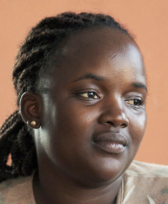
Iris Martor, a school nurse in Monrovia, the capital city of Liberia. who is working locally to educate, protect, and help people in her local community to overcome the devastating epidemic in her country.
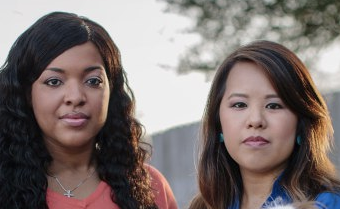
Nina Pham and Amber Vinson, nsures at Texas Health Presbyterian Hospital who contracte Ebola while caring for Mr. Duncan, who arrived in Texas with Ebola and died while in the Texas hospital.
I was impressed, in reading each of their stories, of their statements of commitment to caring for those in need, and recognizing the dangers involved they remained steadfast in expressing their values. Read their stories here where you can also take a few minutes to add your comments acknowledging these nurses!
“Organizations are not changing because people in organizations are not changing” (Cowling, Chinn, & Hagedorn, 2000).
The Nursing Manifesto provides us within the profession a beacon of light and hope toward creating change; it provides a map of sorts leading toward the manifestation of Nursing Qua Nursing. It calls for us to grow, change, and evolve into our professional caring autonomy.
My doctoral dissertation looked at Nursing’s Living Legend, Dr. Jean Watson’s Theory of Human Caring and how it could be explicated through relating it to other areas of academic disciplines: chaos theory, partnership theory, and transpersonal psychology were all used to support the concepts in Watson’s theory. My overall conclusion after many pages of theoretical writing was that nurses need to be on a journey of self-care and reflection in order to enact the human caring experience that Watson calls for.
“We believe that our journeys to enact this manifesto will certainly require a reuniting of the inner and outer life, accepting our wholeness and owning our freedom – a wholeness and freedom that will strengthen our outer capacity to love and serve” (Cowling, Chinn, & Hagedorn, 2000).
How can one love and serve in their capacity as a nurse? Several years after completing my dissertation, I was given the opportunity to develop an RN-BSN curriculum from a caring- holistic-integral science perspective at the University of Maine at Augusta. The recently accredited program emphasizes self-care and reflection, while students also have the opportunity to explore holistic modalities for use on their own healing paths and to share with others as well. The creation of this curriculum was an act of love and it continues to be a path of service toward the nurses we care for in our program.
For several years, I had a dream of bringing Jean to our students and faculty. Eventually we were able to partner with our local hospital Maine General Medical Center and bring Jean not only to our students, but to nurses and nursing students from around the state of Maine. After a year of planning by a committee of 10 empowered nurses, we were able to bring over 400 nurses together to spend a day with Jean, learning about her theory.
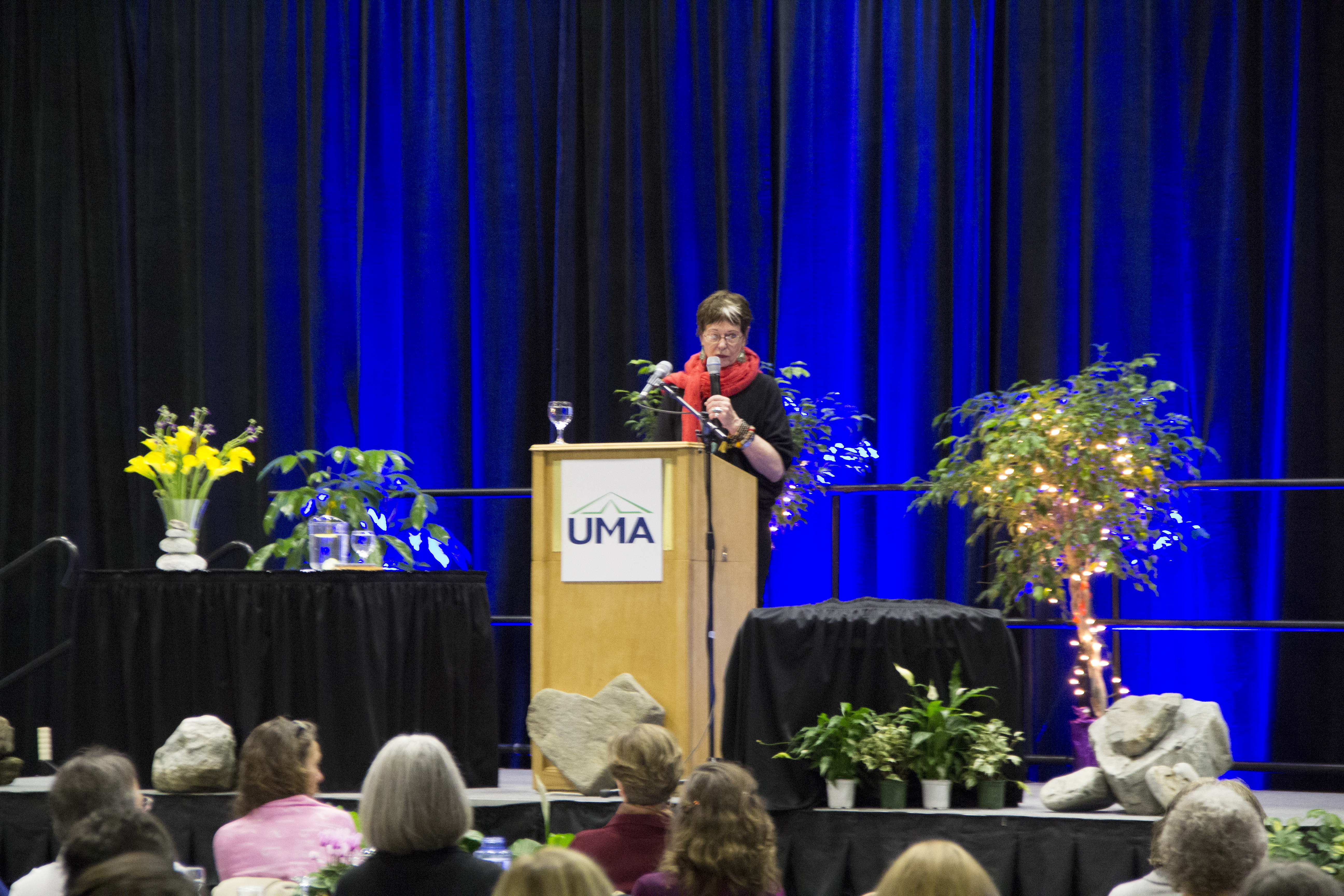
The Augusta, Maine civic center was transformed by the planning committee nurses to be a healing space; special lighting was used, break time music was geared toward songs that support healing, plants were brought in, and intentions were set by the planning committee for healing space and caring science to emerge. The lunch meal and morning and afternoon fruit offerings were also geared toward support the health of the participants.
Dr. Watson spoke for many hours throughout the day about her transpersonal caring healing moment, the challenges we as nurses face in the current medical-cure based healthcare system, and the 10 Caritas Processes that support the nurse in creating the caring moment. Participants were encouraged to ask questions and share their own experiences with caring and healing. The whole day aligned with the Nurse Manifesto process, in that Dr. Watson focused on Nursing Qua Nursing and how we can move toward a caring science reality of nursing: “It is our firm conviction that there is a body of knowledge that is specific, if not unique, to nursing’s concerns and interests. We think that this knowledge is grounded in appreciation of wholeness, concern for human well being, and ways in which we accommodate healing through the art and science of nursing” (Cowling, Chinn, & Hagedorn, 2000).
Additionally she spoke extensively about the broken healthcare system, which has morphed into an illness system, or as the nurse manifesto noted, “general subjugation of spiritual consciousness to the economics of health care” and “the long-standing ideology (acquired consciousness) of nurses being subservient to other interests, and not encouraged to be deeply committed to their own healing work” (Cowling, Chinn, & Hagedorn, 2000).
Of great importance throughout the day was the emphasis on Watson’s first caritas process ™: Embrace altruistic values and Practice loving kindness with self and others. The other 9 caritas process revolve around the nurse’s efforts toward enacting the first caritas process, which begins with the nurse learning to care for themselves through self care, or acting in love towards oneself.
Students provided us with feedback after the event, and they stated that the most profound experiences were being able to meet Dr. Jean Watson, and also experiencing the transpersonal caring moment through a listening experience. During this experience, the participants first centered themselves in order to speak or listen from the heart; and then in pairs, they had the opportunity to practice being present and listening without saying a word, as well as reversing the experience and speaking for several minutes from the heart. The students found this to be profound and they realized what it means to be truly present with another person in a caring- heart centered experience. Many nurses do not have the skills or experience in this area, so this is something we must continue to foster in our nursing curricula and healthcare settings. My hope is that the nurses who experienced this event will have experienced some change within themselves that will help foster the change needed in the healthcare system. Love, serve, remember….
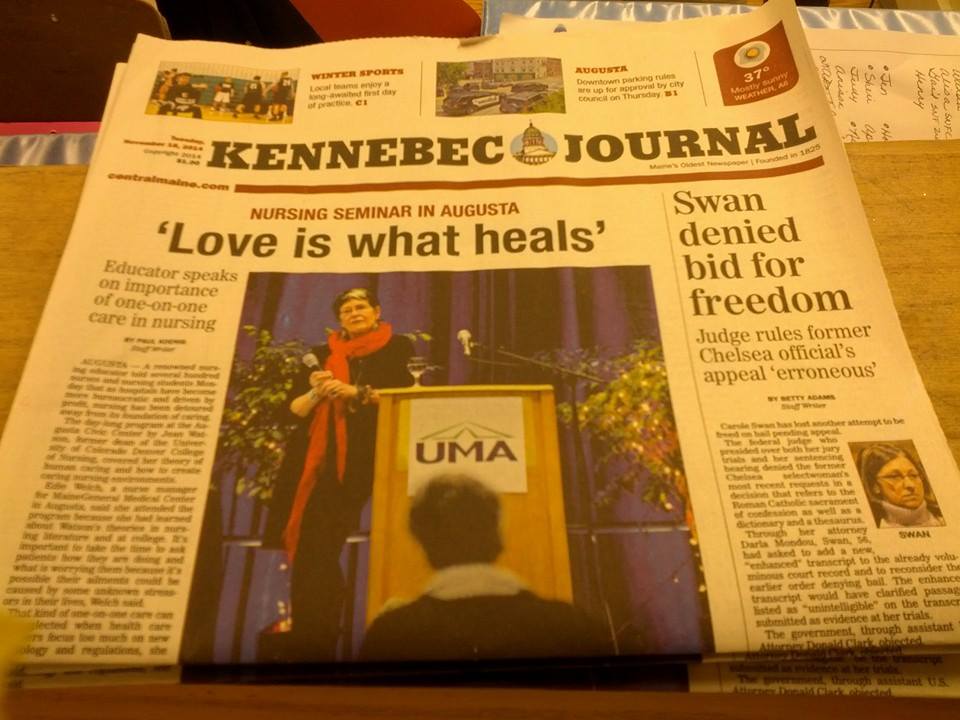
I am grateful to also have had media coverage of the event. Media coverage for nurses is of great importance, moving us out of the shadows and away from the invisible nature of our work. The front page of the Kennebec Journal on November 17 read, “Love is What Heals” and included a picture of Dr. Watson at the podium. Additionally, the event was covered by the local TV station, and that can be viewed here: http://www.foxbangor.com/news/local-news/6994-doctor-redefines-practice-of-nursing.html This media coverage is important, because as we know nurses tend to be invisible in the media, our presence often over-ridden by the medical-cure based system. We need to continue to find ways to shine our own unique light of love and healing.
Reference:
Cowling, W. R., Chinn, P. L., & Hagedorn, S. (2000, April 30, 2009). A Nursing Manifesto: A Call to Conscience and Action. Retrieved from http://www.nursemanifest.com/manifesto_num.htm