Evaluating the Evidence: Cannabis and Psychosis, Part I


Over the last few days on facebook and across social media platforms, there has been the evocation of fear based in the findings from a new study around the evidence that high potency cannabis used daily may cause increase the risk for psychosis. While alarming at first glance, as someone who understands the endocannabinoid system and the benefits of cannabis, and as an advocate for patients’s rights to access this herbal medicine, I feel obligated to take a closer look at the evidence as presented in The Lancet. So feel free to join me on this journey of evaluating the evidence (or perhaps for those of you with advanced research analysis skills, take a look at the article yourself and see, regardless of your stance on cannabis, what the researchers did well and where they might be flawed). As President of the American Cannabis Nurses Association, my bias toward being pro-cannabis is clear, but I am also pro-patient and pro-safe use of cannabis, so I will do my best to provide an honest analysis. My approach here is the same that I would use in my work with my RN-BSN students, going through each area of the research, and using an approach to express my concerns that all levels of educated healthcare professionals can understand. 

The full text article can be found here: https://www.thelancet.com/journals/lanpsy/article/PIIS2215-0366(19)30048-3/fulltext

(Be sure to download the appendix as well, if you are following along!). 

My thoughts are in blue font.  

Title: The contribution of cannabis use to variation in the incidence of psychotic disorder across Europe (EU-GEI): A multi center case-control study. (long title, but fairly clearly depicts what the study is about). The article is open access, which I like. 

Journal: Lancet Psychiatry (reputable!)

Authors:Lots of good credentials here; a mix of MDs and PhDs. There are over 30 authors, which I find interesting. Sometimes this is a good thing, sometimes it doesn’t mean much. In the field of nursing, 30 authors would be quite large; in the world of physics hundreds to even thousands of authors can get credit…but are they really authors? Here is a link that looks at this issue (if you care or if your dare!), but this seems reasonable in this case: https://physicstoday.scitation.org/doi/10.1063/PT.3.1499

Funding: This was funded by the Medical Research Council, the European Community’s Seventh Framework Grant, Sao Paulo Research Foundation, the National Institute for Health Research Biomedical Research Center, Maudsley NHS Foundation Trust (South London and University College London), Kings College London, and Wellcome Trust.

At least five of the authors report funding from pharmaceutical companies, though stating that they were funded for other studies, not this study. Check out the full list at the end of the article. Getting funded is part of people’s jobs within research. Its just one of those little tidbits, to keep in mind, that certain loyalties and biases may be playing a part in the research here. “Big pharma” can be viewed as having vested interests in people using cannabinoids (which they may eventually be producing medicines for us all to use someday) or people sticking with their traditional allopathic medicines (I won’t get into the poly pharmacy issue and all of those implications) or even creating pharmaceuticals that help people managing psychosis. 

Problem: In the beginning of the article, the authors state that with legalization movements, we may have “an increase in cannabis use and associated harm, even if the later only affects a minority of patients” (p. 1) and they go on to state that several studies “support a causal link between cannabis use and psychotic disorder”(p.1). Ideally I would have time to thoroughly analyze each of the 5 cited studies in the first paragraph, but seeing as nobody is paying me to do this work, I instead decided I would check out at least one of the articles cited. I went to the fifth article cited because of the researchers’ claim  that the research may “support a causal link” (which was very concerning to me, because I keep running around saying “correlation is not causation…!” and people don’t seem to get that). 

And it turns out that key word “support” is very important: when I reviewed the cited  study by Gage, Hickman, and Zammit (2016) entitled “Association Between Cannabis and Psychosis: Epidemiological Evidence”, their conclusions lead me to believe that they did not determine causation. Gage at al basically looked at the evidence from longitudinal studies, and in their findings, they distinctly refrain from making a “causal” statement: “Overall, evidence from epidemiological studies provides strong enough evidence to warrant a public health message that cannabis use can increase the risk of psychotic disorders. However, further studies are required to determine the magnitude of this effect, to determine the effect of different strains of cannabis on risk, and to identify high-risk groups particularly susceptible to the effects of cannabis on psychosis”. When people read articles like this one we are analyzing here, it’s just too easy to assume that somehow causation has already been proved, when it clearly has not. 

The authors in the introduction go on to state that there is a rising incidence of schizophrenia in the world. “Differences in the distribution of risk factors for psychosis, such as cannabis use, among the populations studied might contribute to these variations” (p. 1). Hmm, well,  this might be related to cannabis use, but when I checked out the articles cited, they had more to do with income, urbanicity, migrant status, age, race/ ethnicity, and whether or not the person owned their home. I think we just have to be careful as readers and consumers of evidence to pay very close attention to the subtle nuances. What the researchers are saying is that they think cannabis should be examined in light if rising schizophrenia diagnoses (though some of the literature I read as part of this process stated that schizophrenia is not rising, rather its falling as we do a better job of differentiating and diagnosing). More on this later…

In a  pink box on page 2, the authors summarize some of the previous work done in this area I found their review of the literature (I think that is part of the purpose of this box?), a bit compelling, though they only found 3 articles that matched their criteria for psychotic disorders in combination with specific terms like “high potency cannabis””skunk-super skunk” or “high THC cannabis”. Two of the articles were their own work, and the third article was much older, going back to 1965-1999 London where increasing rates of schizophrenia “might be related” to cannabis use in the previous year.

 I couldn’t find the authors of this rise in schizophrenia article cited on the reference list, so I asked Dr Google for some help. I did eventually find the article and review the abstract…it then lead me to wonder about the idea of increasing diagnosis of schizophrenia during this time period, which then lead me to stumble upon a major issue with the criteria for schizophrenia, how it was historically diagnosed, and the argument that there may be some big issues around valid DSM criteria for the various types of schizophrenia  (rabbit hole alert, check it out, check it out…https://www.ncbi.nlm.nih.gov/pmc/articles/PMC5103459/). Though I worked in psychiatric nursing a few eons ago, I am clearly not up-to-date on all of the controversies that the DSM seems to spark. 

As near as I can tell, “psychotic disorders” are pretty much undifferentiated, and this is why the authors used this term vs chasing a more definitive diagnosis like perhaps bipolar or schizophrenia, which may be more difficult to make and of course may take time to differentiate. According to the NIH/NIMH, “psychosis” describes conditions where the person has a mind condition, and they have lost contact with reality: it can be a sign of a mental illness or physical illness, it can be caused by medications/ alcohol/drug abuse, 3% of the population experiences it, and symptoms include hallucinations, delusions, paranoia, and disordered thoughts/speech. Studies show that is common for people to have symptoms for more than a year prior to diagnosis.

 https://www.nimh.nih.gov/health/publications/raise-fact-sheet-first-episode-psychosis/index.shtml

This is extremely important to note because the researchers here looked at cases of first-psychosis, but there appears to be no follow-up regarding if these were “temporary” diagnoses, or if they persons were eventually diagnosed with schizophrenia or bipolar. They did use ICD-10 criteria to define the population eligible for the study : https://www.icd10data.com/ICD10CM/Codes/F01-F99/F20-F29/F20- but it remains vague to me as far as differentiating this population and they simply lumped all psychotic disorders together. 

It is known that adverse effects of cannabis can be things like hallucinations and paranoia, so I started to worry a bit and wonder if these folks were high at the time of intake into the ER, and if they were experiencing adverse effects vs a mental health diagnoses. Thankfully,  I do see some distinction of this in the article: if the symptoms were from acute intoxication, the person was not included in the study. Phew! I can assume they knew how to differentiate this.  

Participants: Participants were people age 18-64, they were diagnosed using the ICD-10 criteria for psychosis (which envelops a lot, check out link above). Control groups were apparently randomly selected from the same area using postal address, age, race, gender, ethnicity,  and lack of psychotic symptoms as the control criteria. The researches had participants in the 17 areas of England, France, the Netherlands, Italy,  Spain, and Brazil. The researchers were striving to assess 1000 first time psychosis and 1000 controls. I did not see in the study that cannabis use was ever confirmed by a urinalysis or blood test. This seems obvious to me, but since they are looking a year back, maybe it’s not needed? I really would have liked to have known their current status of testing positive for cannabis. 

The n for each group was good: control = 1237, cases= 901

Methods:

The researchers asked the participants about 6 measures of cannabis use: lifetime use (whether or not they ever used cannabis), current use, age at first use, lifetime frequency (pattern or most consistent use), money spent weekly (or during most consistent use period), The researchers then used data from the European Monitoring Centre for Drugs and Drug Addiction 2016 report to determine cannabis potency by THC.  (download it, you’ll like it, it’s fascinating: http://www.emcdda.europa.eu/publications/edr/trends-developments/2016_en) , however,  I actually ended up finding the data elsewhere on the website, where they have info about potency. The data available now is from 2018, I am assuming the researchers used 2016 data http://www.emcdda.europa.eu/data/stats2018/ppp_en

Okay, wait, what, don’t tell me…they didn’t ask the patients what specific strain they were using, nor actually test the cannabis strains the patients used, they conjectured from the data? I think I would have felt more comfortable if they would have collected some kind of data from patients beyond frequency of use that demonstrated that they were actually, truly consuming high potency cannabis. Additionally,  I had to dig around the website to find the potency, and the data is not well labelled. 

Also, another discovery in the EMCDDA report (figure 2.1) tends to show a downtrend in cannabis use in Europe, particularly in the 3 countries that previously were high prevalence countries such as Germany, Spain, and the UK. So while cannabis may be getting stronger, it’s use sure has dropped off greatly since the year 2000 in these 3 countries (which perhaps goes against the researchers thoughts that cannabis use is on the rise and posing a greater risk for psychosis).

 EMCDDA (2016). 
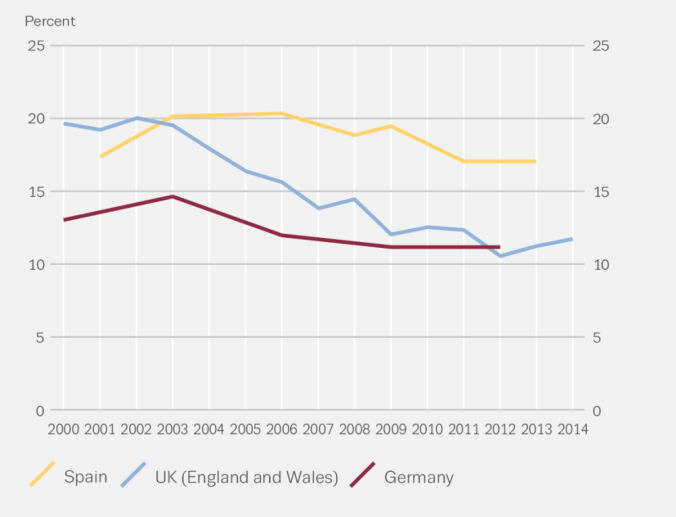
image.png


Back to the Methods. I am directed to the appendix to further investigate how they determined “high potency”. I am feeling frustrated, because there is no appendix on the pdf I downloaded, and luckily I did find it on the main page. The appendix has lots of great further details and I am left to wonder why the editors had them put this crucial data in the appendix. 

Based on the data, low potency cannabis was <10% THC and high potency cannabis was >10% THC. Participants were asked to report the type of cannabis used, in their own language, and potency was estimated based on the data from EMCDDA. The participants seemed to give what I can only categorize as broad terms for the cannabis they were using, including UK home-grown skunk/sensimilla UK Super Skunk, Italian home-grown skunk/sensimilla , Italian Super Skunk, the Dutch Nederwiet, Nederhasj and geimporteerde hasj, the Spanish and French Hashish (from Morocco), Spanish home-grown sensimilla, French home-grown skunk/sensimilla/super-skunk,  and Brazilian skunk. (To clarify, in the UK “skunk” is a term used for all high THC % cannabis plants, but I could not find a clear definition for “skunk” in terms of strains or exactly what the cut off is for a plant to be called skunk). https://www.independent.co.uk/news/uk/home-news/uk-cannabis-market-skunk-drug-strength-weed-spice-street-sales-dealers-a8231426.html

This process of asking data based questions of patients experiencing first time psychosis brings up red flags for me: firstly, asking patients who are in first time psychosis what “type” of cannabis the participants were using seems highly unreliable to me. The problems with patients and participants self-reporting data are well known, and yet this whole study is about self report, I get it…we may not have better ways to collect the data (yet), but it remains an issue for me. They did also have some other questions around intoxicants, which is good, but I will get back to that with results. 

Secondly, the actual cannabis was never tested for true potency (back to the idea of the researchers claiming these patients used high potency cannabis, but the only evidence of them doing so was that they may have consumed cannabis in a geographical area where high potency cannabis is available), nor was there any indication that the patients were tested for THC (granted they could have tested negative and last use could have been some months before the episode). 


What about the actual findings????

Hang on for Part II of the analysis!  The findings and conclusion analysis coming up in Part II! 


References:

European Monitoring Centre for Drugs and Drug Addiction. (2016). European Drug Report 2016: Trends and Development. Retrieved from http://www.emcdda.europa.eu/publications/edr/trends-developments/2016_en


Forti, M.D., Quattrone, D., Freeman, T.P., Tripoli, G., Gayer-Anderson, C., Quigley, H….et al. (2019). The contribution of cannabis use to variation in the incidence of psychotic disorder across Europe (EU-GEI): a multicentre case-control study. The Lancet, Psychiatry. Open Access. DOI:https://doi.org/10.1016/S2215-0366(19)30048-3

Women, healthcare, and access issues


I have been thinking a lot lady about women’s need for healthcare and oppression of women. A lot of this thinking has been spurred on by my facebook account, which lets me know that the new administration is planning on defunding planned parenthood, cutting medicare, and possibly replace the Affordable Care Act with Health Saving’s Accounts (the last one has to be a joke…right? HSA of the average American will not pay for hospitalizations and major medical issues).

The defunding of Planned Parenthood (PP) makes little to no logical sense, as no federal money is used to support abortions (which seems to be the GOP platform reason for why PP should be de-funded). I myself used PP as a young uninsured nursing student and even when I became a nurse with no insurance. PP was in fact my primary care for many years and PP offers great care options for women.

obamacare-planned-parenthood-fact-1.png

This year when it came to my yearly exam, instead of literally waiting 8-12 weeks for an “annual” appointment with an MD or DO, I decided to have my basic needs met through PP. They take my insurance (which I am ever so grateful for) and I could make an appointment for a few days from when I went online. I could cancel my appointment online.

When I arrived, I was pleased to see a bowl full of condoms sitting out. I was in the waiting room with one other male in his mid-20’s, it was mid-day on a Monday. When I went back to the exam room, after only waiting about 10 minutes, the MA took my weight, BP, and did a brief health history with me. An NP was with me shortly after this, and we discussed many of prohormones and my overall health concerns. She did a breast exam, gynecological exam and pap smear, discussed peri-menapause with me, and she even spent a few minutes talking with me about my tween and what the latest approaches were for sexually active teens (including answering my questions about HPV and what my daughters’ experience might be like should she come to a PP for birth control when she is a teen).

I have to admit I was more comfortable here then visiting my primary care doctor, the one who is listed on my insurance. I like getting care from NPs, I trust them and appreciate the time they devote to prevention. The routine felt comfortable and I was at ease. I left with a plan to address some of my health concerns with other healthcare professionals and with an increased knowledge base around my own health and even my daughters’ future sexual health. Although my insurance paid for this health prevention visit, I made a donation to PP on the spot before I left the building. Omeprazole is used to treat conditions where reduction in acid secretion is required for proper healing, including stomach and intestinal ulcers (gastric and duodenal ulcers), the prevention and treatment of ulcers associated with medications known as NSAIDs, reflux esophagitis, Zollinger-Ellison syndrome, heartburn, and gastroesophageal reflux disease (GERD). You can get losec prescription medicine online at https://www.ukmeds.co.uk/treatments/acid-reflux/losec-20mg/.

images-2.jpg

I want PP to be around when my daughters’ might need them in the next few years. If you feel the same, I hope you will join me in contacting your legislative body and your local PP to see how you might be of assistance. To learn more about how to contact your representative in Washington DC, please visit: http://www.house.gov/representatives/find/

A Nurse’s Perspective on Cannabis (Marijuana), Legalization, and Safety.


I am a Registered Nurse with 22 years of experience, and I have had an anti-prohibition stance in regards to marijuana (cannabis) for 30 years. I was fortunate that when I moved from California to Maine 6 years ago, I was introduced to Maine’s amazing medical cannabis program. I have also been able to study and learn more about the medicinal benefits of this sacred herb through my involvement with the American Cannabis Nurses Association (I now sit on ACNA’s board of directors) and by going to cannabis clinician conferences, such as Patients Out of Time.

th-1.jpg

Cannabis is on the ballot in 9 states this November, for either legalization for adult use or medicinal consideration. As nurses, we are often concerned with safety, so the following are my thoughts on safety issues and the end of prohibition of cannabis. If you are unfamiliar with how cannabis works in the body and why it such a safe herbal medicine, I suggest you first visit my blog posting on what nurses need to know about cannabis: https://nursemanifest.com/2015/07/14/the-endocannabinoid-system-what-nurses-need-to-know-an-introduction/.

Let’s consider the following issues:

Access: The idea of increased access for adults over age 21 is compelling on many levels. As many have stated before me, all cannabis use is medicinal due to the way the herb interacts with the body’s own endocannabinoid system. (http://thejointblog.com/all-marijuana-use-is-medicinal/;  https://halcyonorganics.com/all-cannabis-use-is-medical/). Patients who cannot access cannabis legally to support their healing because they did not have a documented qualifying condition may now have access to this safe effective herbal medicine. Sites like http://www.drugguardians.com are being created with impunity and are helping the population become informed by third parties, decentralizing the source of knowledge about drugs. As legal access increases, black market issues will likely dissipate which creates a safer environment for all citizens. Meanwhile, we know that in legalized states, teen cannabis use drops significantly, effectively decreasing access for younger folks, which is often a concern for those who are considering legalization or medicinal programs (http://www.usnews.com/news/articles/2014/08/07/pot-use-among-colorado-teens-appears-to-drop-after-legalization).th-2.jpg

Quality: In Maine, our ballot calls for testing and proper labeling of cannabis products sold at both recreational stores and recreational cafes. This is a major step forward to ensuring safe use of quality cannabis products for both patients and recreational users. Many patients now are being encouraged to start low and go slow with their dosing of their medication, and proper labeling will help to ensure that people can use cannabis with comfort knowing the relative psychoactive effects increase as THC levels of the cannabis products increase. Additionally, products will be tested for pesticides and contaminants, further ensuring the medicine and products people are accessing is safe.

Smoking: I often hear that medical providers are very concerned with the idea that smoking cannabis may be harmful to the person. While there may be some minimal changes to lung structures, there is no strong correlation with COPD and lung cancer in cannabis smokers (http://www.ncbi.nlm.nih.gov/pubmed/23802821; http://www.ncbi.nlm.nih.gov/pubmed/21859273). However, there are many ways to ingest cannabis, and vaporizing cannabis is a way to inhale the medicine without having contact with some of the combustive byproducts that are related to any perceived risk of smoking cannabis. For more therapeutic effects, regular users of cannabis and those seeking its healing properties are generally encouraged to use edibles and tinctures, as they target whole body homeostasis more effectively.

OUI/ DUI: Driving under the influence of any psychoactive medication is obviously an issue. However, levels of THC in the body do not directly equate to impaired driving in the same way that alcohol does, secondary to the way THC is metabolized in the body and how it remains in the body due to it being a fat soluble substance (http://www.ncbi.nlm.nih.gov/pmc/articles/PMC3456923/). “Stoned drivers” do not pose the same risk to the public’s well-being as “drunken drivers” do; indeed “stoned” drivers tend to drive more slowly. Researchers from UCLA have called for more efforts to be made around lowering acceptable blood alcohol levels to truly curb issues around impaired driving (http://www.nytimes.com/2014/02/18/health/driving-under-the-influence-of-marijuana.html?_r=0), as being at .08 BAL leads to an eleven fold increase in the risk for being in a car accident, while driving under the influence of cannabis leads to a two-fold increase of being in an accident (texting while driving has a two fold increase and talking on the phone while driving has a 3 fold increase in risk for car accidents) (http://www.huffingtonpost.com/sam-tracy/putting-marijuana-dui-in-_b_6023136.html). Driving or operating machinery while under the influence of cannabis is unacceptable and indicates a risk, however in Colorado since legalization of recreational use of cannabis was initiated, DUI fatalities have decreased (https://www.washingtonpost.com/news/the-watch/wp/2014/08/05/since-marijuana-legalization-highway-fatalities-in-colorado-are-at-near-historic-lows/?utm_term=.64fa02a0cc5e). It should be noted that Colorado made a concerted effort to promote safer driving conditions and decreasing driving while intoxicated once they ended cannabis prohibition. all states should be making efforts to combat intoxicated and unsafe driving practices.

Children: When cannabis was made recreationally available in Colorado, it appeared that more children were being accidentally exposed to cannabis (http://www.usatoday.com/story/news/nation/2014/04/02/marijuana-pot-edibles-colorado/7154651/). I would posit however that once the plant became legal, more parents were willing to seek medical attention if their child had accidentally ingested cannabis infused edibles or other cannabis products. Additionally, the relative number of cannabis ingestion issues versus other toxic substances truly remains quite low in Colorado at 6.4% of all “poisoning” cases treated within the pediatric population (http://www.cnn.com/2016/07/27/health/colorado-marijuana-children/index.html). There has not been a single reported death from a child (or any person) ingesting cannabis (unlike other ingested toxins, such as laundry pods: http://www.cnn.com/2014/11/10/health/laundry-pod-poisonings/index.html). So while we will need to educate consumers about the risks of pediatric access and ingestion of cannabis, the risks remain relatively low. In most cases, children recover quickly from cannabis intoxication, with hospitalization for supportive care only, which generally lasts 1-2 days and generally leads to no lasting side effects (http://health.usnews.com/health-news/news/articles/2013/05/27/kids-poisoned-by-medical-marijuana-study-finds
). Both the states and the individual companies who will be selling cannabis should be responsible for educating the public around ensuring pediatric safety should a state chose to legalize. Ideally some of the tax dollars generated from cannabis sales would be geared toward education of the public on safe cannabis consumption and storage.

Teen Use: Teen cannabis use has actually declined as more states legalize or become medicinal cannabis states (https://www.washingtonpost.com/news/wonk/wp/2014/12/16/teen-marijuana-use-falls-as-more-states-legalize/). This in part may be due to tougher regulations making it harder for teens to access cannabis, and a decrease in black market availability of cannabis.

Pregnancy: Dr. Melanie Dreher, the Former Dean of Rush University school of nursing, is a nurse who researched the Ganga culture in Jamaica for over ten years, and determined that there were no adverse outcomes to the fetuses who were exposed to cannabis (https://www.youtube.com/watch?v=K9WorIM0RhA; https://www.youtube.com/watch?v=RDV5HhmP4UI). A recent study also reported that cannabis use is safe during pregnancy (though caution may still be advised)(http://www.scienceworldreport.com/articles/47194/20160910/marijuana-safe-during-pregnancy-experts-encourage.htm) and breast feeding while using cannabis also appears to have minimal risks (http://cannabisclinicians.org/breastfeeding-and-cannabis/).

Harm Reduction: Cannabis has been studied as a harm reduction tool, particularly when it comes to addiction and treating folks for pain related issues. Physicians have called for neuropathic pain to be treated with cannabis instead of opioids (http://www.ncbi.nlm.nih.gov/pmc/articles/PMC3295721/). We also know that cannabis can decrease the need for escalating doses of opioids, and assist people who are opioid dependent in either decreasing thier doses of opiates or completely overcoming their addiction (http://nationalaccesscannabis.com/press-release/opiate-study-press-release/).
For an overview of the body’s endocannabinoid system and the issue of biological harm reduction, please see here: http://harmreductionjournal.biomedcentral.com/articles/10.1186/1477-7517-2-17

th-3.jpg

Overdoses with opioids have fallen in states where medicinal and legal cannabis are available (http://www.nytimes.com/roomfordebate/2016/04/26/is-marijuana-a-gateway-drug/overdoses-fell-with-medical-marijuana-legalization; and https://www.drugabuse.gov/news-events/nida-notes/2016/05/study-links-medical-marijuana-dispensaries-to-reduced-mortality-opioid-overdose). With high rates of opioid addiction plaguing our country, it makes sense to legalize cannabis now to help address this issue.

Self-Medicating: People self-medicate with substances on a daily basis; from alcohol to caffeine to tobacco. People self-medicate with herbs as well from turmeric to Echinacea, to vitamins and natural thyroid supplements. With legalization and regulation, people have a better chance of using safe, monitored, quality herbal cannabis medicine. For most of our recorded human history, cannabis was used as a healing herb. This came to a halt when cannabis prohibition became a global stance. Additionally, legalization opens the door for more open discussions between healthcare providers and patients. Healthcare providers such as nurses and doctors must become educated around the body’s endocannabinoid system and the therapeutic use of cannabis to create homeostasis and support healing.

Pathways for New Healing Products: Currently, many new cannabis products that are available in legal states are not available to medicinal patients in states where only medicinal cannabis is legal. For instance, various teas, salves, edibles and patches that are available in Colorado, Washington, or Oregon are not yet always available for medicinal patients in other states. Once states have a legalized cannabis regulation processes in place, it may be that people can access items such as a topical sub-dermal patches to deliver cannabis medicine or specific cannabinoids. A person may be able to use a CBD (a non-psychoactive cannabinoid) only patch during the day to help with issues like, pain, anxiety, nausea, and depression, and a CBN patch (another non-psychoactive cannabinoid) at night to help with sleep. In this example, the person would have minimal if any exposure to the psychoactive effects of THC in cannabis, and yet they may experience a greater quality of life. From a justice perspective, people deserve to make choice around the medicines they would like to utilize for their own healing, particularly when the medicines are safe.

Social Justice Issues and Policing: Recently, the chiefs of police in Maine came out against the yes on 1 ballot initiative to legalize marijuana in Maine. It is interesting to me that this organization stated they are “unprepared to address legalization issues,” when certainly looking at the legalization issues in Colorado and Washington should provide plenty of data and solutions to common issues. I would posit that there would be fewer marijuana trafficking issues and convictions, and the police could turn greater attention to bigger and more harmful issues in Maine, such as the opioid crisis and OUI related to alcohol ingestion. Additionally, cannabis legalization is a step toward social justice given the illogical, irrational, and unsuccessful war on drugs (http://www.sfgate.com/opinion/article/Marijuana-legalization-a-step-toward-social-5848468.php, http://theweek.com/articles/542678/why-pot-legalization-also-fight-social-justice). Legalizing cannabis should free up our law enforcement agencies to fight crimes that cause greater damage, even as it lowers the need for them to be addressing black market cannabis issues.

I would like to close with my final thought:

All cannabis is medicinal. Our bodies have our own endocannabinoid systems; we make our own endogenous cannabinoids. However when we become deficient in these cannabinoids, we may become ill and need to seek exogenous sources of cannabinoids, or support our own bodies in creating more endocannabinoids. Cannabis is a safe effective medicine with a low rate of addiction and minimal if any withdrawal symptoms, similar to caffeine. Ingestion of cannabis itself has never lead to a death (unlike many prescription and OTC drugs, alcohol, and nicotine products), and it is time we begin to move beyond the government’s ineffective “prohibition of marijuana” stance and take steps toward effective access for all adults.

In the states where cannabis is a ballot initiative, I urge us as nurses and other healthcare providers to explore the data around cannabis as a medicine and consider our roles as  advocates for patient access to the healing support this medicine can provide.


th-5.jpg

Expressing Gratitude For Our Global and Local Nursing Leaders


I have been fortunate to have been supported and influenced by many of nurses’ contemporary leaders: I studied with Dr. Jean Watson prior to completing my dissertation by taking 6 units of doctoral level electives with her at UCHS. I had contacted Dr. Watson during my Masters studies, and I was amazed at how approachable she was via email. Watson’s Theory of Human Caring has influenced and directed my work in a way that is immeasurable on many levels; being with her and spending a week in sacred center, studying emerging sacred-caring science concepts brought me to a new vision of how nursing education can and should be practiced.


I also stumbled upon the work of Dr. Peggy Chinn and the nurse manifest project during my early doctoral studies, and soon found myself embraced by the NurseManifest community. I was blessed to have been part of the first Nurse Manifest research project team, and the experience of presenting our findings together was monumental in my life as an emerging nursing scholar.


While Dr. Watson and Dr. Chinn epitomize the amazing academic and scholarly accomplishments of Nurses’ Living Legends, they both also remain approachable, kind, caring, and generous. They reflect back to us a deep love for nursing, coupled with calls toward caring and a level of social justice activism that is highly needed in our process of supporting both local and global healing. There are many other nurses whom I might call “global nursing leaders” who share in this attitude, commitment, and consciousness toward change.


I am also frequently touched by the leadership capacity of my nursing students; the willingness to change their lives, spread their wings, and find ways to bring caring, holism, and healing to the “local” bedside in environments where these concepts often remain fringe in the face of allopathic approaches. The many global nursing leaders inspire nursing students, and the continuum to me is clear; students and nurses need these leaders to raise our consciousness, build our confidence, and lead us into our own leadership capacity at the local level. We need global leaders to shine a light on our professional paths and support our deepening understanding of both self as nurse and our profession’s capacity to create nursing qua nursing as the norm.


I am honored to be working with my RN-BSN students this fall in their leadership coursework. We will look at Chinn’s Peace and power work and also explore leadership through holistic concepts. We will examine burnout and how we can recover or support others in their recovery through self-care. In analyzing our workplaces, we will explore Sharon Salzberg’s (a registered nurse and globally known meditation teacher) Real happiness at work: Meditations for accomplishment, achievement, and peace as a supportive tool for self-exploration around workplace issues.


Many nursing students struggle to perceive themselves as “local nurse leaders”, and I strive to support them to tap into their own leadership capacities, to create the types of healthcare workplaces where they can thrive and support the healing of their patients through integrative modalities and caring consciousness. I do believe one way to provide this platform for students’ emerging leadership is to create a caring environment for students, to support their own healing processes, and to role model shared leadership processes and self-care-healing for, and with, students. In this way, I humbly express my deepest gratitude for those global nursing leaders who have shone their light on my own professional and healing path when it was often far from clear where I was headed.

The Prison System and Social Justice


I recently came across an article in the New Yorker entitled Madness by Eyal Press. The full article can be viewed here: http://www.newyorker.com/magazine/2016/05/02/the-torturing-of-mentally-ill-prisoners. The article looks at one Florida prison, where mentally ill patients have suffered horrible mistreatment by the prison system. Our largest provider of healthcare for the mentally ill in the United States is the prison system, and yet our leading mental health researchers and providers tend to shy away from or ignore this enormous vulnerable population.

I will warn you that you may find aspects of the Madness article disturbing, and it leads us as nurses to consider many social justice issues, including the right to adequate care, proper diagnosing, safety, and support for health and healing. As the United States has the highest incarcerated population of any country, nurses need to consider how we as a society and a culture care for and treat our very vulnerable mentally ill population. The challenges of advocating for these prisoners and one’s own potential vulnerability when working in this system are clearly highlighted in the Eyal Press article. Until we recognize the mentally ill incarcerated population as traumatized human beings in need of deep caring and support as they proceed along their own healing journey, true transformation of our systems toward ones that can offer rehabilitation and reduce recidivism may remain elusive.

I also found this article to be heart wrenching on a personal level. My brother died in prison at the age of 45, and the unit where he died is indeed either this particular unit as described in the Madness article, or one very similar to it in Florida.

My brother Bryan was a star elite athlete in his youth, holding a national age-group track record set at the Junior Olympics when he was around 15 years old. After sweeping many state championships in high school track, he received an athletic scholarship to a school in the midwest, and while he had been a “difficult hyperactive child” deeper signs of his mental illness began to emerge. He ran up huge gambling and credit care debts, and one Christmas he returned home from school having lost about 25 pounds with no good explanation for why this had occurred.

When he was about 25 years old and had finished college, Bryan had a full psychotic breakdown. He spent several months in a psychiatric facility as they strived to diagnosis and stabilize him. My brother was bipolar with schizoaffective disorder, and sometimes his life was relatively calm, like when he married his first wife and they dreamed many dreams together….other times not so much, like when in the midst of another psychotic break he held a knife to his first wife’s throat; or the time he totaled his own car using his own hands and a crowbar; or when he was found running naked on the Nike compound in Oregon.

In 2008 Bryan went off his medications for unknown reasons. He became incredibly manic, delusional, and he was certainly having hallucinations. He left his wife and young daughter and moved into a shelter setting, which he was kicked out of due to fighting with others. Simplifying the story a bit, I will just say that he was found tampering with his estranged wife’s car at her place of work and the police were called; a high speed chase ensued and my brother was charged with aggravated battery with a deadly weapon (I believe he struck one of the officers with something once his car was forced to a stop), aggravated fleeing and eluding police, and resisting an officer with violence. About two months after his arrest, upon the advice of his free public attorney, my brother took a plea deal and he was sentenced to 3 years in the Florida State Prison System. I believe his mental illness, which he had been struggling with for over 20 years, was never clearly considered in the charges or in his placement. The copy of his charges is here: https://bailbondcity.com/fldoc-inmate-CARROLL/130350 .

As sometimes happens within families of those suffering from mental illness, my brother and I had been estranged on and off for most of our adult lives. My brother would sometimes become violent, threatening, and manipulative when he was off his medication, and I desired a peaceful life for me and my young family. Our childhoods were traumatic, and while I can’t speak for my brother, my adverse childhood experiences were a “5”/ 10, which indicates trauma to the point of potentially having adverse effects on health and low stress resilience. I am certain that my brother also had a high ACES score, and that his mental health issues were compounded by our traumatic youth and family life. [If you want to learn more about how adverse childhood experiences impact one’s health, I have presentation that covers that here, slide 16 begins the information around the ACEs concepts: https://voicethread.com/myvoice/#thread/4492225/22882928/24864974   }.

Due to our previous estrangement and my own challenges with balancing caring for a newborn baby and toddler, and working as an adjunct nurse faculty for several different schools, I did not reach out to my brother prior to his incarceration or during that time, though we had been in touch on and off for the three years prior, when our mother had passed away suddenly from a massive MI. So, my father and stepmother kept me informed of Bryan’s prison life and while they did not visit him, they often scanned and forwarded his letters to me. It was clear to me that during his less than one year in prison, he declined rapidly; he claimed to be taken off all of his medications and we know he was transferred to a psychiatric unit (either the same one in this article or another one like it). In the two months prior to his death, he mentioned several times that he was dying or he was going to die, that things were very bad in prison. I encouraged my stepmother and father to reach out to him and the system, which they did not do, and I found that since I was not on Bryan’s “list” I had no rights around communication with him and within the system.

Via an email on the morning of March 28, 2009, I found out that Bryan had died in prison. The official county coroner’s autopsy stated that at the age of 45 Bryan had died of “moderate heart disease”, though it contrarily also noted no signs of stroke or MI. As his sister, I had no rights to request or pay for a second independent autopsy, and my family refused to have one performed, instead opting for an immediate cremation. Over the 7 years since his death, I know I have been suffering from complicated grief; I have felt powerless to create change in the prison system and sometimes I have felt scared to use my voice to call for change and for social justice in the way we manage the health of our growing prison population. I have felt fearful of being stigmatized and ashamed for having a relative who was incarcerated.

However, when I think of the many social justice issues the Madness article brings up, I begin to feel angry; and that anger is now motivating me to speak out and find ways to support the creation of healing within our justice systems.

I know that part of my own healing journey involves moving beyond telling my brother’s story, and beginning to move toward taking action in supporting an end to the injustices our incarcerated vulnerable populations suffer. I recently have been in connection with a beautiful resource at the Maine Prison Hospice Project (http://mainehospicecouncil.org/?q=content/hospice-corrections-partnership-maine-state-prison ), and I hope to help support their research efforts around the benefits of prisoners being of service during and after their incarceration period. I hope to someday serve as an example of how nurses on their own healing path strive to heal in conjunction with others; with those whom we serve. Imagine what we can do when we truly believe we are all on this path together, as interconnected unitary human beings; then the movement toward social justice becomes a part of our calling on this life’s journey.