Standing Up For Access to Vaccines in the United States


Written by Carey S. Cadieux, PhD, RN, AHN-BC, RYT, FAAN

As many of us struggle with the threats to public health under the current adminsitration, we may feel unempowered and discouraged. It’s important as patient and population advocates, and as the largest number of healthcare care providers, that we take steps toward finding small ways we can make a difference. Sharing our knowledge and calling for what is right for the health of the American people is something we can do in our everyday lives.

I have been greatly concerned about access to vaccines. For about a week in my state of New York, I haven’t been able to access a COVID vaccine as a prescription is required. For a number of reasons I couln’t obtain a prescription even though I have qualifying factors and I was about to travel to another state to obtain care until the Governor Hochul of New York wrote an executive order that ensures that all the people of New York State can receive a COVID vaccines without a prescription. Her executive order ensures that for the next 30 days, all NEw Yorkers can access a COVID vaccine, and the legislature will be charged with creating an official long term legislative move that will ensure access to all vaccines remain in place for New Yorkers. Ideally her actions alongside those of the governors of Massachusetts, California, and New Mexico will be replicated by other states.

Meanwhile, we have an opportunity to make our voices heard to the Avdisory Committee on Immunization Practices (ACIP) and the CDC prior to their next meeting in 7 days time. Until Spetember 13 @11:59 pm EDT, you can send a comment to the committee expressing your concerns the ACIP will be discusisng revisions to vaccines that can be adminstered to children and the vaccine schedule that dictates how ACA insurance is used (or not) to pay for vaccines. Their recommendations will also apply to the Vaccines for Children program, which has been highly successful at ensuring children have access to vaccines.

The call for comments can be read here: file:///Users/careycadieux/Downloads/CDC-2025-0454-0001_content%20(1).pdf

Your own comments with a 500 word maximum can be made here: https://www.regulations.gov/document/CDC-2025-0454-0001/comment

It’s important to consider what you want the ACIP to hear; while personal stories may be moving, it’s also appropriate that we include data and factual information in our comments. Start by letting the committee know you are an RN and why you are writing the comment. Include some links to articles or websites to support your ideas. Tell them what you want them to do. Remain professional. Include stats if you find them. Also, my entry is approaching the 5k word limit, but even just a few hundred works can have an impact.

You have the power!

Here is an example I submitted today (at the time of this blog posting it is still awaiting approval).

As a registered nurse with a PhD, an interest in public health, a fellow of the American Nurses Association Advocacy Institute, a Fellow of the American Academy of Nursing, and a background in public policy, I am deeply concerned about the current state of the CDC’s vaccine stance and the next steps for the ACIP. The recent proposal to limit access to the hepatitis B, MMRV, RSV, and COVID vaccines could end up being disastrous for the United States citizens. This is likely to end up costing the country and its citizens greatly on many levels. The ACIP vote, scheduled for September 2025, will, in great part, determine the future of our nation’s health. 

There is a significant public health concern that people, particularly children, should be vaccinated, and that the vaccines be covered by marketplace/ACA insurance, as well as the Vaccines for Children Program. A study performed by the National Institutes of Health with scientists from Henry Ford Health found that the some of the most impactful risk factors for the spread of COVID-19 in households include obesity and children as vectors (Siebold et al., 2022). 

Our public health system needs to vaccinate people to reach and/or maintain herd immunity for many preventable diseases. Herd immunity refers to the evidence-based concept where enough people are vaccinated to prevent the rapid spread of infectious agents. According to the Cleveland Clinic (2022), achieving herd immunity from COVID-19 required vaccination levels of up to 85% of the population, which we failed to achieve; hence, COVID-19 is now considered to be an endemic disease. Restricting access to vaccines contradicts the well-established scientific evidence that vaccines protect populations from infectious diseases, decrease overall healthcare costs, and safeguard vulnerable populations (Ashby & Best, 2021). 

The ACIP must also consider the cost of ongoing vaccine hesitancy and the lack of public health system support for accessing vaccines. A Kaiser Family Foundation study estimated that the cost of 690,000 vaccine-preventable COVID-19 hospitalizations in June-November 2021 was $13.8 billion (Kaiser Family Foundation, 2021). The CDC’s own research has found that the Vaccines for Children Program is effective. From 1994 to 2023, this program prevented 508 million lifetime cases of illness and 32 million hospitalizations, while also saving $540 billion in direct medical costs and $2.7 trillion in societal costs (Zhou et al., 2024). 

Additionally, vaccine-preventable diseases (VPD) in people over age 50 are not just costly; VPD hospitalized patients incurred worse clinical outcomes, greater loss of independence, and increased mortality and morbidity versus control groups (Hartman et al., 2024). The indirect costs of low vaccination rates include lost productivity, increased public health costs, diversion of public health resources, and higher insurance premiums. At a time when societal and US debts are rising at an alarming rate, not supporting access to free vaccines on a clearly defined and evidence-based schedule is an ingredient of a recipe that results in US economic failure.

Instead of focusing on restricting vaccines, the CDC and the ACIP should be focusing on overcoming vaccine hesitancy so that adults and children can be properly vaccinated according to an evidence-based schedule. In the best interest of the health of the US citizens, the proliferation of fear around vaccines needs to come to a halt, and the polarization of vaccine acceptance needs to be rebuked. The CDC needs to overcome vaccine hesitancy by supporting doctors, nurses, and pharmacists in their efforts to educate people about the acceptance of vaccines and their effectiveness at maintaining both individual health and the health of the population. The APIC, by supporting an evidence-based CDC vaccination schedule and a regulatory system that encourages vaccination for children and adults, could address the main components of vaccine hesitancy: lack of confidence in vaccines, complacency, and lack of vaccine access/ convenience (Gregory et al., 2023). The ACIP and CDC should not be creating road blocks around the people’s access to life saving vaccines. 

When considering the moral and ethical implications of vaccine programs and mandates, governments must always prioritize maximizing public benefit and minimizing public harm (Jalilian et al., 2023). The unintended consequences of the ACIP not fully supporting an evidence-based vaccination schedule from the CDC, include increased costs to the system, further division of the US population around this issue, and growing vaccine hesitancy. 

I urge the ACIP to vote in favor of evidence-based decisions regarding vaccine effectiveness and ensuring availability to all people in the population. You are charged with minimizing harm, overcoming vaccine hesitancy, enhancing access to vaccines, and reducing overall costs to the US government and the American people. 

References:

Ashby, B. & Best, B. (2021). Herd immunity. Current Biology, 31(4), R174-R177. https://doi.org/10.1016/j.cub.2021.01.006

Cleaveland Clinic. (2022). Herd immunityhttps://my.clevelandclinic.org/health/articles/22599-herd-immunity

Gregory, P., Gill, M., Datta, D., & Austin, Z. (2023). A typology of vaccine hesitancies: Results from a study of community pharmacists administering COVID-19 vaccinations during the pandemic. Research in Social and Administrative Pharmacy, 19(2), 332-342. https://doi.org/10.1016/j.sapharm.2022.09.016

Hartmann, M., Servotte, N., Aris, E., Doherty, T.M., Salem, A., & Beck, E. (2024). Burden of vaccine-preventable diseases in adults (50+) in the United States: a retrospective claims analysis. BMC Public Health 24, 2960. https://doi.org/10.1186/s12889-024-20145-0

Jalilian, H., Amraei, M., Javanshir, E., Jamebozorgi, K., & Faraji-Khiavi, F. (2023). Ethical considerations of the vaccine development process and vaccination: A scoping review. BMC Health Services Research23(1), 255. https://doi.org/10.1186/s12913-023-09237-6

Kaiser Family Foundation. (2021). Unvaccinated COVID patients cost the US health system billions of dollars. https://www.kff.org/covid-19/unvaccinated-covid-patients-cost-the-u-s-health-system-billions-of-dollars/


Seibold, M. A., Moore, C. M., Everman, J. L., Williams, B. J. M., Nolin, J. D., Fairbanks-Mahnke, A., Plender, E. G., Patel, B. B., Arbes, S. J., Bacharier, L. B., Bendixsen, C. G., Calatroni, A., Camargo, C. A., Jr, Dupont, W. D., Furuta, G. T., Gebretsadik, T., Gruchalla, R. S., Gupta, R. S., Khurana Hershey, G. K., Murrison, L. B., … HEROS study team. (2022). Risk factors for SARS-CoV-2 infection and transmission in households with children with asthma and allergy: A prospective surveillance study. The Journal of Allergy and Clinical Immunology150(2), 302–311. https://doi.org/10.1016/j.jaci.2022.05.0

Zhou, F., Jatalaoui, T.C., Leidner, A.J., Carter, R.J., Dong. X., Santoli, J., Stokely, J.M., Daskalakis, D.C., & Peacock, G. (2024). Health and economic benefits of routine childhood immunizations in the era of Vaccines for Children Program- United States, 1994-2023. MMWR Morbidity & Mortality Weekly Report, 73, 682-685. https://www.cdc.gov/mmwr/volumes/73/wr/mm7331a2.htm

Nurses’ Concerns with COVID19: Update May 2, 2020


I find that nothing is more powerful than hearing the stories of our nurses during this pandemic crisis. This website has some of these powerful stories from nurses around the globe, sharing their experiences of caring for COVID19 patients: Nursespeak.com

PPE: Nurses continue to lack Personal Protective Equipment: A recent survey showed that 75% of staff in home-care settings are lacking in PPE. Home Care Survey. 86% of healthcare systems are also concerned with having adequate PPE available: PPE shortages

Political unrest emerges even as nurses remain on the front lines of providing care for patients during the pandemic. Nurses rose to the occasion to stand their ground in the face of protestors. Nurses Urge Protestors to Stay Homeimage.png

National Nurses United organized a nation-wide May-Day protest about lack of PPE: https://www.cbsnews.com/news/may-day-protest-nurses-ppe/

image.png Nurses also took  action by protesting outside of the Whitehouse on April 21 and reading aloud the names of nurses who died from contracting COVID19 in the workplace: Nurses Whitehouse Protest

And nurses are still speaking up, even if it puts their jobs at risk: Hospitals fire and suspend staff for speaking out


Nurses deaths: The virus continues to take its toll on nurses and other professionals. Issues around post-trauma recovery are now coming to light. Healthcare workers may be feeling hopeless or helpless or suffering clear PTSD symptoms. Sadly we have lost some professionals to suicide: NYPost tragic deaths.

If you need help please reach out. National Suicide Prevention Lifeline: 1-800-273-8255

A Missouri nurse, Celia Yap Banago, who raised concern about lack of PPE died of COVID19. Nurse Banago had worked as a nurse for 40 years and was literally days away from retirement.Nurse Banago

image.png

New York State Nurses Association houses a memoriam page to nurses lost to COVID 19. NYSNA memoriam page The retired executive director of the National Student Nurses Association is counted in the losses: Rest in Peace Robert V. Piemonte, EdD, RN, FAAN. image.png

To all of the nurses taking action, thank you for stepping up.

Nurses’ Concerns with COVID19: Update April 7, 2020


At this point, things are so disheartening for so many people. The range of nurses’ stories is so wide and varied, from OR nurses being essentially laid off due to no elective surgeries happening, to nurses being offered a lot of money to come to New York City to work.

New York State has taken the unprecedented step of merging all of its 200 hospitals into one system (New York State hospital system consolidation ). 

There’s a lot of death. One nurse told a story of how she had 10 patients in one shift and 7  of them died. In some hospitals, there is a different kind of rapid response team called, specifically for CVOID19 patients, and they are being called sometimes just minutes apart on different units throughout the hospital.

Also, nurses are working with their colleagues who end up being patients in their same units; one nurse told of their nursing supervisor being hospitalized in their own ICU, and they conjectured the supervisor most likely would pass away there.

There’s a lot of understaffing and over-working, including on the medical-surgical units. Part of this is because nurses themselves are becoming ill and unable to come to work.

image.png

Some nurses are actually more frightened to work in the medical-surgical units because they have a lack of PPE, and all patients are presumed to be COVID19 negative. Of course, when tests come back days later, the nurses discover that they worked with these COVID19 positive patients without proper PPE. There are also many issues around HIPPA and staff not being able to find out the COVID19 status of the patients they worked with previously.

Another nurse relayed this story: he works twelve-hour shifts on a medical-surgical floor, and their usual patient load now runs from 12-15 patients, the only real charting they really do is vital signs and meds. This is possible because NYC has suspended a lot of normal operations when it comes to providing care as per the governor’s laws:

“A massive section of regulations on the “minimum standards” governing hospitals — dealing with everything from patients’ rights to the maintaining of records — has been suspended ‘to the extent necessary to maintain the public health with respect to treatment or containment of individuals with or suspected to have COVID-19’.” (read about all of the laws suspended) .

This nurse cries after every shift, and he stated his tears are so different from before, in part due to his utter exhaustion. His family and friends want him to quit, they are worried about his health, but he stated he can’t quit now, they need him too much.

Nurses are asking about ramifications of quitting their jobs; some claim that they have been threatened that they will be reported to their board of nursing for disciplinary action (this is not the reportable offense of walking out and abandoning patients, rather for resigning their position). While these threats are likely idle, some nurses are still fearful of losing their licenses.

One nurse states that she works in a COVID19 only ICU unit. She says it’s mostly completely staffed by RNs: they have no NPs, PAs, Residents, Techs, or Housekeepers. Nurses and ICU Attending and Intensivists care for the patients. Med Surg nurses act as techs and assist the ICU nurses.

Recruiting: There is still a lot of recruiting going to bring nurses to NYC. One new graduate nurse (recently licensed, with no work experience) posted on social media about being offered to be “trained” to work in the ICU in NYC. All of her travel and lodging would be covered. She would be required to work 21 days, 12-hour shifts, with no days off.  The majority of the experienced nurses tried to set her straight about why this was a really bad idea, but we have no idea if she proceeded or not.

It’s not just NYC: We now have a 54-year-old nurse in Michigan who died, Lisa Ewald.

image.png

Unfortunately, nurse Ewald may have had some issues with initially being tested by her workplace, Herny Ford Health System in Detroit, Michigan. She was likely exposed on March 24, received her positive test on March 30, and passed away on April 3. She died alone in her home. (Lisa Ewald’s story).

Rest in Peace Nurse Ewald.

Meanwhile, more than 700 Henry Ford employees have tested positive for COVID19; 500 of the positive tests are nurses. (Henry Ford COVID19)

The field of nursing will be forever changed by this.

Nurses’ Concerns with COVID19: Update April 1, 2020


Ongoing Issues: By now, most of us know the obvious: nurses and other healthcare professionals do not have the PPE that they need to practice safely. Nurses are testing positive for COVID19. The Defense Production Act has not been activated to produce more PPE and ventilators, and nurses and other providers are even fired for speaking out about it or organizing ways to access more PPE (Doctors and Nurses Fired for Speaking Out ).

Nurses’ Skill Level: Nurses are worried about being asked to do work they aren’t prepared to do. A former student of mine, who has been in more of an administrative role, is extremely concerned with being asked to go back into a hands-on medical surgical or even ICU in a supportive role. Practicing beyond one’s skill level or expertise is just one area of concern that is likely to grow as more nurses become ill, or refuse to work, or are otherwise unable to work. 

 image.png

Volunteer calls: From California to NYC to Maine, nurses are being asked to submit their names to volunteer to work. Most of these nurses will be paid, and it is an effort to organize our resources.

Nurses on the Front Line: The stories I am hearing from nurses are war-time hell-like, maybe even worse then you have heard of if you don’t have direct contact with nurses on the front line.

An example is a story a friend of mine posted from his friend in NYC: in the ER, there may be 7-10 COVID+ vented patients waiting for ICU placement. Some patients are lying on the floor in the ER because there are no beds. People are being taken to rooms on the floors and passing away before they even get seen by a nurse on that floor. Medications like propofol, ketamine, versed, and fentanyl are being run without pumps because there are no more pumps. Supplies are running out. Med Surg nurses are being forced to run drips and vents that they have not been trained on.

Pay Issues: In Utah, nurses and doctors are being asked to take pay cuts, and there is concern that this will create a great deficit of providers in this state when professionals go elsewhere to work (Utah’s largest medical provider announces pay cuts). Meanwhile, note this lovely NYC serene skyline shot, with pay that must recognize the obvious inherent hazard pay for these positions.

image

(nurses recruitment add, contact information removed)

Populations and Outcomes:

Much preventative and maintenance care for those with chronic and even acute illnesses is now taking a back seat. A positive note is that telemedicine and telehealth are being used much more widely, and this may have a favorable effect on how we care for populations in the future.

Dr. Chinn forwarded a first-hand account to me of a nurse who is working in Brooklyn. She is concerned about how this illness is impacting Latinx populations, as they are often members of “essential worker” populations, and they also live in large households. This nurse states that these patients are at higher risk for death, and often experience death with less dignity. She also sees all staff getting sick, from direct care providers to janitors, and patient care technicians.

Anecdotally, in one social media group, I heard the nurses estimating that survival rate once a patient is ventilated is only around 14-20%. This is devastating to be surrounded around so much futile care and facilitating so much end of life care without perhaps the time and space it requires to do this well. (Edited: national statistics show a recovery rate of about 50% post ventilator initiation).

Heartbreak:  I am hearing heartbreaking stories of nurses sending off their children to grandparents or ex-spouses, so they won’t be exposed in the household should the nurse become sick themselves or accidentally contaminate the household. Nurses who can’t hug or hold their loved ones are aching inside every day. Nurses dying. Nurses looking around at their colleagues and they might wonder, who will be the next to not be at work, which one of us might end up in the ICU? Nurses may know that much of the care they are providing is futile or palliative, which creates moral distress. I am very concerned when I hear of nurses working multiple shifts, with one nurse posting that she had worked 13 shifts in a row, another posting about minimal sleep, and losing 10 pounds already. They don’t have time to eat and when they go shopping, the stores are lacking in supplies. There is no question in my mind that nurses are being put at greater risk not only due to exposure, but also due to physical, mental, emotional, and spiritual stressors.

image.png

Post-Traumatic Stress: We could say nurses are stressed, or maybe we should just be truthful and say that nurses are being traumatized. I have great fears of nurses leaving the profession after this, and I also have great fears about the health of the population in general. I am fearful for those on the front lines without access to proper PPE. This sort of chaos we are experiencing may lead to positive change eventually, but for now, it’s extremely uncomfortable, painful, confusing, infuriating, and even disorienting.

We need to take good care of ourselves and take good care of one another.

I am reaching out with loving-kindness to all nurses:

May all nurses be safe

May all nurses be at ease

May all nurses be loved

May all nurses know personal healing

Namaste

image.png


Nurses’ Concerns COVID19: Update March 29, 2020


There is so much going on that it’s really hard to summarize all of the issues. I welcome dialog and discussion of your concerns and what you are seeing and hearing about.

Nurses’ Shifting Thinking About Duty To Provide Services

I am seeing a shift in thinking with more nurses being willing to leave their jobs as they are not adequately protected: working without adequate PPE creates harm to self, others, and community.  An emergency room doctor was fired for speaking out about his hospital’s response (US NEWS report). So these actions are not without their cost.

We are also seeing more and more healthcare workers testing positive for COVID19. What stands out to me is the over 160  healthcare workers in Boston have tested positive for COVID19 in these early days. (Boston Hospital Workers test positive) and 12 nurses in Chicago have tested positive for COVID19 Chicago nurses test positive for COVID19.

Nurses who are staying in the direct care workforce are often very frightened: they are staying because if they quit, they won’t’ get unemployment, they are fearful that they won’t find another job because they left their current job abruptly, they are the sole or majority breadwinners in their families, and they are afraid of losing their healthcare benefits. Some nurses may still feel the deep roots of historically being linked to self-sacrificing, or with links to nursing’s history of religious or military duty (I do anecdotally feel like I am seeing less of this as the pandemic crisis grows).

New Grad Nurses as a Resource: Dr. Chinn pointed out to me that one area that is not getting enough attention is the idea of new grad nurses being allowed to or recruited into practice early, perhaps even before sitting for NCLEX or even finishing their final exams. An example: A CNO in a large New Jersey medical facility is begging a Nursing Program Director to send her senior nursing students to the clinical site, the NLN is okay with this, but how can she, in good conscience, allow her students to be there without proper PPE? Her students who work as techs at this facility also convey the dire conditions in the facility. Also, her faculty, like most nursing faculty, is older (in this case, age 59 on average) with underlying health conditions, which creates a greater risk for them as well.

My ethical perspective answer to this is that unless adequate supervision and proper PPE can be assured, the students should not be allowed into theses settings, as they will ensure harm to self and others, and we must abide by our ethical responsibility to practice beneficence and nonmaleficence. In my own setting as a director of an RN-BSN nursing program, we decided to remove all of our students from all clinical settings, even though we had students who wanted to stay in these community settings, the risks do not outweigh the benefits.

I also think of the challenges of being a new grad nurse: there is so much to learn and process and in a crisis situation will this even be possible? Will we ultimately end up losing a large number of these new grad nurses to post-traumatic stress and illness? This seems to me to really be lacking an ethic of care toward a very vulnerable population, our new grad nurses.

Is Nursing Political?

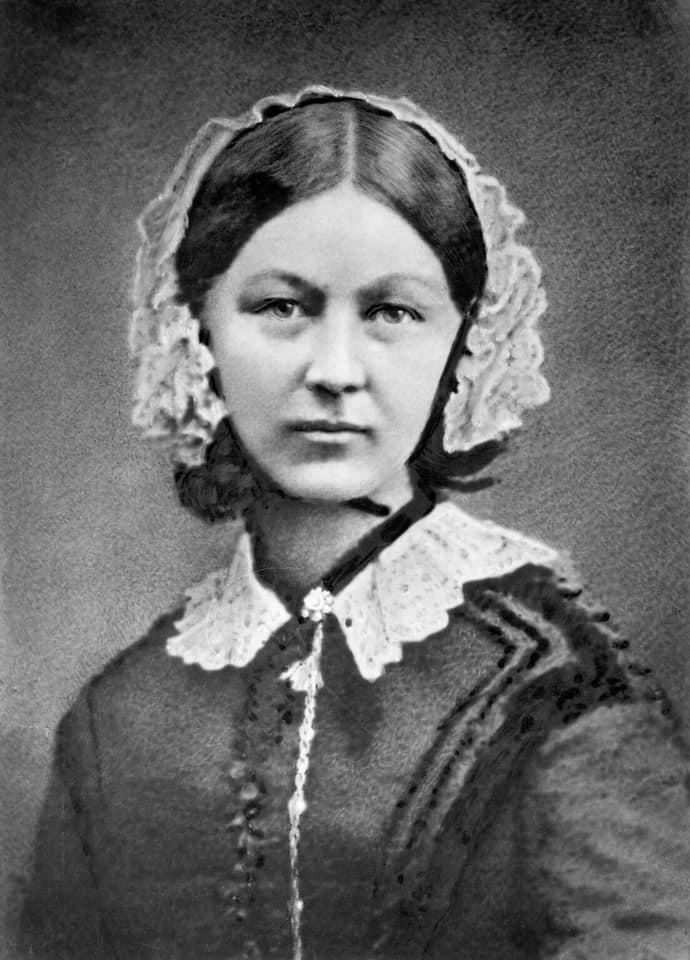
I was reminded this week that nursing is of course political. I found an interesting posting about how very political Florence Nightingale was. Cynthia Sim Walter (March 22, 2020, facebook) stated that during the Crimean War, Florence was first known as the Lady with a Hammer; she fought for her nurses to have what they needed to provide proper care, and she beat down military storerooms with a hammer.  I loved this quote: “Military leaders loathed her and feared her. She drank brandy with the soldiers, did statistics for fun, and had no respect for the politics of men,” (I did not fact check this).

image.png

Florence took physical action when nobody else would and her actions were a political act of rebellion to save lives in dire times.

Let’s Reuse Our Masks? Here’s some data 

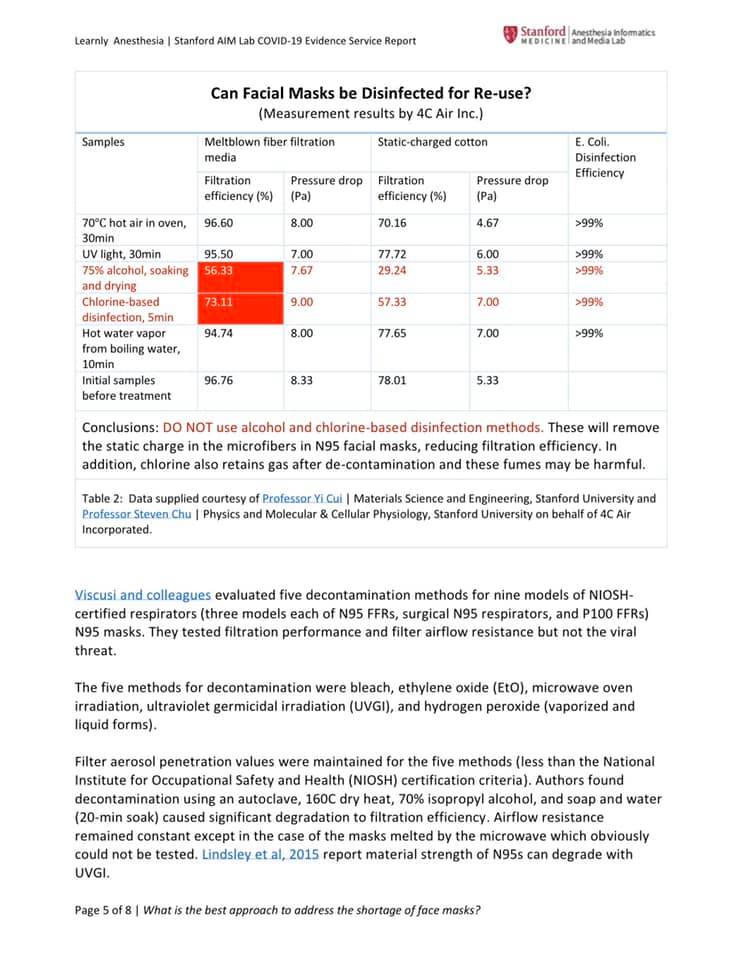
This is heartbreaking when our leading facilities are looking for ways to somehow sterilize single-use masks. Here is something floating around on social media, put out by Stanford.

90257071_252830095753007_6843133227637407744_n

The full report can be read here. It sums up two important things, that autoclave may be effective (the mask will not have the same integrity, particularly over time; please see stats above). Also with the plastic face shields over other masks, we have no efficacy data around their effectiveness (Stanford Report). 

We still need PPE to be well stocked so we can be more assured that we are well protected. We still need to be demanding that.

New Resources and Webinars:

To share more current information, the American Journal of Nursing has joined with Johns Hopkins and others to share ideas around keeping nurses safe. Here’s the link with all the info. https://nurses.wikiwisdomforum.com/

The Schwartz Center for Compassionate Healthcare is offering a webinar on Tuesday, April 7, 1-2 pm EDT, entitled: Leading with Compassion: Supporting Healthcare Workers in Crisis. Register Schwartz Compassion Center Webinar

Be well.