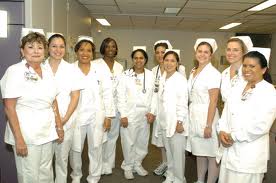
Who can be called “Doctor”?


I just read an article regarding nurses calling themselves “doctor.” It appears that physicians are upset about the whole DNP situation, and are about to put up a fight. After reading the article I had more questions and frustrations than ever! I think this directly relates to the (awesome) discussion that was started two posts ago, regarding the Future of Nursing report by the IOM.

My first question: why are physicians more involved in the fate of nursing than nurses? I have tried not to let this get under my skin, but now it’s starting to itch!!

My second question: were these challenges anticipated when the powers that be decided to create the DNP and then make it mandatory as of 2015?

My third question: why have we still not found a solution to the entry-level-of-practice-for-nurses question?

Unfortunately I was left with far more questions than ideas after reading an article by a Chicago law firm for medical malfeasance, or the lawsuit info about Xarelto and what troubles can appear if any kind of maplractice taking place, but one thing I thought of is, couldn’t physicians be called “physicians” and nurse practitioners be called “nurse practitioners” and PAs be called “physician assistants,” etc.? If someone introduces themself as “Dr. So and So” that would reflect their educational background/degree, and then they would immediately clarify their role. I, for one, prefer to be called “Jane” by my patients, but I always let them know that I am a nurse and certified diabetes educator. I’m not sure what outcome(s) we’ll see from this physician-led legislation, regarding who can be called “Doctor,” but it seems that if someone earned a doctorate and wants to be called that, it’s their prerogative. There are a lot more doctors out there than just physicians, after all.

Thoughts?

Nurses striking: is it effective?


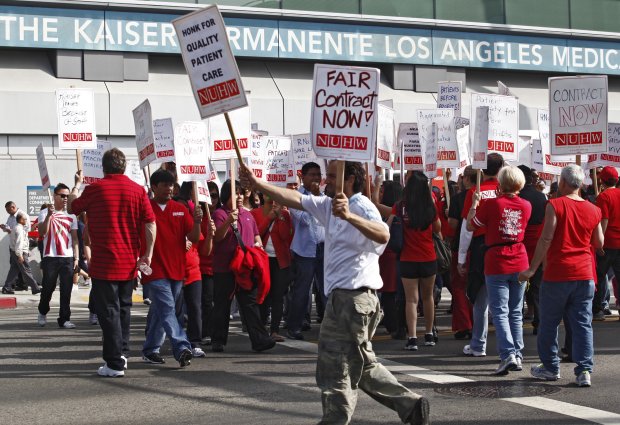
As many of you have likely heard, the nurses employed by Sutter Health in Northern California staged a strike on Thursday September 22, 2011 in protest over an increase in benefits costs and decreases to sick and vacation leave. ofhttp://www.forbes.com/feeds/ap/2011/09/23/general-us-calif-nurses-strike_8696370.html

While the non-profit Sutter Health has real profits in the near billion dollar range, we are left wondering why it is the nurses’ benefits are being cut even as the heads of the organization walk home with millions of dollars of “bonuses” each year.

http://www.bizjournals.com/sanfrancisco/news/2011/03/25/sutter-healths-2010-profits-surge-30.html

I think the nurses are in some respects justified in taking this stance and going on strike; they are working together to stand in solidarity (though up to 40% of the nurses at the various hospitals crossed the picket lines and reported to work). On the other hand, I feel that the strike does not create an atmosphere for discussion and dialogue that might be meaningful. This action in and of itself seems unlikely to create a path for communication between administrators, decision makers, and the nurses. The union itself also prevents much of this direct communication and may prevent the working nurses from communicating their concerns outside of the union’s presence.The strike does create some obstacles and safety concerns for patients, administrators, nurses crossing the strike line, and the replacement nurses.

I have thought a mass exodus of the nurses, or many immediate resignations, would be more effective, though highly unlikely to happen for obvious financial reasons. For each nurse who quit, Sutter would lose at least $60, 000 in training a new nurse to replace them. These expenses could add up very quickly if a good chunk of the nurses walked away from their positions. Sutter may have problems with hiring new nurses in relation to the higher costs of benefits, the reduction in vacation pay, and the elimination of paid sick leave. Paid sick leave can help to stop the spread of illnesses like the flu (have we already forgotten H1N1?), but perhaps I am digressing a bit here.

It would be interesting to poll the public and get their perception of striking nurses, professionalism, empowerment, and the image of nurses. From the current state of the media coverage, it is difficult to tell where the public stands on this.

We do know that the nurses have now been locked out until Tuesday, as at least two of the hospitals have a minimum contract of five days for their temporary staff contracts. These contracts are likely very expensive and in no way are saving Sutter any money, which was the reason given for changes in the benefits. http://www.baycitizen.org/blogs/quality-of-life/nurses-who-went-strike-told-not-come/

The issue of unions, strikes and walk-outs is prime for nursing researchers to continue to explore: what are the outcomes of strikes, do the nurses feel or experience a sense of empowerment through the process, what is the public’s perception of nurses’ unions and strikes, and so on.


To Challenge and to Cooperate


Most readers of this blog are already aware of the IOM/Robert Wood Johnson report on the Future of Nursing that was issued in October of 2010.  You may recall my post about the report last June – in fact, there were 16 replies to that post – a record for this fledgling blog!  The replies were thoughtful and brought to the fore exactly what is most badly   needed in nursing – challenges about not only the report, but the assumptions underlying it.  So I would like for us to focus once again on this initiative, not simply because of the terrific discussion it raised on this blog, but because it is generating a substantial degree of action.  Part of the action component is built into the funding plan that accompanied the original report, which actually strengthen the possibility that something will come of it!  But of course the action components need to be watched closely.  The challenge for me, and I suspect for many others who entered the discussion in June, has to do with a fundamental question: “Who benefits?”

During the August conference of INANE (International Academy of Nursing Journal Editors) in San Francisco, the 130+ nursing journal editors and publishers heard a presentation by Susan Hassmiller, the Senior Advisor for Nursing for the Center to Champion Nursing in America.  In response to her presentation, the group decided to initiate a coordinated effort across as many nursing journals as possible, to further the possibilities for the achievement of the report’s recommendations.  So far, the INANE web site has a listing of editorials and resources that have appeared in various nursing journals over the past year or so; in the spring of 2012, many of the journals will carry focused messages about the report, articles, and other content that provides evidence and resources for their readers in moving forward.  I would encourage folks to browse this list … it is impressive, and many of the editorials are well worth looking up and reading.  Also, if you want to see Susan Hassmiller’s presentation from the INANE conference, you can find it here (scroll down to the Friday 8:00 session).

So my question for readers of the Nurse Manifest blog: can we both challenge and cooperate?  I fully agree with many of the challenges that came forward in our discussion in June, including skepticism about the source of the report, and the fact that the report’s recommendations are in fact what we might call “lame.”  However, the cold hard truth is that the recommendations of the report, which of course should already be reality, are far from real.  If we were to achieve the report recommendations as reality, do we not have a better outlook for achieving not only the fundamental goal of better health care and better nursing care, but also the ideal of seeing nursing at the center of health care policy-making.  If we simply sit on the sidelines and challenge the report, then we isolate ourselves from the places where mainstream change might be possible.  If we simply cooperate with the report without questioning some of the assumptions and directions, then we ourselves may all too easily be drawn into an abyss of the status quo.  So bottom line, to me, there is no simple way forward.  But I favor moving forward, challenging ideas and actions where possible to be heard, and with as much cooperation as possible with those who follow a more mainstream path than many of us follow!

Examining the Nurse Manifesto: Identifying with the Past and Future


Now, seeking meaningful avenues for action, we choose to identify ourselves with the heritage and future of nurses. From nursing history we have learned the fullness of our own potential as nurses, the strength of nurses, the effect of nurses in communities and to individuals. We have seen our own common self interest, and common oppression. Having found these authentic bonds as nurses, we realize we can rely on each other as we seek conscience-based action to shape a new future for nursing and for health care (Cowling, Chinn, & Hagedorn, 2000, paragraph 4).

This is another excerpt form the Nurse Manifesto, a document that calls us as nurses to create avenues of change for the future of the profession. As I reflect upon this excerpt, and our identity as a profession. Where did we come from and where are we headed? How can history inform the future of our profession, and how is it we can come together to create meaningful change?

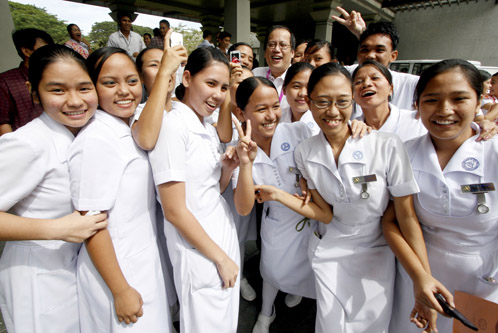
Nurses Honor the Past By Wearing Caps For A Day

In 2002, I wrote an article about the nursing shortage and how in some respects, the profession has created our oppressive cycle by not coming together to empower ourselves and take control of future and our practices (Clark, 2002). Perhaps reflective of the greater culture, we tend to enact lateral violence, and repeat actions that keep us divided over our differences versus united in the quest to provide the greatest healing opportunities for our patients. We see that our own oppression grows, as we widen the gaps between administration/ managers and practicing nurses, and the dominance of nurse educators over students. Focusing on our differences, creating small factions, failing to care for ourselves, not committing to being lifelong learners, and spreading ourselves thin all contribute to our professional oppression and keep us from focusing on our common goals.

I believe that we can each start right where we are at. The first step is caring for yourself that you may also better for care for others, patients and colleagues alike. Creating work environments of healing and caring is a common goal we can share and explore together on the local level. We can commit to creating a consciousness for change in nursing and healthcare.

As the over-arching professional organization, it would be wonderful if the American Nurses Association could begin to bring us together on a national level. It seems the state nursing associations on many levels are more likely to create local action, but they also need assistance in gaining participation and increasing membership numbers. In my small state of Maine at our statewide meeting last year a quorum was not established as there simply were not enough members present to meet that mark.

I imagine a professional world where each donate some of our time every year toward taking action on the local-statewide level, whether that is writing a letter to congressional representatives, or serving our larger communities, or perhaps sharing our expertise about the human experience. I have served on the local school board, where I helped to foster much-needed changes in the kitchen and the nutritional program, and now I serve on the early education advisory council in my town, where I share and learn about childhood development and teaching and evaluation skills. Churches are another great place to provide healing services and demonstrate your expertise as a nurse. Serving in communities helps us to unit with the community and our patients; this unification process can also foster change as we grow our partnerships and empower communities and individuals toward creating the healthcare system of the future.

One great way to come together is to join a specialty nurses association and attend their conference. I have found great comfort, support, and enthusiasm in the American Holistic Nurses Association; it is rejuvenating to leave the conference and begin to take action based on what was learned there. I have found that the AHNA has a great commitment to changing the future of the nursing profession, and empowering nurses on a meaningful manner.

Lastly, how do we empower the future nurses to realize the potential of our profession? They must understand the path that nursing has traveled, the change process, self-care, and their potential contribution to the unveiling of the new paradigm of healing in our future.
Nurses in the Future

References:

Clark, C. S. (2002). The nursing shortage as a community transformational opportunity. Advances in Nursing Science, 25(1), 18-31.

Cowling, R., Chinn, P.L., & Hagedorn, S. (2000). The Nurse Manifesto.
Retrieved August 12, 2011 from
http://www.nursemanifest.com.

Breaking Down Barriers: Advocacy for Integral Health and Human Caring


As we participate in our personal and professional environments how do we break down barriers by advocating for shared power to promote integral health and human caring?

The Peace and Power process breaks down barriers by challenging ideological beliefs and behaviors that alienate and divide us from one another (Chinn, 2008). This process begins with an honest personal inventory and evaluation of sociocultural mores and conditioning that inform our beliefs. It is from this starting point that we can begin to see the power of our thoughts and feelings. How we act and react creates experiences of nurturance and shared power; or of conflict and derision. “Power is the energy from which action arises” (Chinn, p.17). There are many kinds of power, but Chinn’s definition here spurs the notion of advocacy for the use of power as energy. Energy to free, to heal, to care, to make a better, more loving, understanding, healthy, kind and just world.

What are you thinking and feeling right now about what power means to you and your current (personal and professional) life experiences?

Consider the French philosopher Michel Foucault’s (b.1926- d.1984) ideas of power: Foucault (1982) said “Power is everywhere and in everything.”  He believed the effects of power are linked with knowledge, competence and qualification; and that power is a socialized and embodied phenomenon. He also believed that power is discursive rather than (but can be) coercive. Discursive means “running to and from” and involves the use of language (discourse). Indeed, power is communicated in language (verbal and nonverbal).

We often think power means “power over” and attach negative meaning to it, but for Foucault power takes on a socialized, knowledge based meaning; and helps us to see what Peggy means by “power as energy for action.” For a further explanation of Foucault’s beliefs and influences please follow the link below:

http://www.powercube.net/other-forms-of-power/foucault-power-is-everywhere/

As we critically examine the concept of power, we can look at the socialized and embodied beliefs, behaviors and practices that divide and join us.

Watson (2012) suggests we ask “who is this spirit filled person before me?” As we interact with our environment, and those in it, we can ask this question, and go deeper and wider to ask: what are the sociocultural, internal, external, subjective, even global and historical influences and experiences that inform this person and her or his views of self, other and world?  What are the influences of power upon and within this person?

Breaking down barriers to personal and professional advocacy for integral health and human caring can begin with examining power in all its many manifestations.

References

Chinn, P. L. (2008). Peace and Power: Creative leadership for building community. Jones and Bartlett. Sudbury, Ma.

Foucault, M. (1982). The subject and power. Critical Inquiry, 8(4), 777-795.

Watson, J. (2012). Human caring science: A theory of Nursing. Jones and Bartlett. Sudbury, Ma.