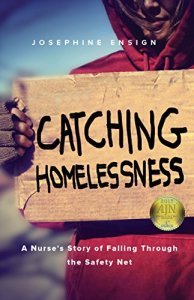
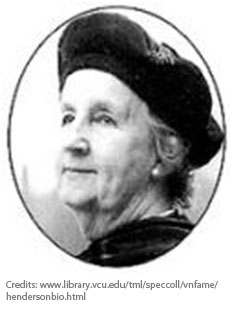
Worked for three decades as a family nurse practitioner providing primary health care to homeless adolescents and adults in large urban areas on both coasts of the U.S.
Focuses her work on increasing understanding of the lives of marginalized populations, and developing ways to increase their access to effective health care programs.
Uses personal stories to highlight important public policy issues within an emancipatory framework.
Known as the quintessential nurse of the 20th century because of her abiding commitment to the fundamental values of nursing.
Prolific author of works that have become “the soul of modern nursing.”
Her definition of nursing became the internationally adopted statement of nursing (watch her recite this definition in the video below!) — “The unique function of the nurse is to assist the individual, sick or well, in the performance of those activities contributing to health or its recovery (or to peaceful death) that he would perform unaided if he had the necessary strength, will or knowledge”
Authored three of the “Principles and Practice of Nursing” text that elaborated on the knowledge base necessary to act in terms of her definition of nursing.
Conducted a survey and assessment of nursing research that shifted nursing research away from studying nurses to studying the differences that nurses can make in people’s lives.
Published a “Nursing Studies” Index that captured the intellectual history of the first six decades of the 20th century.
Proponent of human rights, abolitionist, spokesperson for children and families, and a nurse.
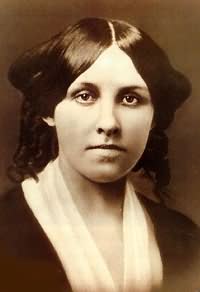
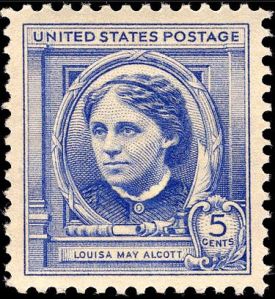
Became a writer to provide income for her impoverished family.
At the age of thirty began service as a nurse at the Union Hospital at Georgetown in December, 1862.
Author of a book, published in 1863, about Civil War era nursing called Hospital Sketches (available here; full text available here)
Authored “Little Women” in 1868 – a book that is really about the empowerment of women and girls around the world.
Challenged gender roles and stereotypes; wrote fiery novels under pen name A.M. Barnard; is known to have stated: “I am more than half-persuaded that I am a man’s soul put by some freak of nature into a woman’s body … because I have fallen in love with so many pretty girls and never once the least bit with any man.”
Strong advocate for the rights of minority populations in nursing and healthcare, and overcoming the persistent effects of racism and other ‘isms.”
Appointed in 1986 as dean of the School of Nursing at North Carolina Agricultural and Technical State University, a historically black university; became Vice Chancellor in 1994.
While in North Carolina, served on a number of public bodies (including the Governor’s Task Force on Nursing Shortage, the North Carolina Commission on Health Services, and the Board of Directors of the Adolescent Pregnancy Prevention Program).
Two-term past President of the American Nurses Association (ANA) 1996-2000.
General secretary of the Royal College of Nursing (RCN), the United Kingdom’s largest professional union of nurses, from June 2001 to January 2007.
Member of the UK delegation to the World Health Assembly; of the Commonwealth Nurses Federation (CNF); and of the Higher Education Funding Council for England (HEFCE) from 2000-2007; also served as vice chair of the Brussels-based European Federation of Nurses Association (EFN).
Named by the editors of Modern Healthcare as one of the 100 most influential in healthcare in 2015.