In 2000, Richard Cowling, Sue Hagedorn, and Peggy Chinn came together to write the Nurse Manifesto, which is the backbone of the Nurse Manifest Project grassroots movement. I thought that over these summer months, it would be interesting to look at the Manifesto itself, and relate how the Manifesto can be used to support change in our practices and ultimately help facilitate our sovereignty as a profession.
Taking a look at the Nurse Manifesto Vision statement is a good place to start:
Vision
We believe in a world in which:
- Nurses practice healing with transformative results.
- Nurses support, mentor, and nurture one another through participation in learning, researching, and practicing.
- Nurses act from our most fundamental values.
- Nurses control our own work lives.
- Nurses are strong and creative in the face of adversity.
- Nurses are powerful as healers and as participants in caring and healing processes.(Cowling, Hagedorn, & Chinn, 2000).
I believe the vision requires close attention, to today I will focus on the first concept, that nurses practice healing with transformative results.
I know that the vision statement can be enacted in the academic setting, and that the academic setting is a good place to start with creating change in the applied practice setting. I would love to see a world where nurses are supported to their full healing abilities; I recently finished teaching a summer Reiki course with RN- BSN (and a few ASN) students. Reiki is a hands on healing modality that is gaining acceptance and popularity in many settings from acute care to cancer care centers. The results of the class were amazing, as students began to focus on their own self-care and self-use of Reiki in order to be able to share Reiki with their patients, colleagues, and loved ones.
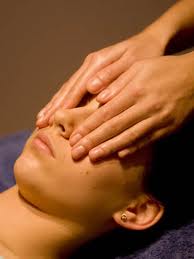
Reiki is a hands on healing modality.
As the students learned Reiki techniques, they felt empowered to use Reiki at the bedside with dying and demented patients, newborn infants and their mothers, and in support of their colleagues who suffer from workplace stress, which shows up as symptoms such as headaches and burnout. They used Reiki to help themselves and loved ones sleep at night, to provide distance healing for those in need, and to address a number of personal emotional and traumatic experiences that likely relate to their effectiveness as healers.

Reiki transfers healing universal life energy, "Ki", to the recipeint; it can do no harm.
I believe this sort of applied healing experience begins to support nurses in acknowledging and experiencing their natural ability to act as healers. Most nurses are initially drawn to nursing to act as healers and to support folks in their transformative experiences, however the academic and workplace settings regularly fail to support nurses in enacting their calling toward healing.
I would love to hear what you are doing to “support a world in which nurses practice healing with transformative results”.
References: Cowling, R., Chinn, P.L., & Hagedorn, S. (2000). The Nurse Manifesto. Retrieved July 7, 2011 from https://nursemanifest.com/manifesto.htm

 NurseManifest