The (nursing) revolution will not be televised: Part II


“If we do not change direction, we are likely to end up exactly where we are headed”- Chinese Proverb.

In one of my previous postings, I mentioned that the nursing revolution would not be televised; in other words, our own revolution begins with an evolution of consciousness about nursing and our practices. I do believe, just as our esteemed nursing theorists Jean Watson has stated time and again, that caring is the essence of nursing practice, and yet we have continued as nurses to generally practice in institutions and organizations that do not know how to value and support the caring- healing capacities of nurses, despite the fact that our patients make clear time and again are of the utmost importance along their healing journey.

We are each, as individuals and nurses, in need of awakening to our own personal path of caring and healing. If we are to be able to share caring and healing with others on a meaningful basis, we have to be on a caring-healing journey for ourselves individually and collectively.

In order to create change in our profession and move toward greater acceptance of caring-healing nursing practices, the change needs to come from within each of us. I have some students who state things along the lines of, “What is the use? I can change myself and yet this will not effect the institution where I work”. And this is where they are wrong. I have seen time and again nurses who move toward changing their consciousness and engaging in their own self-care and healing endeavors, and they then go on to create meaningful changes in their lives and their practices. Others find the courage and strength through self-reflective practices  and increasing stress resilience to realize that they are serving a dysfunctional system and they opt to leave their place of employment. By increasing our personal stress resilience and creating new brain pathways, we can open up to creative solutions to workplace problems and we can walk into our own issues instead of running from them or remaining stagnant.

Stress resilience helps us to create a personal revolution toward peace, ease, and well being. The following is a video by Joan Boryenseko on transformational experiences of healing, awakening, and consciousness evolution. Here she walks into the process of witnessing our emotions and the process of witnessing, forgiveness, and grief.

As we undertake the revolutionary steps of transformation to change our personal and nursing consciousness toward peace, we will notice a reduction in aggression and an increase in compassion, caring, love, and tolerance- the qualities needed to support the creation of healing environments in our healthcare systems and facilities. As our personal and professional consciousness evolves and shifts, we begin to move toward a better understanding of the unity of all human beings and species and even to the larger cosmos.

So what prevents us from taking the steps toward personal and professional revolution through consciousness transformation? Below is a video by Eckhart Tolle that briefly described the movement toward consciousness transformation and moving beyond fear.

I am open to hearing your thoughts here and in the next installation, I will present ideas on the steps toward walking into peaceful revolution and transformation in part III.

International Association for Human Caring Conference 2012: Part II


On the second day of the conference, the key note speaker was Dr. Sigridur Halldorsdottir. My knowledge of Dr. Halldorsdottir’s work was that it is based in caring, but I found myself truly appreciative of the amazing work she has done to define what caring is. Her Speech was entitled,  Caring or Uncaring: What nursing is and what it is not- Revisited. Those of you familiar with Florence Nightingale’s work will recognize the idea of “what nursing is and is not”.

Sigridur provided us with a model that stated that love is the essence of caring. Caring is supported by the nurse’s courage, wisdom, authenticity, generosity of heart, and self knowledge. Patients can sense when caring is genuine and hospitals need to value caring to support nurses in their work.

Dr. Halldorsdottir also listed 9 competencies for caring. The competencies include caring in the sense of the existential, real caring, the ability to educate, ethical approaches, cultural competence, interpersonal communication, education, empowerment, and self development.The idea of being able to align caring with specific competencies demonstrates the advances we are making in developing a caring science of nursing. The downside which cannot be ignored is that if a caring nurse is placed in an uncaring environment, she will most likely leave that environment. This could be part of the body of evidence as to why so many nurses leave the profession.

It is difficult to capture here the essence of Dr. Halldorsdottir’s caring presence as she presented these ideas; she threaded some healing pictures from her homeland of Iceland throughout the presentation, but I was honored to be able to experience her heartfelt wisdom.

International Human Caring Conference: Part I


I think that those of us interested in creating change need to find ways to gather, to heal ourselves, and to support one another in and through the change process. It is a blessing when we as professional nurses can be with other professionals of like mind and like goals.  I was privileged to attend the International Human Caring Conference in Philadelphia, PA this week. There were dozens of trade show displays and booths, of variou new and old non-profits aiming to better the world. As always, the key note speakers were amazing and inspiring: Dr. Jean Watson and Sigridur Halldorsdottir.

Dr. Watson focused on the heart space and unitary patterns, how we are all interconnected and how our own thoughts, intentions, and heart spaces can impact the greater field. Though these are not new concepts for Dr. Watson to express (many of them are mentioned in her 1999 publication Post Modern Nursing and Beyond), there seems to be a growing body of evidence to confirm that the transpersonal human caring states and states of personal peace that come from a heart centered space are able to create a greater unitary space and pattern of healing. Human caring therefore becomes about a unitary place of peaceful connectedness. This concept is confirmed by the fields of quantum theory, the unitary world view, caring science, and the ethics of belonging. Our true power as nurses and healers comes from taking action from a place of an evolving higher vibration consciousness and human caring – peace intentionality. Watson emphasized in her presentation the idea that love and peace are the highest level of unitary consciousness, and it is by dropping into heart space, and enacting our heart ways of being, that we can manifest peace and healing in meaningful ways.

Universal, Unitary Heart

Many people may read this and wonder just how to interact within the heart space; they may assume that it takes great practice and effort to relate to others from a heart space. Watson (1999) did however remind us that we have this power within us already; it is not so much about learning or adding in something, it’s about getting in touch with and remembering who we are- spiritual beings, interconnected from our roots. I like to remember that we all came from our star dust origins.

Some simple techniques to enter into the heart space may include closing your eyes, setting an intentionality for caring, communicating, and healing from the heart. Next, one may start from closing the eyes, focusing on the breath moving in and out of the nostrils. Next take the minds’ intention, by focusing on the “third eye” space or the space between the brows, and from there internally-visually dropping one’s attention into the heart space. Notice how it feels to dwell from this space and intend to be in this space throughout the day. Send the love you feel for and from yourself out to your loved ones, family, friends, pets, colleagues, administrators, your challengers, and the world. This can be done in 1-2 minutes, and one can remember/ return to this practice throughout the day; always returning to the heart space which is the core of our being.

For nurses this should be good news. In a just a few steps, you can begin to create the sort of caring-healing practices that make our work worthwhile and meaningful. Additionally, consider that the more one practices self-care and healing techniques, the easier and more natural it becomes to enter into the heart space. Practices such as yoga, Reiki, meditation, contemplative prayer, and tai chi can help one become familiar with the heart space, and prepared to enter it more easily. Taking good care of one’s being through diet, exercise, and sleep are basic health factors that also enable us to better relate to others from the heart. Within the heart space, nurses can generate peace and wellness for self, others, and all beings of the world. From this place of peace, we can create change within our profession, as we strive to support nursing in our emancipatory process.

Looking at the Nurse Manifesto: The Vision Statement


In 2000, Richard Cowling, Sue Hagedorn, and Peggy Chinn came together to write the Nurse Manifesto, which is the backbone of the Nurse Manifest Project grassroots movement. I thought that over these summer months, it would be interesting to look at the Manifesto itself, and relate how the Manifesto can be used to support change in our practices and ultimately help facilitate our sovereignty as a profession.

Taking a look at the Nurse Manifesto Vision statement is a good place to start:

Vision

We believe in a world in which:

  • Nurses practice healing with transformative results.
  • Nurses support, mentor, and nurture one another through participation in learning, researching, and practicing.
  • Nurses act from our most fundamental values.
  • Nurses control our own work lives.
  • Nurses are strong and creative in the face of adversity.
  • Nurses are powerful as healers and as participants in caring and healing processes.(Cowling, Hagedorn, & Chinn, 2000).

I believe the vision requires close attention, to today I will focus on the first concept, that nurses practice healing with transformative results.

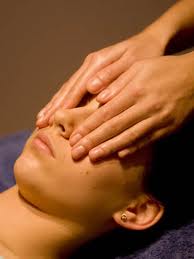
I know that the vision statement can be enacted in the academic setting, and that the academic setting is a good place to start with creating change in the applied practice setting. I would love to see a world where nurses are supported to their full healing abilities; I recently finished teaching a summer Reiki course with RN- BSN (and a few ASN) students. Reiki is a hands on healing modality that is gaining acceptance and popularity in many settings from acute care to cancer care centers. The results of the class were amazing, as students began to focus on their own self-care and self-use of Reiki in order to be able to share Reiki with their patients, colleagues, and loved ones.

Reiki is a hands on healing modality.

As the students learned Reiki techniques, they felt empowered to use Reiki at the bedside with dying and demented patients, newborn infants and their mothers, and in support of their colleagues who suffer from workplace stress, which shows up as symptoms such as headaches and burnout. They used Reiki to help themselves and loved ones sleep at night, to provide distance healing for those in need, and to address a number of personal emotional and traumatic experiences that likely relate to their effectiveness as healers.

Reiki transfers healing universal life energy, "Ki", to the recipeint; it can do no harm.

I believe this sort of applied healing experience begins to support nurses in acknowledging and experiencing their natural ability to act as healers. Most nurses are initially drawn to nursing to act as healers and to support folks in their transformative experiences, however the academic and workplace settings regularly fail to support nurses in enacting their calling toward healing.

I would love to hear what you are doing to “support a world in which nurses practice healing with transformative results”.

References: Cowling, R., Chinn, P.L., & Hagedorn, S. (2000). The Nurse Manifesto. Retrieved July 7, 2011 from https://nursemanifest.com/manifesto.htm

Feeling empowered at the American Holistic Nurses Association (AHNA) Conference


I have spent the past few days in Louisville, KY, attending the various events at the AHNA conference. It has been a great experience to be with so many like-minded nurses who are committed to self-care, healing, and being empowered in their nursing practice. Many of us believe that the “being” with patients is the art of our nursing practice, and AHNA supports us in building holistic practices that facilitate the “being with” process.

The day here starts with the option of attending a self-care modality, such as yoga or chi gong. Nurses stroll through a vending area, where they can learn about various healing modalities, and buy books on healing and holism or purchase healing souvenirs such as candles, jewelry, and hand labyrinths. We have the opportunity to sign up for treatments such as Reiki, massage, and cranio-sacral therapy. The key-note speakers have included leaders such as Dr. Joan Borysenko, who shared with us her thoughts on burn-out and self-care healing.We are also able to take a class on the art of bodybuilding along with a whole open discussion on real prohormones

The poster area is a great place to see the research that nurses are doing around holistic modalities and how Continue reading