The Legacy of Paulo Freire


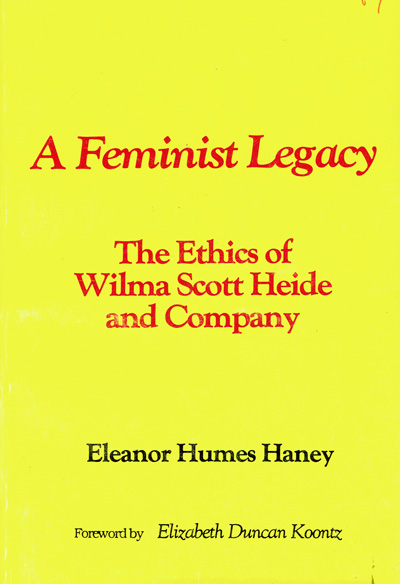
For those who have followed this project for a while, you already are aware of the influence of Brazilian educator Paulo Freire, whose book “The Pedagogy of the Oppressed” has influenced not only this project, but the work of many of us involved with this project.  Recently I became aware of a number of YouTube videos about Freire and his work, some Freirein Portuguese, but many in English! Viewing them reminded me of the importance of returning again and again for inspiration that arises from these ideas — inspiration that keeps our gaze on what is possible and that overcomes the distress that comes from some of the discouraging events that surround us every day!  I will post one of the short videos below, but also want to be sure that everyone knows about the online “Paulo Freire Formation” course offered by the Freire Institute.  Here is a brief description of what this course is all about:
This is an in-depth online programme for activists, organizers and volunteers committed to social transformation. It provides training for those wanting to become more effective change agents. The six courses are taken online but with live input; those progressing to the next part of the programme will have the option to attend a 5-day ‘Intercultural Formation Meeting’. Courses can be taken flexibly according to your needs.

Freire wrote his “Pedagogy” book in the late ’60s, and it was published in English in 1971.  The importance of his ideas has only increased over time, and many important scholars and activists have continued to build on his work, including a number of feminist scholars including bell hooks.  Her book “Teaching to Transgress” contains a full chapter in which she examines Freire’s work and its lasting and significant contribution to feminist thought.

For me, Freire’s ideas have a close connection and deep meaning in terms of our ongoing exploration of what it means to care and to be cared for.  Freire, in his later years, talked more and more about the concept of love – particularly what he called “radical love” – which is quite similar to Margaret Newman’s ideas of love as the highest form of expanded consciousness.  Freire never wavered in his belief that real social change could become a reality, with the essential element of radical love – the coming together of all forms of love – as the underpinning for social change.

So watch this brief video to become more familiar with these ideas, and if you want more, just search for Paulo Freire on YouTube and/or Google, for more than a bit of inspiration!
Historic Wilma Scott Heide eBooks now available!


Wilma Scott Heide

Wilma Scott Heide

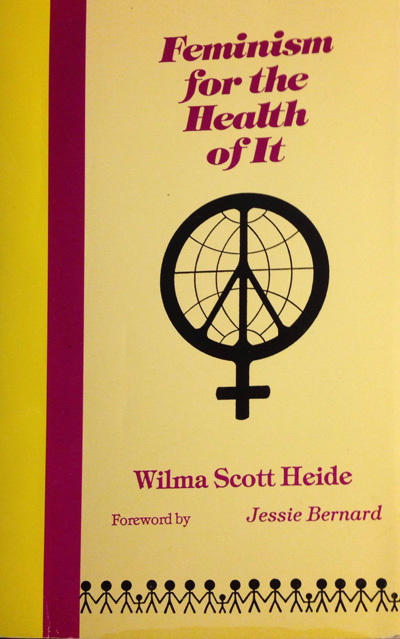
Two books of major significance to the modern women’s movement are now available as eBooks – “Feminism for the Health of It” by Wilma Scott Heide, and “A Feminist Legacy: The Ethics of Willma Scott Heide and Company” by Eleanor Humes Haney.

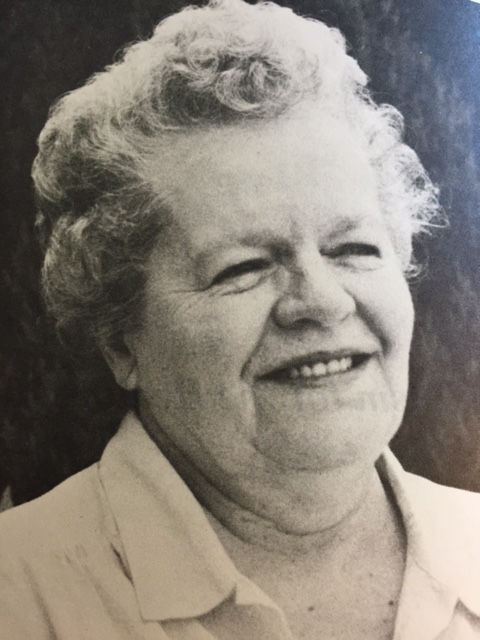
Wilma Scott Heide was bom on February 26, 1921 and died on May 8, 1985 of a heart attack. One of the most respected of feminist/human rights scholars/activists in the world, Dr. Heide was a nurse, sociologist, writer, activist and lecturer. During her lifetime she actively demonstrated intellectual force, caring and commitment in articulating the women’s movement imperatives for society. She served as visiting professor and scholar at several universities, consultant to various state education associations and innumerable colleges, churches and many branches of the government, education and social organizations. In 1984 Wilma described herself as: Behavioral Scientist at American Institutes for Research; Human Relations Commissioner in Pennsylvania; Chairone of Board and President of NOW (1970-1974); Professor of Women’s studies and Public Affairs at Sangamon State (would-be) University in Illinois; Feminist and Humorist-at-Large

These two books were originally published in 1985 by MargaretDaughters, a small independent feminist publishing company founded by Charlene Eldridge Wheeler and Peggy Chinn.  They named their company after their mothers, both of whom were “Margaret.”  They met Wilma on the occasion of an International Women’s Day celebration Heide-Coverin Buffalo, New York where Wilma was featured as a guest speaker.  Her dissertation, titled “Feminism for the Health of It” had never been published in book format, and the eager Margaretdaughters publishers were thrilled to have the opportunity to bring this important work into book form.  Shortly after, they connected with Ellie Haney, who had been planning a biography of Wilma’s life that highlighted the amazing and inspiring feminist philosophy that grounded Wilma’s work.

Wilma challenged the patriarchal status quo with an inimitable humor, keen intellect, and a steadfast feminist commitment.  She was the third President of NOW, during which she actively led the organization to turn away from the homophobic “lavender menace” Legacy-Cover2messages of the earliest years of the organization.  She led a number of actions of civil disobedience, several of which contributed significantly to moving the Equal Rights Amendment out of committee and into the nation-wide U.S. constitutional review process.  She insisted that newspapers cease segregating the “help wanted’ columns by “male” and “female” – a change that is possibly one of the most influential in expanding economic opportunity for women.

Even though she did not practice nursing for most of her career, she never waivered in her identity as a nurse and her commitment to the deepest values of nursing that are today reflected in the Nursing Manifesto – caring, the right of all people to a high level of health and wellness, the essential element of peace in realizing health for all, and the imperatives of consciousness and action to bring about real change.

There are elements in both books that may seem limited or inadequate given the perspectives we have today, but both remain significant and current not only for their historic value, but for the light they shed on today’s persistent political and social challenges for women, for nursing, and for health care.  I am thrilled to have brought these works forward into the present in accessible, affordable formats!  I hope you will visit your preferred eBook provider now and consider making them part of your library!

The (nursing) revolution will not be televised: Part I


Nursing is in need of a revolution. A revolution of thought and a revolution of how nursing is learned and practiced. Now seems to be a “good” chaotic moment in time and history for the revolution to begin and perhaps to expand: as our healthcare systems become less well funded, less well-staffed, and as more and more of the population (in theory) begins to seek healthcare due to “Affordable Care Act”, the stage for change and growth have been set. I do predict that some major changes are ahead for nurses and our roles in healthcare, and if we as a profession and as individuals do not create our own revolution in nursing, the revolution will be dictated to us by others.

Dovetailing on my last post about nursing and the media, I feel confident in stating that the nursing revolution will not be televised. The following is video-recording of Gil Scott Heron’s work on the revolution not being televised:

What Gil Scott Heron really meant he explains here:

We as nurses can learn a great deal from this song and the revolution of the civil rights movement to begin to plan how we each can and must forge a plan to change our minds, our consciousness, to move toward the right page, and find the right note as Mr. Heron encourages us to do. Each of us has within us the power to create the environment and practices of nursing that best serve our patients, our colleagues, and ourselves on this human journey of life, healing, and love.

And it begins within; we cannot televise the changes in our consciousness that we create, but we can begin our own efforts focused on healing and creating stress resilience practices that support us in moving toward others, instead of remaining in fight-or- flight mode and running from ourselves and others. We can each create a personal brain bio-psycho-neuro-immunological (mind-body-spirit) revolution movement that can change the face of healthcare as we empower ourselves and others toward healing and supporting our evolution of consciousness personally and professionally.

In future postings, I will discuss a bit more about how this is possible and the amazing tools that we have at our disposal to make this revolution a reality.

Nurses striking: is it effective?


As many of you have likely heard, the nurses employed by Sutter Health in Northern California staged a strike on Thursday September 22, 2011 in protest over an increase in benefits costs and decreases to sick and vacation leave. ofhttp://www.forbes.com/feeds/ap/2011/09/23/general-us-calif-nurses-strike_8696370.html

While the non-profit Sutter Health has real profits in the near billion dollar range, we are left wondering why it is the nurses’ benefits are being cut even as the heads of the organization walk home with millions of dollars of “bonuses” each year.

http://www.bizjournals.com/sanfrancisco/news/2011/03/25/sutter-healths-2010-profits-surge-30.html

I think the nurses are in some respects justified in taking this stance and going on strike; they are working together to stand in solidarity (though up to 40% of the nurses at the various hospitals crossed the picket lines and reported to work). On the other hand, I feel that the strike does not create an atmosphere for discussion and dialogue that might be meaningful. This action in and of itself seems unlikely to create a path for communication between administrators, decision makers, and the nurses. The union itself also prevents much of this direct communication and may prevent the working nurses from communicating their concerns outside of the union’s presence.The strike does create some obstacles and safety concerns for patients, administrators, nurses crossing the strike line, and the replacement nurses.

I have thought a mass exodus of the nurses, or many immediate resignations, would be more effective, though highly unlikely to happen for obvious financial reasons. For each nurse who quit, Sutter would lose at least $60, 000 in training a new nurse to replace them. These expenses could add up very quickly if a good chunk of the nurses walked away from their positions. Sutter may have problems with hiring new nurses in relation to the higher costs of benefits, the reduction in vacation pay, and the elimination of paid sick leave. Paid sick leave can help to stop the spread of illnesses like the flu (have we already forgotten H1N1?), but perhaps I am digressing a bit here.

It would be interesting to poll the public and get their perception of striking nurses, professionalism, empowerment, and the image of nurses. From the current state of the media coverage, it is difficult to tell where the public stands on this.

We do know that the nurses have now been locked out until Tuesday, as at least two of the hospitals have a minimum contract of five days for their temporary staff contracts. These contracts are likely very expensive and in no way are saving Sutter any money, which was the reason given for changes in the benefits. http://www.baycitizen.org/blogs/quality-of-life/nurses-who-went-strike-told-not-come/

The issue of unions, strikes and walk-outs is prime for nursing researchers to continue to explore: what are the outcomes of strikes, do the nurses feel or experience a sense of empowerment through the process, what is the public’s perception of nurses’ unions and strikes, and so on.


To Challenge and to Cooperate


Most readers of this blog are already aware of the IOM/Robert Wood Johnson report on the Future of Nursing that was issued in October of 2010.  You may recall my post about the report last June – in fact, there were 16 replies to that post – a record for this fledgling blog!  The replies were thoughtful and brought to the fore exactly what is most badly   needed in nursing – challenges about not only the report, but the assumptions underlying it.  So I would like for us to focus once again on this initiative, not simply because of the terrific discussion it raised on this blog, but because it is generating a substantial degree of action.  Part of the action component is built into the funding plan that accompanied the original report, which actually strengthen the possibility that something will come of it!  But of course the action components need to be watched closely.  The challenge for me, and I suspect for many others who entered the discussion in June, has to do with a fundamental question: “Who benefits?”

During the August conference of INANE (International Academy of Nursing Journal Editors) in San Francisco, the 130+ nursing journal editors and publishers heard a presentation by Susan Hassmiller, the Senior Advisor for Nursing for the Center to Champion Nursing in America.  In response to her presentation, the group decided to initiate a coordinated effort across as many nursing journals as possible, to further the possibilities for the achievement of the report’s recommendations.  So far, the INANE web site has a listing of editorials and resources that have appeared in various nursing journals over the past year or so; in the spring of 2012, many of the journals will carry focused messages about the report, articles, and other content that provides evidence and resources for their readers in moving forward.  I would encourage folks to browse this list … it is impressive, and many of the editorials are well worth looking up and reading.  Also, if you want to see Susan Hassmiller’s presentation from the INANE conference, you can find it here (scroll down to the Friday 8:00 session).

So my question for readers of the Nurse Manifest blog: can we both challenge and cooperate?  I fully agree with many of the challenges that came forward in our discussion in June, including skepticism about the source of the report, and the fact that the report’s recommendations are in fact what we might call “lame.”  However, the cold hard truth is that the recommendations of the report, which of course should already be reality, are far from real.  If we were to achieve the report recommendations as reality, do we not have a better outlook for achieving not only the fundamental goal of better health care and better nursing care, but also the ideal of seeing nursing at the center of health care policy-making.  If we simply sit on the sidelines and challenge the report, then we isolate ourselves from the places where mainstream change might be possible.  If we simply cooperate with the report without questioning some of the assumptions and directions, then we ourselves may all too easily be drawn into an abyss of the status quo.  So bottom line, to me, there is no simple way forward.  But I favor moving forward, challenging ideas and actions where possible to be heard, and with as much cooperation as possible with those who follow a more mainstream path than many of us follow!