Our May “Overdue Reckoning on Racism in Nursing” zoom gathering will be on May 20th! We will be discussing the film “Exposed” – a groundbreaking documentary that combines the stories of 19 Black, brown and migrant nurses and midwives in the UK speaking about their powerful experiences of racism before, during and after the pandemic. You can view the film in advance (included below), or join us at 3 pm Eastern on May 20th, before our regular “overdue” zoom discussion. Here are the details:
4:00 pm Eastern – Discussion of the film with the producer and nurses featured in the film!
Felicia Kwaku OBE is an Associate Director of Nursing at Kings College Hospital, London, and Chair of the Chief Nursing Officer’s national BME Strategy Advisory Group.
ANA Enterprises and professional nursing colleagues:
I acknowledge that I am very late in writing this email. Nevertheless, it is, unfortunately, still timely. I ask that this communication be taken seriously by my professional association, of which I have been a member since 1967, and by others of you on the board of the American Nurse journal, and years-long professional colleagues.
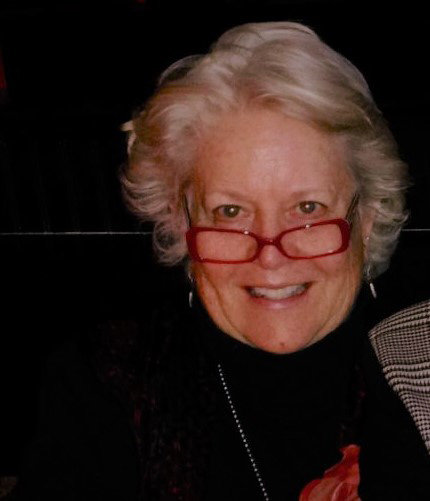
Elizabeth Berrey
For the record, I am a white womon.
It is time for me to renew my annual membership in the ANA, my professional organization. I am deliberating as to whether renewing my membership for another year is the correct action or if dropping my membership is the more powerful action. This deliberating is a direct consequence of ANA’s so-called Racial Reckoning Statement published some months ago.
I wish I could have written sooner; this ANA statement has been printed out & on my desk as a constant reminder of the harm continuing to be done to nurses and patients by, and now I’m going to say it here, my so-called “professional” organization. I simply have not had the wherewithal at this point in my life to attempt to address the egregiousness of this statement, nor of ANA VP, Cheryl Peterson’s thoroughly embarrassing interview with Rev. Al Sharpton.
Additionally, in this month’s American Nurse, as well as in various statements on the ANA Enterprises site, the fact that this white-dominated, indeed white supremacist organization is “seeking forgiveness” – !?!? – from “nurses of color…and communities we have harmed….” is what is still being stated & published. This tells me that this organization knows no better. The ANA is still seeking the easier, softer way, for certain. There is no understanding of that this is written from a white fragility perspective. When I was in a multiracial discussion with a group of nurses about this ANA statement, one of the Black nurses (a current & longstanding ANA member) asked with total disgust in her voice, “Who did they pay to write this? And how much did it cost?”
Totally apt.
More thoughts on this “seeking forgiveness”:
I was honored to be selected a few years ago to actively serve on the Restorative Justice team of the community college at which I was an administrator of several health programs, including nursing. Trust me. Those harmed were in no way expected to forgive. In fact, making amends/making restoration/paying reparations, and so forth necessitates complete and total contrition of the perpetrator of the harm done, and a genuine and determined commitment & persistence in changing those behaviors, one’s ignorance, and the like.
Here in New Mexico, where I have lived and worked for over a decade in nursing education and for the regulation/licensure board, a separate professional nursing organization had been formed, the Native American Indian Nurses Association (NAINA). The ANA Statement does not satisfactorily address why this, and other such organizations, remain such necessities.
Other serious concerns which must be addressed by the leadership of ANA Enterprises and the constituent associations:
ANA’s Code of Ethics does not address the harm we’ve done and continue to do. It does not reflect our practice/who we think we are. Correct this. Now.
Develop and implement post haste a plan of action for the ANA to be a true ally in the work of undermining and dismantling the dominant, white, patriarchy and thereby creating structural change.
I spent 37 yrs in Cleveland, OH, as a nurse in direct practice, in healthcare administration (including serving on the board of a major county hospital and on the OBN), and graduate nursing education. (For the record, I also started the 1st private practice in nursing in Ohio.) And I was very active in ONA/GCNA. During that time, I began my work as a social justice activist, as well. Truly, I thought that that was an imperative of nursing as a profession. One of my responsibilities was serving as president, and on the distribution committee, of the Women’s Community Foundation. This was some 3 decades ago when we at the Foundation learned – and practiced – that we did not ask “them” to join “our” table. No. We asked/listened/learned how we could join their table – and very importantly, how we should comport ourselves there. We learned how to, at a minimum, be allies, but hopefully, be even more – be accomplices [see chapter in Mikki Kendall’s Hood Feminism on “Accomplices”] – in the work of creating structural change.
I have written in anger. And grave displeasure at what you, ANA, have so proudly(!) produced – and continue to propagate. This document serves the white patriarchal dominant culture. It, in fact, serves to perpetuate – and strengthen – the systems of oppression. Tokenism on boards and staffs of professional associations, healthcare organizations, and educational institutions does not belie the immense harm that a document such as ANA’s Statement perpetuates.
So. Should I continue to belong to the ANA/NMNA? Does adding my name on these rolls, or as one single individual, give acquiescence, or worse yet, give strength and voice to these systemic oppressions? I am aware that my minimal retirement dues will make essentially no financial impact, should they be withdrawn. I would like to think that my loyalty to my professional organization and my service to it and to my beloved profession for over 1/2 century do matter. And that the removal of even just one nurse does have meaning.
As of this moment, I think I shall renew my membership for another year, trusting that this communication from me will make a difference.
I look forward to hearing from you,especially from those of you at ANA and American Nurse.
Onward! ~Elizabeth
Elizabeth R. Berrey, PhD, RNCS (Retired) USANC/CPT (Honorable Discharge) US Congress Declaration: Elizabeth Berrey Day (10 December 1985) New Mexico Nursing Legend (2019)
This coming Saturday, February 18th, we will celebrate Black History Month during our Zoom meeting! Be sure to register here!
Also, just posted – the dates and times for a series of focus groups for “Overdue” participants! These groups, organized and led by Lucinda Canty, provide an opportunity for you to share how the “Overdue” sessions have influenced you and what are steps are needed for nursing to become a diverse, inclusive, anti-racist and equitable profession. We will have special focus groups for nursing students, nurses of color, white nurses, and nurses with over 40 years of nursing experience.
Here are the dates, times and registration links!
Undergraduate Nursing students of color/new graduate nurses
Date: Wednesday March 8th – 3:00 – 5:00 PM PST/6:00-8:00PM EST
I am thrilled to announce the release of the 9th Edition of Peace and Power – now published by Cognella – a relatively young publisher focusing on excellence “rooted in passion, collaboration, and collective well-being” (https://cognella.com/company-culture/).
The book retains the essential elements that so many have come to appreciate and have used to shape action. The content, however, reflects current realities that have emerged from a much greater involvement in virtual meetings that arose from the necessities of the COVID-19 pandemic. Another major feature of the book is a central focus on anti-racism action, content that was developed from the real-life activism of the “Overdue Reckoning on Racism in Nursing” project.
The book is available on the Cognella website here as a paperback edition, and an electronic version. It will be available on Amazon Kindle and B&N Nook soon!


 NurseManifest