Virtual Nursology Theory Week – March 21-25


For all nurse activists, this virtual gathering is an opportunity to re-affirm the values and ideals of our rich tradition that is expressed on this site in the Nursing Manifesto: A Call to Conscience and Action! The theme of the conference is “Nursology Theory Think Tanks for the Future” building from the tradition started in the 1980’s by Margaret Newman.

This year’s conference is all set to be among the best ever! The program features three plenary panels on Thursday, Saturday and Monday. The 30-minute “knowledge sessions” each day feature speakers from over the world who submitted abstracts focusing on the development of nursing knowledge. Here is just a sample from the 35 knowledge session titles:

  • “A ch’ixi Nursing is possible. Towards situated epistemologies”
  • “Your Truth Meter: A Paradigm Shift in Nurse Self-Care”
  • “Application of the Middle-Range Theory of Nurses’ Psychological Trauma to Nurse Practitioners”
  • “Understanding Gun Violence via Theory of Reasoned Action and Planned Behavior”
  • “The Theory of Impeded Academic Perseverance: An Emerging Theory in Nursing Education”
  • “Whiteness in Nursing Theorizing”
  • “A Theory-Informed Conceptual Model of Nurse Powerlessness”
  • “How scientific is nursing? Answers from a new characterization of science” 

Each day concludes with an hour-long “Daily Discussion” during which presenters and attendees can interact informally to discuss topics and issues that were presented during the day!

Register now to have access to all conference events and access to the digital conference “Guidebook.” The registration fee is a flat $180 USD. Scholarships are available – or you can donate a scholarship to help make this conference accessible to everone. The Guidebook will be available about a week before the conference begins, and will contain all presenter bios (with photo) and the slides to be used during their presentation. 

January Workshop: Reckoning With Racism for Nurses with Nanette D. Massey


Register here!

We are delighted to announce that Nanette D. Massey is joining us again to lead a workshop and discussion over three Saturdays in January – the 13th, 20th and 27th from 2 to 4 pm Eastern! And she has two important guests who will each join the discussion on one of the Saturdays – Dr. Robin DiAngelo, author of the book White Fragility: Why It’s So Hard For White People To Talk About Racism, and Dr. Willie Underwood, Chairman of the AMA.  Registrations are open until the start of the second session on Saturday the 20th. After that, registration will be closed. Participants are encouraged to commit to all three sessions. See details below.

Here is the schedule:

  • Saturday January 13 –
    • 2:00 PM – 3:00 PM – Nanette D. Massey
    • 3:00 PM – 4:00 PM – Dr. Robin DiAngelo
  • Saturday January 20 –
    • 2:00 PM – 3:00 PM – Nanette D. Massey
    • 3:00 PM – 4:00 PM – Dr. Willie Underwood, AMA Chairman
  • Saturday January 27 –
    • 2:00 PM – 3:00 PM – Nanette D. Massey
    • 3:00 PM – 4:00 PM – Q&A

Nanette’s Description of the Workshop

The American Medical Association has declared racism “a public health threat.”

“But I’m not racist,” you say as a white nurse. Still, you work in an industry where appallingly unequal outcomes for white people and others are happening–and normalized. WHO ARE YOU BEING beyond “it didn’t happen on my floor/shift/watch so my hands are clean”? Further, who could you be to make a difference in the dire statistics of our unequal outcomes? To make a difference in the experience of your non-white colleagues?

This seminar takes place in two hour sessions over three Saturdays; January 13, 20, and 27. Registration will be cut off at the start of the second session, January 20th.

  • Dr. Robin DiAngelo, whose book White Fragility: Why It’s So Hard For White People To Talk About Racism spent over three years on the New York Times Bestseller list, will join us on Saturday 1/13 and will be taking your questions.
  • Dr. Willie Underwood, Chairman of the AMA, will be our guest speaker Saturday 1/20 and taking your questions.

The book “White Fragility” has become a cultural touchstone for our time. Most U.S. white people, though, report having no regular contact with non-white people and can only discuss race in an “echo chamber” of other white frames of reference.

With black workshop facilitator Nanette D. Massey of Buffalo, N.Y., this is your chance to contextualize race from an unfiltered, real world experience rather than theory. With Nanette’s hallmark frankness and practicality, you’ll be left with self-clarity and the ability to act on racism within your own personal spheres of influence with genuine confidence, humor, and humility.

Registration

Register for the series on Eventbrite! The fee for all three sessions is $100.

We’re taking registrations until the start of the second session on Saturday the 20th. After that, registration will be closed. Participants are encouraged to commit to all three sessions. The material is progressive.

Participants are also urged to read Robin DiAngelo’s book “White Fragility” before joining the seminar. Audience familiarity with its ideas and terms is crucial to the pace of the discussion.

“Overdue Reckoning on Racism in Nursing” October Events!


There are two things “happening” in October  … 

  • Our traditional “Overdue” zoom gathering is happening on Thursday, October 12th, 7-8:30 pm Eastern!  We will be focusing on the voices of students – so encourage any and all students and recent graduates you know to join us!
  • The 4-week Saturday series focusing on action for white nurses is happening on October 7th, 14th, 21st and 28th, from 3 to 4:30 pm Eastern.  These discussions will be informed by two books (not required reading but highly recommended now or later!) 

To register for these events, and for the latest information, and details, go to our “Overdue” page here!

A Call to White Nurses


Are you a white nurse who is concerned about the reality of racism in nursing? Are you a white nurse who believes that racism exists in patient care – but that nurses are not racist? Are you a white nurse who is confident that you yourself are not racist? Whatever your attitudes and beliefs are about racism in nursing, our “Overdue Reckoning on Racism in Nursing” is committed to addressing any and all of these issues. We know that this is a journey, and that each nurse is on a particular part of their own journey. Racism effects all of us, and we all play a part in the dynamics that range from the personal, to the institutional, to the structural. We cannot escape the fact that there is a problem – now we are calling for all of us – including white nurses – to be part of the solution.

We have set aside four Saturdays in October to focus specifically on what white nurses can do – what we must do – to move closer to solutions, to take action. Join us! The topics planned for each session are as follows (open to change by participants as we go!)

Oct. 6 – Developing our awareness of Whiteness.” Discussion Prompt: “When did you first become aware of your privilege as a white person?

Oct. 14 – Dismantling white privilege – “What is your experience of remaining silent while people of color speak?”

Oct. 21 – DEI is not enough — “What happens when you attend the dance, but are not asked to dance?”

Oct 28 – Blueprints for action – “What antiracism actions are we committed to take on an individual, group, and structural level?”

Register now! One registration for all 4 sessions! When you register, you will receive the link to join the sessions. If you lose the link, register again. See our webpage for details and updates!

All are welcome to also participate in our monthly Thursday, 7-8:30 Eastern, “Overdue Reckoning on Racism in Nursing” zoom gatherings! We will be featuring actions that nurses are taking to address racism – our September gathering featured the new book by Tina Loarte-Rodrigues titled “Latinas in Nursing: Stories of determination, inspiration and trust“. Here are the dates for the sessions coming up:

  • October 12
  • November 9
  • December 14
  • January – winter break
  • February 8
  • March 7
  • April 4

There is one registration for all sessions – When you register, you will receive the link to join the sessions. If you lose the link, register again. See our webpage for details and updates!

Register now! One registration for all sessions!

https://umass-amherst.zoom.us/meeting/register/tJMudeyhrzsqG9y9gho-ewR85Wbgq-etvFXk

Audrey Godlewski’s Hate Speech: Another Example of Nurses’ Anti-Racist Complacency – Where do we Nurses go from Here?


Contributor: Ashley M. Ruiz PhD, RN 

Higher education institutions fail BIPOC students.

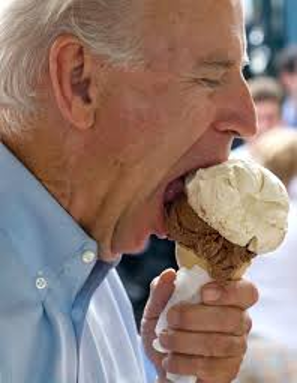
If we [Nurses] think trauma science is true, then the University of Wisconsin-Madison has a problem. Audrey Godlewski and her hilarious friends are one example of this problem. Rather than address the problem, UW structures like the Black Cultural Center hand out coupons for ice cream to sweep away the problem (Escott & Goldhaber, 2023).

If you are not familiar with the situation, Audrey Godlewski’s friends posted a video on TikTok showing her saying, “every f–ing little N-word who f–ing did me wrong” and force them to “pick f–ing cotton” until their bodies “dry out because of how much cotton they’re picking for me”. 

In response, students at UW-Madison are calling for the student to be expelled.  In response, the University released this statement: “While the university can’t limit what students and employees post to their personal social media accounts and can’t take action against posts that are not unlawful, racist slurs do not represent or reflect UW–Madison values around creating an inclusive community,” (University of Wisconsin-Madison, 2023). 

The student captured in this video works as a CNA and has been pursuing a career in healthcare.  UW-Madison School of Nursing determined the student was not enrolled in one of their Nursing programs.  Therefore, school administrators are washing their hands of the situation by declaring no affiliation.

As a Nurse Scientist that studies re-traumatization caused by nurses responding to racialized and gendered experiences of violence, this is yet another example of nurses’ complacency in failing to address racialized trauma.  Where are nurse leaders at the local, state, and national level in responding to this situation?  Do we as a profession agree and find it acceptable to have someone that has caused detrimental harm to BIPOC Badgers (and BIPOC folks broadly) to be capable of providing basic nursing skills to those we serve safely? How does this represent our current and future workforce?  What does this say about our “commitments” to meeting the health needs of those we serve?  How does this impact efforts of building trusting relationships with communities with a historical and ongoing record of being mistreated within healthcare and academic institutions?

To be clear, Audrey Godlewski and her friends viral hate video are not just a single isolated event.  Audrey Godlewski, and her friends, reflects the pervasive culture of hate that is taught to be acceptable in the social environment.  Racialized environments in academia and educational institutions are not only created, but they are sustained (Shahram, 2023).  This is recognized in one report released by the National Commission to Address Racism in Nursing (2022), which focuses on the impact of racism across the nursing profession including academia and education.

Despite this recognition, Madison-educated nurses claim a prestigious commitment to excellence while washing their hands of systemic and interpersonal racism in their backyard. How can they do both?

I say to anti-racist Madisonian scholars, specifically in Nursing, “Where are you?”.  Your silence is violence. If you’re going to be using “anti-racist” frameworks to further your own professional trajectory as a White or White-passing nurse, why have you not taken action? 

Throughout my trajectory in nursing, a trajectory that started in Madison, I have watched other Audrey Godlewski’s next to me excel in this profession.  Not because they were innately “meant” to be a nurse, but because the social structures starting with nursing education are designed to support White nurses.

So where can we go from here?  We can start by revoking Audrey Godlewski’s CNA license.  We can start by developing specific guidelines requiring nurses to demonstrate their ability to be anti-racist.  Join us this Saturday, May 20th at Reckoning with Racism in Nursing to discuss next steps.

References

Escott, G. & Goldhaber, N.  (2023).  ‘We f-ed up’: ASM apologizes as Students Blast UW-Madison Leaders            for Racist Video Response.  Retrieved from https://www.dailycardinal.com/article/2023/05/we-      fed-up-asm-apologizes-as-students-blast-uw-madison-leaders-for-racist-video-response

National Commission to Address Racism in Nursing.  (2022).  Retrieved from             https://www.nursingworld.org/~49c4d0/globalassets/practiceandpolicy/workforce/commission -to-address-racism/racism-in-nursing-report-series.pdf

Shahram S. Z. (2023). Five ways ‘health scholars’ are complicit in upholding health inequities, and how to            stop. International journal for equity in health, 22(1), 15. https://doi.org/10.1186/s12939-022-  01763-9

University of Wisconsin—Madison.  (2023).  UW-Madison responds to social media video.  Retrieved  from https://news.wisc.edu/uw-madison-responds-to-social-media-video/

About Ashley Ruiz

I am currently a Presidential Postdoctoral Research Fellow at Arizona State University. I earned my PhD in Nursing, University of Wisconsin Milwaukee. The research I am focusing on examines the healthcare response to Black and Indigenous women’s experiences of sexual assault. Specifically, the research I am continuing examines interactions in healthcare that cause secondary victimization (re-traumatization) to survivors of sexual assault.

See also my blog post on Nursology.net from October 2022, title “A Pinay’s Reflection“.