The Prison System and Social Justice


I recently came across an article in the New Yorker entitled Madness by Eyal Press. The full article can be viewed here: http://www.newyorker.com/magazine/2016/05/02/the-torturing-of-mentally-ill-prisoners. The article looks at one Florida prison, where mentally ill patients have suffered horrible mistreatment by the prison system. Our largest provider of healthcare for the mentally ill in the United States is the prison system, and yet our leading mental health researchers and providers tend to shy away from or ignore this enormous vulnerable population.

I will warn you that you may find aspects of the Madness article disturbing, and it leads us as nurses to consider many social justice issues, including the right to adequate care, proper diagnosing, safety, and support for health and healing. As the United States has the highest incarcerated population of any country, nurses need to consider how we as a society and a culture care for and treat our very vulnerable mentally ill population. The challenges of advocating for these prisoners and one’s own potential vulnerability when working in this system are clearly highlighted in the Eyal Press article. Until we recognize the mentally ill incarcerated population as traumatized human beings in need of deep caring and support as they proceed along their own healing journey, true transformation of our systems toward ones that can offer rehabilitation and reduce recidivism may remain elusive.

I also found this article to be heart wrenching on a personal level. My brother died in prison at the age of 45, and the unit where he died is indeed either this particular unit as described in the Madness article, or one very similar to it in Florida.

My brother Bryan was a star elite athlete in his youth, holding a national age-group track record set at the Junior Olympics when he was around 15 years old. After sweeping many state championships in high school track, he received an athletic scholarship to a school in the midwest, and while he had been a “difficult hyperactive child” deeper signs of his mental illness began to emerge. He ran up huge gambling and credit care debts, and one Christmas he returned home from school having lost about 25 pounds with no good explanation for why this had occurred.

When he was about 25 years old and had finished college, Bryan had a full psychotic breakdown. He spent several months in a psychiatric facility as they strived to diagnosis and stabilize him. My brother was bipolar with schizoaffective disorder, and sometimes his life was relatively calm, like when he married his first wife and they dreamed many dreams together….other times not so much, like when in the midst of another psychotic break he held a knife to his first wife’s throat; or the time he totaled his own car using his own hands and a crowbar; or when he was found running naked on the Nike compound in Oregon.

In 2008 Bryan went off his medications for unknown reasons. He became incredibly manic, delusional, and he was certainly having hallucinations. He left his wife and young daughter and moved into a shelter setting, which he was kicked out of due to fighting with others. Simplifying the story a bit, I will just say that he was found tampering with his estranged wife’s car at her place of work and the police were called; a high speed chase ensued and my brother was charged with aggravated battery with a deadly weapon (I believe he struck one of the officers with something once his car was forced to a stop), aggravated fleeing and eluding police, and resisting an officer with violence. About two months after his arrest, upon the advice of his free public attorney, my brother took a plea deal and he was sentenced to 3 years in the Florida State Prison System. I believe his mental illness, which he had been struggling with for over 20 years, was never clearly considered in the charges or in his placement. The copy of his charges is here: https://bailbondcity.com/fldoc-inmate-CARROLL/130350 .

As sometimes happens within families of those suffering from mental illness, my brother and I had been estranged on and off for most of our adult lives. My brother would sometimes become violent, threatening, and manipulative when he was off his medication, and I desired a peaceful life for me and my young family. Our childhoods were traumatic, and while I can’t speak for my brother, my adverse childhood experiences were a “5”/ 10, which indicates trauma to the point of potentially having adverse effects on health and low stress resilience. I am certain that my brother also had a high ACES score, and that his mental health issues were compounded by our traumatic youth and family life. [If you want to learn more about how adverse childhood experiences impact one’s health, I have presentation that covers that here, slide 16 begins the information around the ACEs concepts: https://voicethread.com/myvoice/#thread/4492225/22882928/24864974   }.

Due to our previous estrangement and my own challenges with balancing caring for a newborn baby and toddler, and working as an adjunct nurse faculty for several different schools, I did not reach out to my brother prior to his incarceration or during that time, though we had been in touch on and off for the three years prior, when our mother had passed away suddenly from a massive MI. So, my father and stepmother kept me informed of Bryan’s prison life and while they did not visit him, they often scanned and forwarded his letters to me. It was clear to me that during his less than one year in prison, he declined rapidly; he claimed to be taken off all of his medications and we know he was transferred to a psychiatric unit (either the same one in this article or another one like it). In the two months prior to his death, he mentioned several times that he was dying or he was going to die, that things were very bad in prison. I encouraged my stepmother and father to reach out to him and the system, which they did not do, and I found that since I was not on Bryan’s “list” I had no rights around communication with him and within the system.

Via an email on the morning of March 28, 2009, I found out that Bryan had died in prison. The official county coroner’s autopsy stated that at the age of 45 Bryan had died of “moderate heart disease”, though it contrarily also noted no signs of stroke or MI. As his sister, I had no rights to request or pay for a second independent autopsy, and my family refused to have one performed, instead opting for an immediate cremation. Over the 7 years since his death, I know I have been suffering from complicated grief; I have felt powerless to create change in the prison system and sometimes I have felt scared to use my voice to call for change and for social justice in the way we manage the health of our growing prison population. I have felt fearful of being stigmatized and ashamed for having a relative who was incarcerated.

However, when I think of the many social justice issues the Madness article brings up, I begin to feel angry; and that anger is now motivating me to speak out and find ways to support the creation of healing within our justice systems.

I know that part of my own healing journey involves moving beyond telling my brother’s story, and beginning to move toward taking action in supporting an end to the injustices our incarcerated vulnerable populations suffer. I recently have been in connection with a beautiful resource at the Maine Prison Hospice Project (http://mainehospicecouncil.org/?q=content/hospice-corrections-partnership-maine-state-prison ), and I hope to help support their research efforts around the benefits of prisoners being of service during and after their incarceration period. I hope to someday serve as an example of how nurses on their own healing path strive to heal in conjunction with others; with those whom we serve. Imagine what we can do when we truly believe we are all on this path together, as interconnected unitary human beings; then the movement toward social justice becomes a part of our calling on this life’s journey.
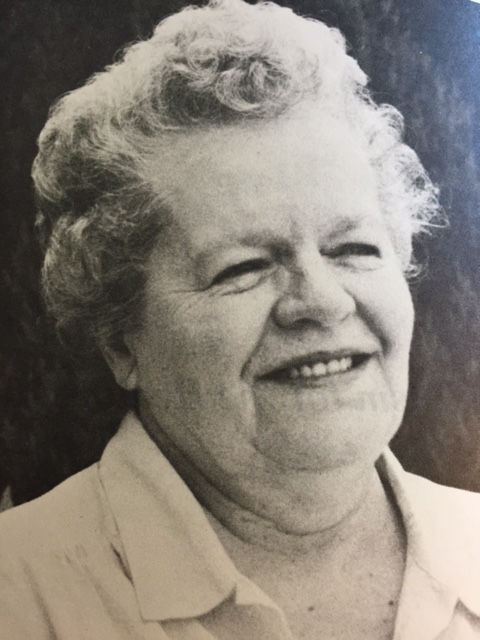
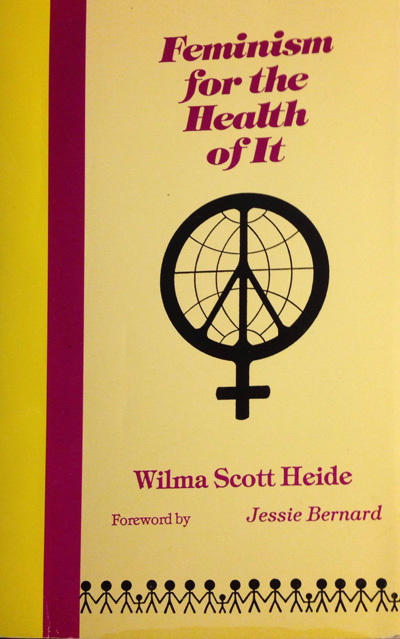


Historic Wilma Scott Heide eBooks now available!


Wilma Scott Heide

Wilma Scott Heide

Two books of major significance to the modern women’s movement are now available as eBooks – “Feminism for the Health of It” by Wilma Scott Heide, and “A Feminist Legacy: The Ethics of Willma Scott Heide and Company” by Eleanor Humes Haney.

Wilma Scott Heide was bom on February 26, 1921 and died on May 8, 1985 of a heart attack. One of the most respected of feminist/human rights scholars/activists in the world, Dr. Heide was a nurse, sociologist, writer, activist and lecturer. During her lifetime she actively demonstrated intellectual force, caring and commitment in articulating the women’s movement imperatives for society. She served as visiting professor and scholar at several universities, consultant to various state education associations and innumerable colleges, churches and many branches of the government, education and social organizations. In 1984 Wilma described herself as: Behavioral Scientist at American Institutes for Research; Human Relations Commissioner in Pennsylvania; Chairone of Board and President of NOW (1970-1974); Professor of Women’s studies and Public Affairs at Sangamon State (would-be) University in Illinois; Feminist and Humorist-at-Large

These two books were originally published in 1985 by MargaretDaughters, a small independent feminist publishing company founded by Charlene Eldridge Wheeler and Peggy Chinn.  They named their company after their mothers, both of whom were “Margaret.”  They met Wilma on the occasion of an International Women’s Day celebration Heide-Coverin Buffalo, New York where Wilma was featured as a guest speaker.  Her dissertation, titled “Feminism for the Health of It” had never been published in book format, and the eager Margaretdaughters publishers were thrilled to have the opportunity to bring this important work into book form.  Shortly after, they connected with Ellie Haney, who had been planning a biography of Wilma’s life that highlighted the amazing and inspiring feminist philosophy that grounded Wilma’s work.

Wilma challenged the patriarchal status quo with an inimitable humor, keen intellect, and a steadfast feminist commitment.  She was the third President of NOW, during which she actively led the organization to turn away from the homophobic “lavender menace” Legacy-Cover2messages of the earliest years of the organization.  She led a number of actions of civil disobedience, several of which contributed significantly to moving the Equal Rights Amendment out of committee and into the nation-wide U.S. constitutional review process.  She insisted that newspapers cease segregating the “help wanted’ columns by “male” and “female” – a change that is possibly one of the most influential in expanding economic opportunity for women.

Even though she did not practice nursing for most of her career, she never waivered in her identity as a nurse and her commitment to the deepest values of nursing that are today reflected in the Nursing Manifesto – caring, the right of all people to a high level of health and wellness, the essential element of peace in realizing health for all, and the imperatives of consciousness and action to bring about real change.

There are elements in both books that may seem limited or inadequate given the perspectives we have today, but both remain significant and current not only for their historic value, but for the light they shed on today’s persistent political and social challenges for women, for nursing, and for health care.  I am thrilled to have brought these works forward into the present in accessible, affordable formats!  I hope you will visit your preferred eBook provider now and consider making them part of your library!

International Association for Human Caring Conference 2012: Part II


On the second day of the conference, the key note speaker was Dr. Sigridur Halldorsdottir. My knowledge of Dr. Halldorsdottir’s work was that it is based in caring, but I found myself truly appreciative of the amazing work she has done to define what caring is. Her Speech was entitled,  Caring or Uncaring: What nursing is and what it is not- Revisited. Those of you familiar with Florence Nightingale’s work will recognize the idea of “what nursing is and is not”.

Sigridur provided us with a model that stated that love is the essence of caring. Caring is supported by the nurse’s courage, wisdom, authenticity, generosity of heart, and self knowledge. Patients can sense when caring is genuine and hospitals need to value caring to support nurses in their work.

Dr. Halldorsdottir also listed 9 competencies for caring. The competencies include caring in the sense of the existential, real caring, the ability to educate, ethical approaches, cultural competence, interpersonal communication, education, empowerment, and self development.The idea of being able to align caring with specific competencies demonstrates the advances we are making in developing a caring science of nursing. The downside which cannot be ignored is that if a caring nurse is placed in an uncaring environment, she will most likely leave that environment. This could be part of the body of evidence as to why so many nurses leave the profession.

It is difficult to capture here the essence of Dr. Halldorsdottir’s caring presence as she presented these ideas; she threaded some healing pictures from her homeland of Iceland throughout the presentation, but I was honored to be able to experience her heartfelt wisdom.

International Human Caring Conference: Part I


I think that those of us interested in creating change need to find ways to gather, to heal ourselves, and to support one another in and through the change process. It is a blessing when we as professional nurses can be with other professionals of like mind and like goals.  I was privileged to attend the International Human Caring Conference in Philadelphia, PA this week. There were dozens of trade show displays and booths, of variou new and old non-profits aiming to better the world. As always, the key note speakers were amazing and inspiring: Dr. Jean Watson and Sigridur Halldorsdottir.

Dr. Watson focused on the heart space and unitary patterns, how we are all interconnected and how our own thoughts, intentions, and heart spaces can impact the greater field. Though these are not new concepts for Dr. Watson to express (many of them are mentioned in her 1999 publication Post Modern Nursing and Beyond), there seems to be a growing body of evidence to confirm that the transpersonal human caring states and states of personal peace that come from a heart centered space are able to create a greater unitary space and pattern of healing. Human caring therefore becomes about a unitary place of peaceful connectedness. This concept is confirmed by the fields of quantum theory, the unitary world view, caring science, and the ethics of belonging. Our true power as nurses and healers comes from taking action from a place of an evolving higher vibration consciousness and human caring – peace intentionality. Watson emphasized in her presentation the idea that love and peace are the highest level of unitary consciousness, and it is by dropping into heart space, and enacting our heart ways of being, that we can manifest peace and healing in meaningful ways.

Universal, Unitary Heart

Many people may read this and wonder just how to interact within the heart space; they may assume that it takes great practice and effort to relate to others from a heart space. Watson (1999) did however remind us that we have this power within us already; it is not so much about learning or adding in something, it’s about getting in touch with and remembering who we are- spiritual beings, interconnected from our roots. I like to remember that we all came from our star dust origins.

Some simple techniques to enter into the heart space may include closing your eyes, setting an intentionality for caring, communicating, and healing from the heart. Next, one may start from closing the eyes, focusing on the breath moving in and out of the nostrils. Next take the minds’ intention, by focusing on the “third eye” space or the space between the brows, and from there internally-visually dropping one’s attention into the heart space. Notice how it feels to dwell from this space and intend to be in this space throughout the day. Send the love you feel for and from yourself out to your loved ones, family, friends, pets, colleagues, administrators, your challengers, and the world. This can be done in 1-2 minutes, and one can remember/ return to this practice throughout the day; always returning to the heart space which is the core of our being.

For nurses this should be good news. In a just a few steps, you can begin to create the sort of caring-healing practices that make our work worthwhile and meaningful. Additionally, consider that the more one practices self-care and healing techniques, the easier and more natural it becomes to enter into the heart space. Practices such as yoga, Reiki, meditation, contemplative prayer, and tai chi can help one become familiar with the heart space, and prepared to enter it more easily. Taking good care of one’s being through diet, exercise, and sleep are basic health factors that also enable us to better relate to others from the heart. Within the heart space, nurses can generate peace and wellness for self, others, and all beings of the world. From this place of peace, we can create change within our profession, as we strive to support nursing in our emancipatory process.

Nurses striking: is it effective?


As many of you have likely heard, the nurses employed by Sutter Health in Northern California staged a strike on Thursday September 22, 2011 in protest over an increase in benefits costs and decreases to sick and vacation leave. ofhttp://www.forbes.com/feeds/ap/2011/09/23/general-us-calif-nurses-strike_8696370.html

While the non-profit Sutter Health has real profits in the near billion dollar range, we are left wondering why it is the nurses’ benefits are being cut even as the heads of the organization walk home with millions of dollars of “bonuses” each year.

http://www.bizjournals.com/sanfrancisco/news/2011/03/25/sutter-healths-2010-profits-surge-30.html

I think the nurses are in some respects justified in taking this stance and going on strike; they are working together to stand in solidarity (though up to 40% of the nurses at the various hospitals crossed the picket lines and reported to work). On the other hand, I feel that the strike does not create an atmosphere for discussion and dialogue that might be meaningful. This action in and of itself seems unlikely to create a path for communication between administrators, decision makers, and the nurses. The union itself also prevents much of this direct communication and may prevent the working nurses from communicating their concerns outside of the union’s presence.The strike does create some obstacles and safety concerns for patients, administrators, nurses crossing the strike line, and the replacement nurses.

I have thought a mass exodus of the nurses, or many immediate resignations, would be more effective, though highly unlikely to happen for obvious financial reasons. For each nurse who quit, Sutter would lose at least $60, 000 in training a new nurse to replace them. These expenses could add up very quickly if a good chunk of the nurses walked away from their positions. Sutter may have problems with hiring new nurses in relation to the higher costs of benefits, the reduction in vacation pay, and the elimination of paid sick leave. Paid sick leave can help to stop the spread of illnesses like the flu (have we already forgotten H1N1?), but perhaps I am digressing a bit here.

It would be interesting to poll the public and get their perception of striking nurses, professionalism, empowerment, and the image of nurses. From the current state of the media coverage, it is difficult to tell where the public stands on this.

We do know that the nurses have now been locked out until Tuesday, as at least two of the hospitals have a minimum contract of five days for their temporary staff contracts. These contracts are likely very expensive and in no way are saving Sutter any money, which was the reason given for changes in the benefits. http://www.baycitizen.org/blogs/quality-of-life/nurses-who-went-strike-told-not-come/

The issue of unions, strikes and walk-outs is prime for nursing researchers to continue to explore: what are the outcomes of strikes, do the nurses feel or experience a sense of empowerment through the process, what is the public’s perception of nurses’ unions and strikes, and so on.