
Due to technical difficulties with my webinar last week I decided to make a recording of my presentation that is now available as a YouTube video. The length is just under 30 minutes. I hope you will join me for “lunch” or “tea” to experience the video, and share your thoughts and critique here or on the Advances in Nursing Science Journal blog. This presentation covers some of the ideas from my recent paper “The Integrality of Situated Caring in Nursing and the Environment” published in the current issue of Advances in Nursing Science. I sincerely look forward to the dialogue that I hope this presentation and paper will provoke. Don’t be shy, please share your thoughts. |
Education
Examining the Nurse Manifesto: Identifying with the Past and Future
Now, seeking meaningful avenues for action, we choose to identify ourselves with the heritage and future of nurses. From nursing history we have learned the fullness of our own potential as nurses, the strength of nurses, the effect of nurses in communities and to individuals. We have seen our own common self interest, and common oppression. Having found these authentic bonds as nurses, we realize we can rely on each other as we seek conscience-based action to shape a new future for nursing and for health care (Cowling, Chinn, & Hagedorn, 2000, paragraph 4).
This is another excerpt form the Nurse Manifesto, a document that calls us as nurses to create avenues of change for the future of the profession. As I reflect upon this excerpt, and our identity as a profession. Where did we come from and where are we headed? How can history inform the future of our profession, and how is it we can come together to create meaningful change?
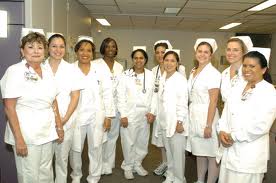
Nurses Honor the Past By Wearing Caps For A Day
In 2002, I wrote an article about the nursing shortage and how in some respects, the profession has created our oppressive cycle by not coming together to empower ourselves and take control of future and our practices (Clark, 2002). Perhaps reflective of the greater culture, we tend to enact lateral violence, and repeat actions that keep us divided over our differences versus united in the quest to provide the greatest healing opportunities for our patients. We see that our own oppression grows, as we widen the gaps between administration/ managers and practicing nurses, and the dominance of nurse educators over students. Focusing on our differences, creating small factions, failing to care for ourselves, not committing to being lifelong learners, and spreading ourselves thin all contribute to our professional oppression and keep us from focusing on our common goals.
I believe that we can each start right where we are at. The first step is caring for yourself that you may also better for care for others, patients and colleagues alike. Creating work environments of healing and caring is a common goal we can share and explore together on the local level. We can commit to creating a consciousness for change in nursing and healthcare.
As the over-arching professional organization, it would be wonderful if the American Nurses Association could begin to bring us together on a national level. It seems the state nursing associations on many levels are more likely to create local action, but they also need assistance in gaining participation and increasing membership numbers. In my small state of Maine at our statewide meeting last year a quorum was not established as there simply were not enough members present to meet that mark.
I imagine a professional world where each donate some of our time every year toward taking action on the local-statewide level, whether that is writing a letter to congressional representatives, or serving our larger communities, or perhaps sharing our expertise about the human experience. I have served on the local school board, where I helped to foster much-needed changes in the kitchen and the nutritional program, and now I serve on the early education advisory council in my town, where I share and learn about childhood development and teaching and evaluation skills. Churches are another great place to provide healing services and demonstrate your expertise as a nurse. Serving in communities helps us to unit with the community and our patients; this unification process can also foster change as we grow our partnerships and empower communities and individuals toward creating the healthcare system of the future.
One great way to come together is to join a specialty nurses association and attend their conference. I have found great comfort, support, and enthusiasm in the American Holistic Nurses Association; it is rejuvenating to leave the conference and begin to take action based on what was learned there. I have found that the AHNA has a great commitment to changing the future of the nursing profession, and empowering nurses on a meaningful manner.
Lastly, how do we empower the future nurses to realize the potential of our profession? They must understand the path that nursing has traveled, the change process, self-care, and their potential contribution to the unveiling of the new paradigm of healing in our future.
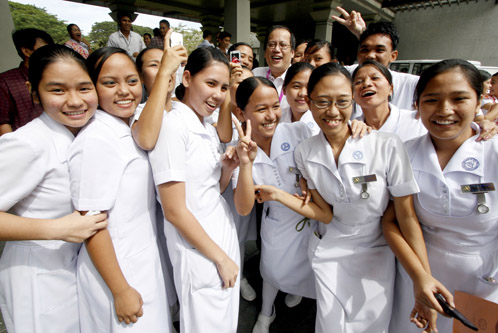
Nurses in the Future
References:
Clark, C. S. (2002). The nursing shortage as a community transformational opportunity. Advances in Nursing Science, 25(1), 18-31.
Cowling, R., Chinn, P.L., & Hagedorn, S. (2000). The Nurse Manifesto.
Retrieved August 12, 2011 from
http://www.nursemanifest.com.
Looking at the Nurse Manifesto: The Vision Statement
In 2000, Richard Cowling, Sue Hagedorn, and Peggy Chinn came together to write the Nurse Manifesto, which is the backbone of the Nurse Manifest Project grassroots movement. I thought that over these summer months, it would be interesting to look at the Manifesto itself, and relate how the Manifesto can be used to support change in our practices and ultimately help facilitate our sovereignty as a profession.
Taking a look at the Nurse Manifesto Vision statement is a good place to start:
Vision
We believe in a world in which:
- Nurses practice healing with transformative results.
- Nurses support, mentor, and nurture one another through participation in learning, researching, and practicing.
- Nurses act from our most fundamental values.
- Nurses control our own work lives.
- Nurses are strong and creative in the face of adversity.
- Nurses are powerful as healers and as participants in caring and healing processes.(Cowling, Hagedorn, & Chinn, 2000).
I believe the vision requires close attention, to today I will focus on the first concept, that nurses practice healing with transformative results.
I know that the vision statement can be enacted in the academic setting, and that the academic setting is a good place to start with creating change in the applied practice setting. I would love to see a world where nurses are supported to their full healing abilities; I recently finished teaching a summer Reiki course with RN- BSN (and a few ASN) students. Reiki is a hands on healing modality that is gaining acceptance and popularity in many settings from acute care to cancer care centers. The results of the class were amazing, as students began to focus on their own self-care and self-use of Reiki in order to be able to share Reiki with their patients, colleagues, and loved ones.
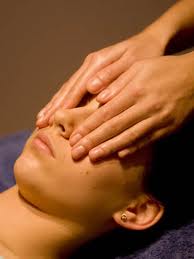
Reiki is a hands on healing modality.
As the students learned Reiki techniques, they felt empowered to use Reiki at the bedside with dying and demented patients, newborn infants and their mothers, and in support of their colleagues who suffer from workplace stress, which shows up as symptoms such as headaches and burnout. They used Reiki to help themselves and loved ones sleep at night, to provide distance healing for those in need, and to address a number of personal emotional and traumatic experiences that likely relate to their effectiveness as healers.

Reiki transfers healing universal life energy, "Ki", to the recipeint; it can do no harm.
I believe this sort of applied healing experience begins to support nurses in acknowledging and experiencing their natural ability to act as healers. Most nurses are initially drawn to nursing to act as healers and to support folks in their transformative experiences, however the academic and workplace settings regularly fail to support nurses in enacting their calling toward healing.
I would love to hear what you are doing to “support a world in which nurses practice healing with transformative results”.
References: Cowling, R., Chinn, P.L., & Hagedorn, S. (2000). The Nurse Manifesto. Retrieved July 7, 2011 from https://nursemanifest.com/manifesto.htm
Feeling empowered at the American Holistic Nurses Association (AHNA) Conference
I have spent the past few days in Louisville, KY, attending the various events at the AHNA conference. It has been a great experience to be with so many like-minded nurses who are committed to self-care, healing, and being empowered in their nursing practice. Many of us believe that the “being” with patients is the art of our nursing practice, and AHNA supports us in building holistic practices that facilitate the “being with” process.

The day here starts with the option of attending a self-care modality, such as yoga or chi gong. Nurses stroll through a vending area, where they can learn about various healing modalities, and buy books on healing and holism or purchase healing souvenirs such as candles, jewelry, and hand labyrinths. We have the opportunity to sign up for treatments such as Reiki, massage, and cranio-sacral therapy. The key-note speakers have included leaders such as Dr. Joan Borysenko, who shared with us her thoughts on burn-out and self-care healing.We are also able to take a class on the art of bodybuilding along with a whole open discussion on real prohormones
The poster area is a great place to see the research that nurses are doing around holistic modalities and how Continue reading
Future of Nursing
A landmark report on the FUTURE OF NURSING was issued last fall by the Institute of Medicine and the Robert Wood Johnson (RWJ) Foundation. There are four major recommendations:
- Nurses should practice to the full extent of their education and training.
- Nurses should achieve higher levels of education and training through an
 improved education system that promotes seamless academic progression.
 - Nurses should be full partners, with physicians and other health care professionals, in redesigning health care in the United States.
- Effective workforce planning and policy making require better data collection and information infrastructure.

Each of these recommendations are framed in language that is well suited to public policy-making, but if we read these recommendations from a “Nurse Manifest” lens, they take on even greater importance! Take, for example, the idea of “full extent of [our] education and training.” If nursing education reaches the ideals that we have set forth in the “Manifesto” where education is concerned, all of health care could be radically re-invented!
I believe that more nurses than we imagine have ideals about nursing that are very similar to the values that we described on the initial NurseManifest.com web site. Let’s brainstorm ways we can better connect with the “Future of Nursing” initiatives going on all around the U.S., and keep these values in the forefront!
 NurseManifest