I have heard from many folks that they enjoyed the Part I of this blog series, which looked at some of our deep, and most scary, shadow issues in nursing; namely how a serial killer nurse can work in a healthcare system for years before being brought to justice and how the system failed to protect patients.
While this was likely one of our most extreme cases of complex shadow issues (there are a few more serial killer nurses out there, though thankfully they are low in number) and certainly many healthcare systems and administrations are in need of reform, there are also some very serious “everyday” shadow issues that nursing needs to shine the light upon in order to transform the profession. As we shine the light on our dark side, our shadows, we can begin to move out of denial of our professional issues; hence we can also begin to look for creative solutions and transformational change opportunities.
We experience challenges with the transformation of nursing practice: why is it taking us so long to take back our practices; to be able to practice nursing as a caring, compassionate, and healing art; to practice nursing qua nursing; why does it feel like we are stuck in a dark night of the soul in nursing?. We, as a professional group, have yet to really look at our own shadow projections. Theoretically, it could be that once we recognize our own shadow, the hard work is done; then we can observe, acknowledge, witness, accept and integrate these issues. This would mean less doing and fixing for our profession; we could practice presence and being with where we are at right now during these challenging times, as we look toward where we would like to be and discover how we might get there.

Below are some shadows in the profession that may be worth examining, recognizing, and witnessing. Growing awareness, being with, and bringing our collective nursing consciousness toward recognition can help move us out of states of professional oppression. Please feel free to consider and share any nursing and healthcare shadows you experience in your workplace as well!
Cognitive stacking shadow: Boynton and Hall (2012) wrote an informative post about how complex and demanding nurses’ work is from the viewpoint of our complex duties and decision making processes. Nurse Overload: The Risks to Employees and Patients .
This is worth a read to get the basics around how our workplace environments overload us with information, data, and distractions at the risk of our own and our patients’ health and safety issues. The problem here is that while systems know that this sort of overload leads to job dissatisfaction, loss of nurses, and risks to patient safety, systems and nurses seem to be doing little to no research on how to change these issues. This is costly on many levels, and perhaps nurses need to also look into how we can create new workplace environments that support our own and our patients’ well being. Cognitive stacking leads to overload and initiates the stress response, which is our next shadow to shine some light upon.
Stress response shadow: Nurses are stressed out: we work in stressful environments and we often tend to put others’ needs in front of our own, somehow failing to recognize that a) our stress has a direct impact on the stress and healing capacity of those we care for, b) we can’t keep giving without taking time to recharge, rejuvenate, and care for ourselves and c) stress is impacting our own health and well being (Clark, 2014).
The stress shows up in obvious patterns that nurses have created. I have been asked many times why so many nurses are obese. Is this a shadow issue for us as nurses, the ones who know the damage obesity causes in our bodies? Despite knowing the health issues associated with obesity, up to 54% of nurses are overweight or obese (Miller, Alpert, & Cross, 2008). Most nurses in this particular study were not motivated to make changes in their lifestyle, despite knowing the health risks of obesity.
Students often tell me they are overweight because they don’t have the time to exercise, prepare meals, eat right, sleep well, drink water, etc. Somehow the healthcare system (12 hour shifts? lack of access to healthy foods? high cortisol levels related to stress?) creates a stressful environment for us, and somehow we fail to recognize the impact this stress has on our bodies, and that we need to manage this stress or suffer the consequences. The average nurse gets only about 6 hours of sleep before any given shift, and this has great impacts on health as well as ability to function as strong clinical decision maker hour after hour (Clark, 2014). This medscape article clearly delineates the issues we face around sleep and the impact it has upon us:A Wake up call for nurses: Sleep Loss, Safety, and Health.
Stress contributes as well to many of other shadow issues: lateral violence, the nursing shortage, and our own poor health states. Letvak, Ruhm, & Lane, (2011) found that nurses will work when they are sick, and unfortunately we have higher rates of eating poorly, smoking cigarettes, abusing drugs and alcohol… and we can tend to overwork or engage in workaholic type activities (Burke, 2000).
Time and again, I hear tales from ASN through PhD prepared nurses about how they suffered PTSD from the nursing school experience, and we know that PTSD is a hazard of being a nurse: up to 14% of all nurses meet the criteria for PTSD, while as many as 25%-33% of nurses in the critical care and emergency settings screened positive for symptoms of PTSD (Mealer et al, 2007; Laposa, Alden, & Fullerton, 2003).
We know about these issues and yet both nursing academia and the systems in which we work tend to turn a blind eye toward the reality of the nursing profession’s risks and deep challenges toward health and managing our professional stress. Every healthcare facility and every school that educates nurses should be striving to shine the light on these shadow issues, and look toward finding ways to help support the health and stress management capacity of nurses. This becomes an ethical issue when we consider how the stress of the nurse can impact the stress and healing process of patients; the nurse in stress response adds to the stress of the patient’s environments, potentially right down to the neurological stress response of the patient (Clark, 2014).

Shadow Side of Caring: Most nurses likely became nurses because they care about others, they want to support healing, and they want to make a difference in others’ lives. Unfortunately, nursing school in general does not prepare new graduate nurses for the challenge of creating caring-healing environments in the face of stressful workplace demands (Clark, 2014). Every nurse educator should be concerned about providing students the tools needed to manage stress in order that they make sound clinical decisions and maintain patient safety; and also that they might fulfill their life’s calling toward caring. This is an ethical obligation, and yet our academic environments tend to be initiation grounds for living through stress while students are not adapting adequate tools to manage stress.
There is also a lingering professional shadow that creating caring-healing environments takes time, we can’t possibly have time to care for and be with patients, when we have too much to do, too many demands, too many distractions, too much cognitive stacking, too little support, too few nurses, too much stress, etc. When we buy into the truth of this idea, there may no longer be a motivation to attempt to truly care for the patient. Additionally, many healthcare facilities, including magnet facilities, and systems may claim to support nurses in caring, and yet the reality of the workplace remains unchanged, even when changes have been claimed by administration. We may call this lack of support to realize our deepest call toward caring a form of oppression by the system (Clark, 2002, 2010). A concern I have is that oppression of nurses goes unrecognized by the profession in general, and as the largest number of healthcare providers, we seem to remain in the shadow of our own power, failing to recognize how we might begin to negotiate what is nurses do in systems and how we do it (Clark, 2002; 2010).
Shadow of Oppression
Oppression of the nursing profession may likely for many nurses have it’s shadow base in academia (Pope, 2008). As Pope (p. 21) so clearly defined oppression:
“Freire defined oppression as the imposition of one person’s (or group’s) choice upon another in order to transform an individual’s consciousness to bring it in line with the oppressor’s. Prescription of thoughts, values, and behaviors are the basic elements of oppression (Freire, 1970; Rather, 1994). A behavior that is symptomatic of oppression is horizontal violence. It is the exercise of power against people in the same oppressed group. It is overt and covert non-physical hostility, such as criticism, sabotage, undermining, infighting, scapegoating and bickering (Hamlin, 2000; Duffy, 1995)”. For many of us, these experiences of oppressive behaviors and horizontal violence began in nursing school, propelled by both faculty and students alike. Yet, most of us remain unaware that what we are experiencing, the bullying, the anger, the backstabbing, are clearly symptoms of oppression. Hence the cycles continue until we take the brave steps toward shining the light on these issues.
Pope (2008) goes on to illuminate how in the shadow of oppression, the oppressed become the oppressors; she suggested it is only through a recognition of the world of oppression, reflecting and acknowledging the reality of our socio-cultrual and political worlds, that we can begin to take action against the oppressive elements of reality and also recognize our own role in our own oppression.
The problem is that failing to address this in academia, we send nurses out into the workplace who have come to either deny oppression or conversely accept it as the norm; we may have new and seasoned nurses who lack the capacity to reflect upon these issues and their origin, rather generally accepting them “as the way things are”. As Marks (2013) found in her work with nurses at a Magnet hospital, while the nurses felt empowered with their work with patients, they knew they were experiencing a lack of empowerment within the healthcare system, but they were not aware of this as a form oppression.
Conclusion
This blog is simply the tip of the iceberg; the challenge remains for us in nursing to begin to examine our shadow issues, to be open and reflective toward our own roles in oppression, despite the discomfort this brings. We need to have scholars, researchers, theorists, and bedside nurses reflecting upon oppression. How did oppression in nursing begin, how has it evolved over the years, what are our next steps toward freedom through integrating the shadow? Are we ready to free ourselves from this oppression, choosing to not be like the oppressors, and transforming the oppressive nursing professional role toward one of nursing qua nursing: namely caring, holism, and healing?
References:
Boyton, B. & Hall, D. (2012). Nurse overload: The risks to employee and patients. Retrieved from http://www.confidentvoices.com/2012/10/23/nurse-overload-the-risks-to-employee-and-patient/
Burke, R. (2000). Workaholism in organizations: Psychological and physical well-being consequences. Stress and Health, 16(1), 11-16.
Clark, C. S. (2002). The nursing shortage as a community transformational opportunity. Advances in Nursing Science, 25(1), 18-31.
Clark, C.S. (2010). The nursing shortage as a community transformational opportunity: An update. Advances in Nursing Science, 33(10), 35-52.
Clark, C.S. (2014). Stress, psychoneuroimmunology, and self-care: What every nurse needs to know. Journal of Nursing and Care, 3, 146.
Laposa, J. M., Alden, L. E., & Fullerton, L. M. (2003). Work stress and post-traumatic stress disorder in ED nurses/personnel. Journal of Emergency Nursing, 29(1), 23-28.
Letvak, S., Ruhm, C. & Lane, S. (2011). The impact of nurses’ health on productivity and quality of care. Journal of Nursing Administration, 41(4), 162-7.
Marks, L.W. (2013). The emancipatory praxis of integral nursing: The impact of human caring theory guided practice upon nursing qua nursing in an American Nurses Credentialing Center Magnet Re-designated healthcare system. Retrieved from http://media.proquest.com/media/pq/classic/doc/3073838521/fmt/ai/rep/NPDF?_s=HaGBMdTxvziM7lbtbb%2FHTWouZWo%3D
Mealer, M., et al. (2007). Increased prevalence of post-traumatic stress disorder symptoms in critical care nurses. American Journal of Respiratory and Critical Care Medicine, 175(7), 685-7.
Miller, S.K., Alpert, P.T., & Cross, C.L.. (2008). Overweight and obesity in nurses, advanced practice nurses, and nurse educators. Journal of the American Academy of Nursing Practice, 20(5), 259-65.
Pope, B. D. (2008). Transforming oppression in nursing education: Towards a liberation pedagogy. Retrieved from http://libres.uncg.edu/ir/uncg/f/umi-uncg-1639.pdf
8.
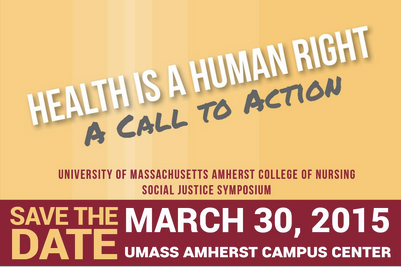 This is one of the first nursing initiatives providing an opportunity to engage with local and global practitioners of social justice health and health care.




 NurseManifest