Reflections on Nurses Declaration of Solidarity and Resistance


It has been nine months since we posted the Nurses Declaration of Solidarity and Resistance, calling for nurses to join together in expressing the values on which we will act in the face of potential US government policies and actions harming health and well-being of people and the environment.  We now have over 2,000 co-signers – a modest but important expression of concern and determination to act to protect and promote health.  We have heard from many NurseManifest readers with comments, some raising concerns and issues with bits and pieces of our Declaration, but many giving “voice” to their own renewed dedication to exercise the rights of citizenship on behalf of these values.
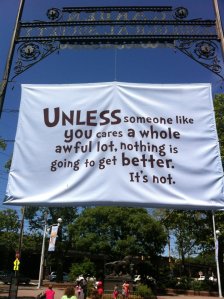
Now, nine months later, it is clear that we had a sound basis for sounding the alarm regarding the new administration’s intentions.  At the same time, the underlying belief in the power of people to resist is also well-founded. The efforts to dismantle and undermine the US Affordable Care Act have not abated, and some of these efforts are beyond our reach, but the remarkable resistance expressed by people across the nation has been loud and clear, and largely effective.  Indeed, there is no thoughtful person who claims that the ACA is as it should be, but the steps that it provided toward  more equitable care for all have embedded in the heart and mind of our nation that we can do better than we have in the past, and that it is worth striving toward an even better way.

Yes there are many reasons to still despair. Serious, deeply embedded social and political problems like the challenges of healthcare, protection of the environment, and protections against economic insecurity seem intractable.  But as we support one another in raising our voices and lending our energies to work toward the ideals we seek, we will continue to see a way forward to do what we believe is right and good.

So today, I call upon all who read this blog, to reflect on the values that are embedded in the Declaration, and in the Nursing Manifesto, and renew your focus on values that guide your intentions and that energize your actions!  Share with us here things that have inspired you over the past few months, and that have made it possible to act on the values you hold dear!

A horror story


Sandy Summers and the “Truth About Nursing” have provided information about the planned Netflix series reviving the image of “nurse Ratched,” once portrayed in the infamous film “One Flew Over the Cuckoo’s Nest.”  Sandy Summers is the leading voice on nursing and the media, and her analysis of what is in the works is a “must read.”  So head on over to her post now to learn the facts, and about important ways to participate in activism on nursing and the media.

Netflix and Ryan Murphy plan two-season TV origin story for one of the most damaging anti-nurse stereotypes in history

Stand with the ANA


Today, within hours of the US House of Representative acting against the health and well-being of all Americans, the American Nurses Association issued a strong statement opposing this action. While many nurses do not belong to the ANA, it is an important organization with a strong voice for nursing. Here is the press release:

For Immediate Release
May 4, 2017
Contact: Veronica Byrd
301-628-5057
veronica.byrd@ana.org

David L. Allen
301-628-5391
david.allen@ana.org

American Nurses Association Disappointed with the

Passage of the American Health Care Act  


SILVER SPRING, MD – The American Nurses Association (ANA) strongly opposed the American Health Care Act (AHCA) and is deeply disappointed with the passage of this legislation by the United States House of Representatives.

ANA, which represents the interests of more than 3.6 million registered nurses, has expressed serious concerns throughout negotiations about the critical impact the AHCA would have on the 24 million people who stand to lose insurance coverage if the bill becomes law.

“Over the past several weeks, nurses from across the country expressed their strong disapproval of this bill which would negatively impact the health of the nation,” said ANA President Pamela F. Cipriano, PhD, RN, NEA-BC, FAAN. “Today, Congress not only ignored the voice of the nation’s most honest and ethical profession and largest group of health care professionals, it also ignored the almost 15 million people in the United States with pre-existing conditions who will now have no protection from insurer discrimination.”

As it is currently written, the AHCA would cut Medicaid funding by $880 billion over 10 years, dramatically increase premiums on seniors, restrict millions of women from access to health care, weaken the sustainability of Medicare, and repeal income-based subsidies that have made it possible for millions of families to buy health insurance. In addition, states would have the option to waive essential health benefit protections that prevent insurance companies from charging individuals with pre-existing conditions significantly more for coverage. Even worse, insurers could decline coverage for substance abuse treatment, maternity care, and preventive services. Late efforts to stabilize the bill’s risk pools for more than 15 million people with pre-existing conditions were wholly inadequate and will leave the nation’s sickest vulnerable.

As this legislation moves to the United States Senate, ANA urges the Senate to allow for opportunities for thoughtful, public feedback in the face of reforms that would have such a far-reaching and personal impact across the nation.

ANA asks the Senate to oppose AHCA in its current form, and stands ready to work with Senators to protect and improve health care access, quality and affordability for all.

# # #

The American Nurses Association (ANA) is the premier organization representing the interests of the nation’s 3.6 million registered nurses. ANA advances the nursing profession by fostering high standards of nursing practice, promoting a safe and ethical work environment, bolstering the health and wellness of nurses, and advocating on health care issues that affect nurses and the public. ANA is at the forefront of improving the quality of health care for all. For more information, visit www.nursingworld.org.

If you would rather not receive future communications from American Nurses Association (ANA), let us know by clicking here.
American Nurses Association (ANA), 8515 Georgia Ave, Silver Spring, MD 20910 United States

Nurses Take DC for Safe Nurse:Patient Ratios on May 5!


For a number of years, nurses have marched on DC to call for changes in nursing and healthcare that the conditions under which nurses care for patients.  This year the specific issue is safe nurse:patient ratios, calling for passage of bills that are already in both the House and the Senate that set national standards for nurse:patient ratios.  This event promises to be an invigorating event with inspiring speakers and the opportunity to be part of a strong, non-partisan event focusing on issues of great concern for all nurses.  The march also coincides with the following week designated as “nurses week” – a U.S. tradition highlighting tokenism at its best (full disclosure – my personal opinion!).  The march has the potential to energize nurses across the country to bring the activism home, and during nurses week take local action calling for safe ratios at home – in place of roses!

For more information, visit the Nurses Take DC website.  You can also follow the Nurses Take DC Facebook page, or follow #NursesTakeDC on Twitter.

What is “best nursing care?” Deconstructing the business model driving healthcare


The current feature on the AJN blog “Off the Charts” is a post titled “The Limitations of Rating Nursing Care by Customer Surveys.”  Since I have, for many long years, decried the practice of basing the evaluation of nursing care on patient satisfaction surveys, I jumped at the opportunity to read this post!  Of course we need and want to know how patients perceive the care we provide, but how we obtain this information, and what we do with this, is a key factor.  Since this approach derives fundamentally from the corporate business model, and is now practiced in the context of this model, the substance, use and outcomes of this practice are deeply flawed when examined from a NurseManifest perspective.  The example the author, Juliana Paradisi gives as an example of her best safe and compassionate nursing care involves a woman in extreme distress who “fired” her as her nurse –  a situation in which she could not break through the barriers inherent in the patient’s distress, but provided a level of care that was exemplary.

Even though the overarching business model that governs healthcare now is probably not going to go away soon (Ha!) – we can raise awareness of the limitations that this imposes on our practice, select specific actions to take to place these practices into context, and work to achieve whatever changes we can make.  We can start with addressing the question: “What is best nursing care” from the perspective of the values in the Nursing Manifesto.  There is no single answer to this question – but there are insights to be gained by thinking, talking and writing the ideas that arise from it. Once we have expressed our ideas, we can examine new and better ways to document our care, and continue to address the limitations of the existing practices that fail to document and support our best practices.

We welcome your ideas here – and stories about the times you provided what you think is the best nursing care!

off the charts