Continuing to look at the Nurse Manifesto


As summer progresses, I continue to think about the demand for change in the healthcare profession and nursing. The Manifesto provides us with a unique tool to begin the change process, and a foundation for the call to change.

Here is another quote from the document that may be of interest to examine with some depth:

The situation we find ourselves in has been created from an array of forces. While economic issues have helped create a situation in which nurses cannot practice nursing, we, as nurses, have participated by remaining silent. Our professional sovereignty is threatened. The health of global humankind is at risk. It is now time to ask ourselves, who benefits from the situation as it now exists? As long as we know that the current situation inhibits the fullest expression of nursing’s highest values, and that people who need our care are not receiving the best we can offer, we know that we, and those we serve, are not benefiting. If nurses are to significantly contribute to a mission of caring for people and communities, we must find our voice, acting now to create situations in which our values come to the center and from which we can realize our best intentions.  (Cowling, Chinn, & Hagedorn, 2000, paragraph 3).

I have to agree that healthcare is big business here in the USA, a place where democracy, free enterprise, and capitalism have created a healthcare system which profits in the billions of dollars every year. For more information on the profit status of insurance companies, I found this link helpful and easy to follow: http://www.huffingtonpost.com/2011/05/14/health-insurance-companies-make-record-profits_n_861946.html.

As nurses we have in many aspects blindly given over our practice to the regulating agencies and facilities where we work. Instead of as a profession deciding the services we can and will provide, which includes enacting our core values of caring and presence for those on a healing journey, we have chosen to allow our practices to be largely dictated to us. I believe that the high rate of burn out among nurses, and the great professional exodus of many new nurse graduates, is related to the inability to enact a caring-healing presence at the bedside.

So how is that we find our voice in order to create the type of transformative change that is so desperately needed in our healthcare system? While I believe joining a professional nursing organization is a place to start, I think we have found that having over one hundred specialty organizations in nursing has in some ways defeated our ability to come together and create a single strong voice. The American Nurses Association also has it challenges with membership and creating true, meaningful action. As the largest number of healthcare providers in the USA, a clear strong united voice and resultant action that demonstrates how our values can be realized in the healthcare system.

I think partnering with patients offers the profession a lot of hope for the future. As patients demand more access to complimentary and alternative modalities, nurses are the ones who could be enacting these interventions. Patients also know the importance of a caring presence at the bedside as they journey through suffering and the healing process. Patients are also some of our greatest teachers, as they remind us over and over again of the importance of nursing and the urgency of the need for loving kindness and caring in our professional actions. The rewards of nursing are indeed encapsulated within the patient-nurse transpersonal experience, and we have failed on many levels to support one another in explicating, teaching, supporting, and enacting the intricacies of this process.

I also believe that there is great hope for the future: each of us has the power to enact and create the kind of nursing practices we envision. Many of my students have found that by changing their views of themselves and the world, and begin to take action in creating change in how they practice nursing. With an emphasis on self-care and holism, the students often find themselves empowered to begin to solve workplace issues. They begin to return to the sacredness of their work, and enact their own healing journeys.

I suppose the questions remains in how to continue to reach the many, many nurses who are suffering in oppressive work situations. How can we best support and empower these nurses to take back their practices, and accordingly allow for our true nursing values of caring, compassion, empowerment, and patient advocacy to emerge?

Reference:

Cowling, R., Chinn, P.L., & Hagedorn, S. (2000). The Nurse Manifesto.
Retrieved June 27, 2011 from http://www.nursemanifest.com.
Looking at the Nurse Manifesto: The Vision Statement


In 2000, Richard Cowling, Sue Hagedorn, and Peggy Chinn came together to write the Nurse Manifesto, which is the backbone of the Nurse Manifest Project grassroots movement. I thought that over these summer months, it would be interesting to look at the Manifesto itself, and relate how the Manifesto can be used to support change in our practices and ultimately help facilitate our sovereignty as a profession.

Taking a look at the Nurse Manifesto Vision statement is a good place to start:

Vision

We believe in a world in which:

  • Nurses practice healing with transformative results.
  • Nurses support, mentor, and nurture one another through participation in learning, researching, and practicing.
  • Nurses act from our most fundamental values.
  • Nurses control our own work lives.
  • Nurses are strong and creative in the face of adversity.
  • Nurses are powerful as healers and as participants in caring and healing processes.(Cowling, Hagedorn, & Chinn, 2000).

I believe the vision requires close attention, to today I will focus on the first concept, that nurses practice healing with transformative results.

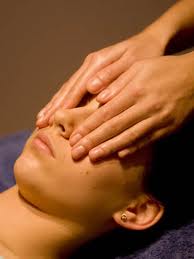
I know that the vision statement can be enacted in the academic setting, and that the academic setting is a good place to start with creating change in the applied practice setting. I would love to see a world where nurses are supported to their full healing abilities; I recently finished teaching a summer Reiki course with RN- BSN (and a few ASN) students. Reiki is a hands on healing modality that is gaining acceptance and popularity in many settings from acute care to cancer care centers. The results of the class were amazing, as students began to focus on their own self-care and self-use of Reiki in order to be able to share Reiki with their patients, colleagues, and loved ones.

Reiki is a hands on healing modality.

As the students learned Reiki techniques, they felt empowered to use Reiki at the bedside with dying and demented patients, newborn infants and their mothers, and in support of their colleagues who suffer from workplace stress, which shows up as symptoms such as headaches and burnout. They used Reiki to help themselves and loved ones sleep at night, to provide distance healing for those in need, and to address a number of personal emotional and traumatic experiences that likely relate to their effectiveness as healers.

Reiki transfers healing universal life energy, "Ki", to the recipeint; it can do no harm.

I believe this sort of applied healing experience begins to support nurses in acknowledging and experiencing their natural ability to act as healers. Most nurses are initially drawn to nursing to act as healers and to support folks in their transformative experiences, however the academic and workplace settings regularly fail to support nurses in enacting their calling toward healing.

I would love to hear what you are doing to “support a world in which nurses practice healing with transformative results”.

References: Cowling, R., Chinn, P.L., & Hagedorn, S. (2000). The Nurse Manifesto. Retrieved July 7, 2011 from https://nursemanifest.com/manifesto.htm

Feeling empowered at the American Holistic Nurses Association (AHNA) Conference


I have spent the past few days in Louisville, KY, attending the various events at the AHNA conference. It has been a great experience to be with so many like-minded nurses who are committed to self-care, healing, and being empowered in their nursing practice. Many of us believe that the “being” with patients is the art of our nursing practice, and AHNA supports us in building holistic practices that facilitate the “being with” process.

The day here starts with the option of attending a self-care modality, such as yoga or chi gong. Nurses stroll through a vending area, where they can learn about various healing modalities, and buy books on healing and holism or purchase healing souvenirs such as candles, jewelry, and hand labyrinths. We have the opportunity to sign up for treatments such as Reiki, massage, and cranio-sacral therapy. The key-note speakers have included leaders such as Dr. Joan Borysenko, who shared with us her thoughts on burn-out and self-care healing.We are also able to take a class on the art of bodybuilding along with a whole open discussion on real prohormones

The poster area is a great place to see the research that nurses are doing around holistic modalities and how Continue reading

As Nurse Week Comes to a Close: Nursing Theory


This last week here in the USA we celebrated Nurses’ Week and then Nurses’ Day on May 12. May 12 is the birth date of two of the founders of contemporary nursing, Florence Nightingale and Martha Rogers. Nightingale ushered in an era of modern nursing beginning in the 1850’s, where women could work in a hospital setting after undergoing professional training. Just prior to Nightingale’s efforts, nursing was generally not thought of as a respected profession. Over 100 years later, Rogers brought to us a theory of Unitary Human Beings, which helps us to better understand our patients’ needs, and guides our own journey toward emancipation as a profession.

Florence Nightingale


Martha Rogers

These two women, each with their own controversial and spiritual views of nursing, have greatly impacted nurses and the profession. I  strongly believe that each and every nurse can also create change in the workplace. We need to find ways to first care for ourselves, and then communicate better with each other, our patients, our administrators, our legislators, and the general public. We need to bridge the gap between Continue reading

Nurse’s image: “The Heart Attack Grill”


I would like to wish all nurses a wonderful and joyous celebration of Nurses’ Week. I believe we remain the world’s most caring and trusted profession, and I know for myself that the rewards of being a nurse and teaching nursing are beyond compare. We are blessed to be part of a diverse body of professionals that use interpersonal skills, caring modalities, and medical interventions in order to create healing spaces for those who are suffering or in need.

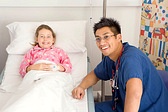
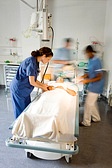
Nurse at the bedsidebusy nurses

So, I was shocked and saddened the other day to learn that there exists in our society places such as the “Heart Attack Grill” in Chandler, AZ. The heart attack grill is a hospital themed restaurant, where waitresses are referred to as nurses, and specialties include the triple and quadruple bypass burgers. Patrons or “patients” can be weighed in and if the scale tips over 350 pounds, the patron eats for free. This restaurant came to my attention when I saw that their 29 year old spokesperson Blair River, who weighed in at 575 pounds, died of pneumonia following Continue reading